
A Person Grows When He Strives – Albert Camus
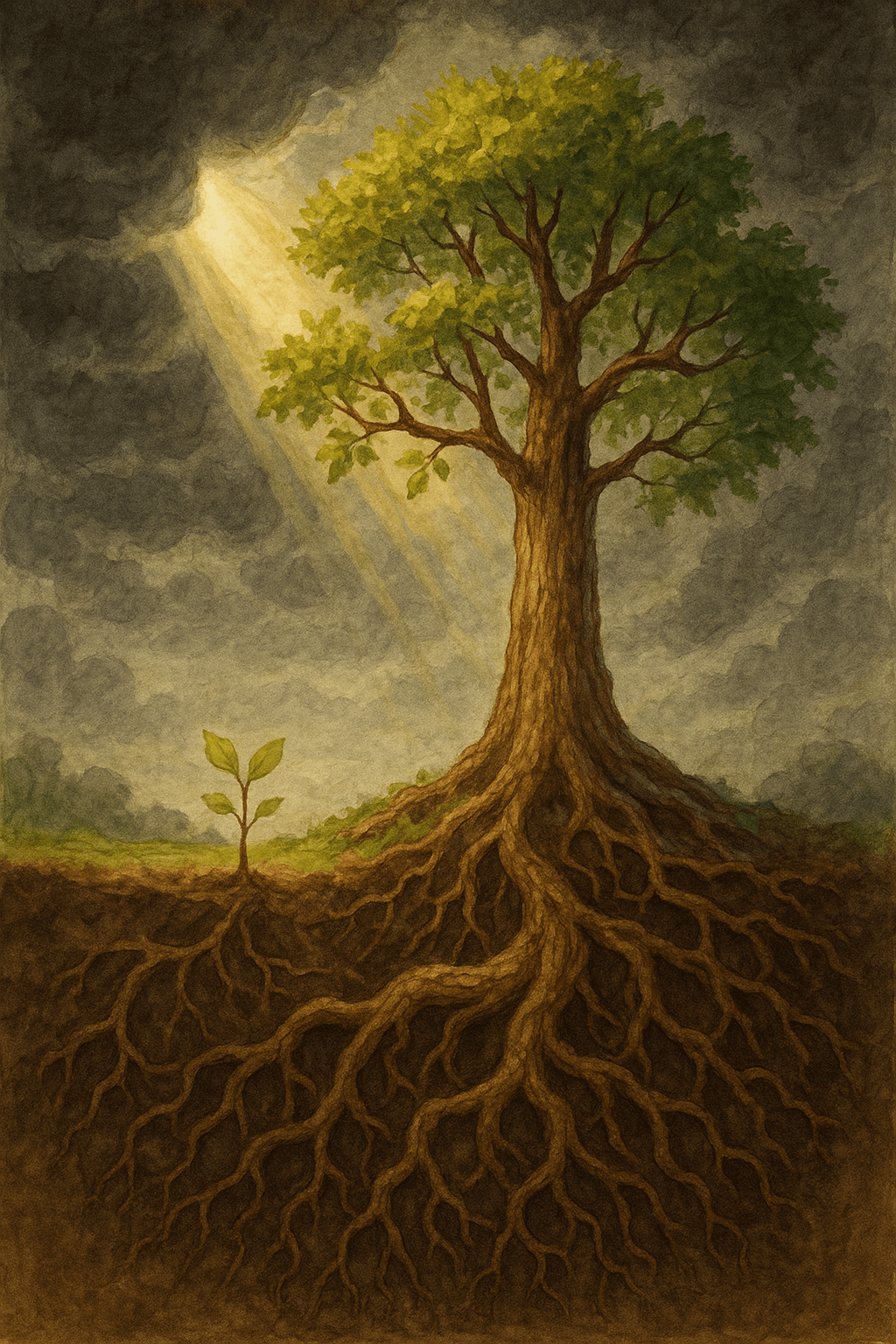
A person grows when he strives. — Albert Camus
—What lingers after this line?
Growth Through Effort
Camus suggests that personal development is intimately linked to active striving. This echoes themes from his philosophical essay *The Myth of Sisyphus* (1942), where Sisyphus, in the act of endlessly rolling a boulder up a hill, finds meaning and growth not in ultimate success, but in persistent effort.
Striving Amid Adversity
Growth is often forged through facing challenges. Viktor Frankl, in *Man’s Search for Meaning* (1946), recounts how striving to find meaning, even in the suffering of concentration camps, led to profound personal transformation.
Rejection of Stagnation
The quotation warns against complacency: without striving, stagnation sets in. In *Crime and Punishment* (1866), Dostoevsky’s Raskolnikov must grapple with anguish and guilt, but it is through his psychological struggle that he experiences moral awakening.
Existential Responsibility
Camus's philosophy often places the onus of life's value on individual action. The existentialist belief, also seen in Jean-Paul Sartre’s *Existentialism Is a Humanism* (1946), holds that humans define themselves through what they strive toward, not by static attributes.
Illustrative Anecdote: Athletic Endeavor
Athletes exemplify this idea: Michael Jordan was famously cut from his high school varsity basketball team, yet relentless effort led to legendary greatness (Lazenby, *Michael Jordan: The Life*, 2014). His growth stemmed from his determination to improve after setbacks.
Recommended Reading
As an Amazon Associate, we earn from qualifying purchases.
One-minute reflection
What's one small action this suggests?
Related Quotes
6 selectedBegin with the question that awakens you; persistence will answer. — Albert Camus
Albert Camus
Albert Camus invites us to notice the first question that genuinely startles us awake, the one that disrupts routine and demands attention. Rather than treating questions as abstract puzzles, he treats them as alarm cloc...
Read full interpretation →You are built not to shrink down to less but to blossom into more. — Oprah Winfrey
Oprah Winfrey
Oprah Winfrey’s line hinges on a vivid contrast: “shrink down” suggests self-erasure, caution, and living smaller than one’s nature, while “blossom into more” evokes organic growth—slow, embodied, and inevitable when con...
Read full interpretation →If you want to change the fruits, you will first have to change the roots. Stop fixing the symptoms and start healing the source. — T. Harv Eker
T. Harv Eker
T. Harv Eker’s metaphor is straightforward: the “fruits” are the visible outcomes of your life—money, health, relationships, work performance—while the “roots” are the hidden drivers beneath them, such as beliefs, habits...
Read full interpretation →A moment of self-compassion can change your entire day. A string of such moments can change the course of your life. — Christopher K. Germer
Christopher K. Germer
At first glance, Germer’s quote appears modest, almost understated: one moment of self-compassion can change a day. Yet that is precisely its force.
Read full interpretation →You do not need to be a finished product to be worthy of grace. You are allowed to be a work in progress. — Yung Pueblo
Yung Pueblo
At its heart, Yung Pueblo’s quote dismantles the harsh belief that value must be earned through perfection. It insists that grace is not a prize reserved for the polished or the fully healed; rather, it belongs equally t...
Read full interpretation →Rise with the sun of your intentions and work until the horizon answers — Chinua Achebe
Chinua Achebe
Achebe’s line opens with a vivid image: rising “with the sun of your intentions.” Intention here isn’t a vague wish—it’s something bright, scheduled, and unavoidable, like sunrise itself. By pairing waking with purpose,...
Read full interpretation →More From Author
More from Albert Camus →In order to understand the world, one has to turn away from it on occasion. — Albert Camus
Camus’ line sounds contradictory at first: how can you understand the world by turning away from it? Yet the paradox points to a familiar truth—immersion can blur perception, while distance can sharpen it.
Read full interpretation →Face the stretch of life as an open road for discovery, not a wall to avoid. — Albert Camus
Camus’ image hinges on a simple choice of metaphor: an “open road for discovery” versus a “wall to avoid.” The road suggests motion, curiosity, and an invitation to keep going even when the destination is unclear, while...
Read full interpretation →Turn the questions that unsettle you into tools that shape your tomorrow. — Albert Camus
Camus’s line treats discomfort not as a flaw in our thinking but as evidence that something meaningful is at stake. The questions that “unsettle” us—about purpose, integrity, belonging, or loss—often arrive when our usua...
Read full interpretation →Embrace the absurdity of fear and move toward what frightens you. — Albert Camus
Camus’s line begins with a typically absurdist premise: fear is not merely an obstacle to be eliminated but a strange, unavoidable feature of being alive. To “embrace the absurdity” is to recognize that we can crave safe...
Read full interpretation →