
Resilience: Transforming Obstacles into Opportunities for Growth
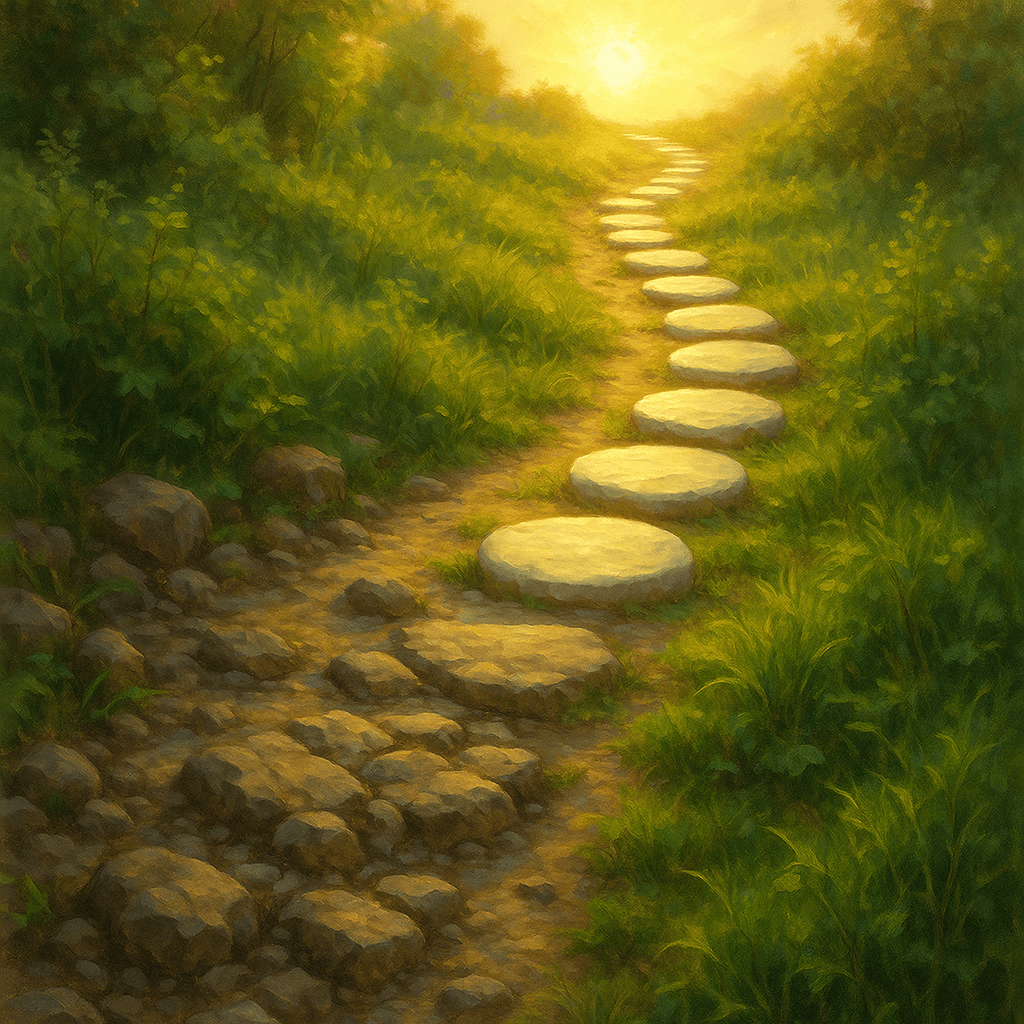
Resilience turns stones into stepping-stones. — Toni Morrison
—What lingers after this line?
The Metaphor of Stones and Stepping-Stones
Toni Morrison’s quote draws on the vivid image of stones—traditionally symbols of burdens or blockages—and reimagines them as stepping-stones that facilitate progress. This metaphor encourages us to consider challenges not as dead ends, but as necessary platforms that enable advancement. Much like a path across a river, it is only by stepping on each stone, regardless of its shape or stability, that one can reach the other side.
Defining Resilience Amid Adversity
Building from this metaphor, resilience emerges as the capacity to transform difficulties into instruments for personal development. Psychologist Norman Garmezy pioneered research on resilience in children facing significant adversity, noting that this trait allows individuals to adapt and even flourish in the face of hardship. Rather than being innate, resilience can be cultivated through repeated exposure to life's inevitable obstacles.
Historical Examples of Resilience
The power of resilience is reflected throughout history, especially in the lives of those who have triumphed over adversity. Consider Nelson Mandela, who spent 27 years in prison yet emerged as a leader committed to reconciliation in post-apartheid South Africa. His life is a testament to using hardship as a foundation for profound personal and societal change—turning 'stones' into stepping-stones.
Literary Resonance in Morrison’s Works
Morrison’s own novels, such as 'Beloved' (1987), illuminate how characters endure and adapt amidst trauma. Her protagonists frequently confront immense suffering, yet their journeys are marked by tenacity and transformation. Through these narratives, Morrison illustrates her belief that resilience is not merely about survival, but about harnessing pain to forge new paths forward.
Cultivating Resilience in Everyday Life
Transitioning from literature and history to everyday experience, we recognize that resilience can be nurtured through daily practice. By reframing setbacks as opportunities to learn or grow—whether facing academic, professional, or personal struggles—we engage in the process Morrison describes. Ultimately, resilience invites us to adopt a mindset that regards every 'stone' in our journey as a potential stepping-stone toward a better self.
Recommended Reading
As an Amazon Associate, we earn from qualifying purchases.
One-minute reflection
What feeling does this quote bring up for you?
Related Quotes
6 selectedThe ability to endure is the discipline of the soul. — Toni Morrison
Toni Morrison
Toni Morrison’s line shifts endurance from a mere survival trait into a deliberate inner practice: a discipline cultivated in the soul. Rather than glorifying pain for its own sake, she suggests that the capacity to cont...
Read full interpretation →Refuse to be reduced by doubt; write your answer with steady hands. — Toni Morrison
Toni Morrison
Toni Morrison’s line, “Refuse to be reduced by doubt; write your answer with steady hands,” begins as a quiet defiance against an invisible force. Doubt, in her framing, does not merely slow us down; it actively tries to...
Read full interpretation →True resilience is not about returning to the person you were before the storm. It is about bouncing forward into the person the storm required you to become. — Satya Nadella
Satya Nadella
Satya Nadella’s line challenges the common idea that resilience is simply “getting back to normal.” Instead of treating hardship as a temporary interruption, he frames it as a transforming event that changes what “normal...
Read full interpretation →Turn obstacles into practice; the craft of resilience is learned stroke by stroke. — Albert Camus
Albert Camus
Camus’ line reframes adversity as a training ground rather than a detour. Instead of waiting for ideal conditions, it invites a shift in posture: the obstacle is not merely something to be removed, but material to be wor...
Read full interpretation →Instead of trying to return to how things were, build a flexible structure that can handle constant change. — Favor Mental Health
Favor Mental Health
The quote begins by challenging a common instinct: when life is disrupted, we often try to restore an earlier version of stability. Yet “how things were” is usually a moving target, shaped by circumstances that may not r...
Read full interpretation →Quietly cracking does not have to be your permanent state. — Dr. Sarah McQuaid
Dr. Sarah McQuaid
Dr. Sarah McQuaid’s line begins by giving language to a common but often invisible experience: feeling like you’re “quietly cracking.” It suggests a slow, internal strain—functioning on the outside while something splint...
Read full interpretation →More From Author
More from Toni Morrison →The ability to endure is the discipline of the soul. — Toni Morrison
Toni Morrison’s line shifts endurance from a mere survival trait into a deliberate inner practice: a discipline cultivated in the soul. Rather than glorifying pain for its own sake, she suggests that the capacity to cont...
Read full interpretation →You are your best thing. — Toni Morrison
Toni Morrison’s line, “You are your best thing,” quietly overturns a common habit: looking outward for proof of worth. Instead of treating love, status, or achievement as the final measure, the quote plants value inside...
Read full interpretation →Keep a stubborn heart and a flexible plan. — Toni Morrison
Toni Morrison’s sentence splits strength into two complementary forms: a “stubborn heart” that refuses to surrender what matters, and a “flexible plan” that accepts reality’s constant revisions. Rather than treating grit...
Read full interpretation →Open your hands and the world will learn how to fit in them. — Toni Morrison
Toni Morrison’s line sounds gentle, yet it carries a bracing claim: the way you hold yourself teaches the world how to approach you. “Open your hands” evokes release—of tight control, fear, and the reflex to clutch what...
Read full interpretation →