
The Irrecoverable Value of Lost Time
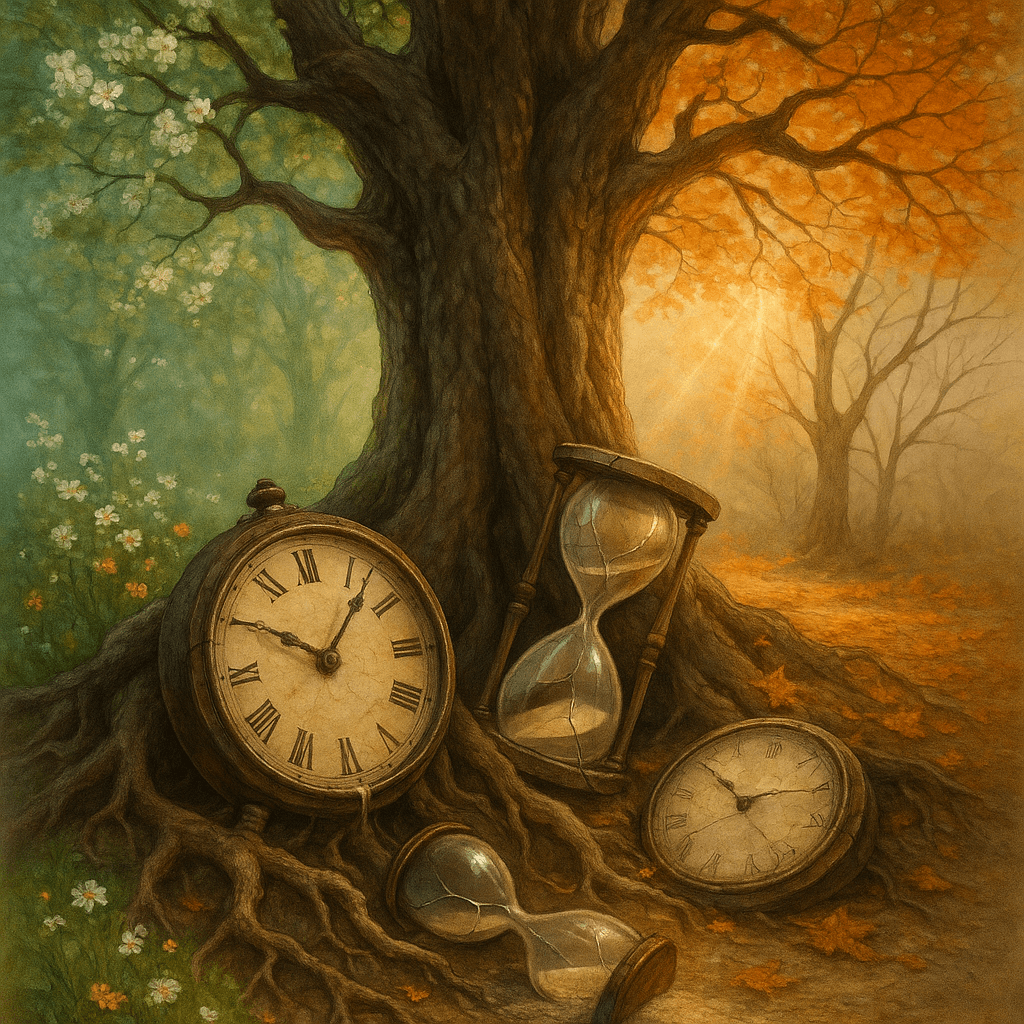
Lost time is never found again. — Benjamin Franklin
—What lingers after this line?
Franklin’s Enduring Maxim
Benjamin Franklin’s declaration, ‘Lost time is never found again,’ encapsulates a timeless concern about the fleeting nature of life. As an inventor, statesman, and philosopher, Franklin constantly sought to maximize productivity and personal growth, often extolling the virtue of prudent time management. This maxim serves not merely as a warning but as a guide for prioritizing what truly matters.
The Relentless Passage of Time
Building on Franklin’s insight, the idea that time moves forward without pause is rooted in ancient literature—echoed in Horace’s ‘carpe diem’ from 23 BCE. Both thinkers encourage us to seize each moment, for once an hour slips by, it’s irretrievable. The irreversible march of time demands that individuals approach each day with intention and resolve.
Consequences of Procrastination
By recognizing time’s irrevocability, we become acutely aware of the costs of procrastination. Delaying important tasks or postponing meaningful experiences often leads to regret, as opportunities missed rarely present themselves a second time. Franklin’s own Poor Richard’s Almanack (1732–1758) repeatedly admonishes readers against the subtle perils of idleness.
Time as Life’s Most Precious Resource
Transitioning to a modern perspective, time is now seen as our most valuable asset, more finite than money or possessions. In his essay ‘On the Shortness of Life,’ Seneca (c. 49 AD) argued that, while people guard their wealth jealously, they squander time heedlessly. Reframing our lives around the value of time can profoundly influence personal and professional fulfillment.
Practical Lessons for Today
Bringing Franklin’s wisdom into contemporary life, we find reminders to be mindful in how we spend each day. Productivity strategies like Eisenhower’s urgent-important matrix or Pomodoro Technique are modern responses to the challenge Franklin posed. Ultimately, by cherishing each moment and acting deliberately, we ensure that our allotment of time is not simply spent, but invested wisely.
Recommended Reading
As an Amazon Associate, we earn from qualifying purchases.
One-minute reflection
What does this quote ask you to notice today?
Related Quotes
6 selectedThe life of the spirit requires less and less; time is ample and its passage sweet. — Annie Dillard
Annie Dillard
Annie Dillard’s line begins with a gentle reversal of ordinary ambition: instead of needing more—more money, more recognition, more stimulation—the life of the spirit “requires less and less.” She frames inner growth as...
Read full interpretation →Time does not wait, the seasons flow like a stream.
Unknown
This statement emphasizes that time is relentless and unstoppable. It moves forward without waiting for anyone, much like the continuous flow of water in a stream.
Read full interpretation →In the end, we only regret the chances we didn't take. - Lewis Carroll
Lewis Carroll
This quote stresses the importance of seizing opportunities. It suggests that as we look back on our lives, the moments we didn't act on or the risks we didn't take are what we regret the most.
Read full interpretation →One today is worth two tomorrows. — Benjamin Franklin
Benjamin Franklin
This quote emphasizes the importance of the present moment. It suggests that what you can accomplish or experience today is more valuable than what lies in the uncertain future.
Read full interpretation →Time is the best author: it always finds a perfect ending. - Charles Chaplin
Charles Chaplin
This quote suggests that time has a way of bringing events and stories to their natural conclusions. No matter how unresolved or complicated things may seem, time will eventually provide closure and resolution.
Read full interpretation →Time is the best author: it always finds a perfect ending. - Charles Chaplin
Charles Chaplin
This quote suggests that time is an unstoppable force that eventually brings about the conclusion of all things, whether they are events, situations, or chapters in our lives.
Read full interpretation →More From Author
More from Benjamin Franklin →When you're finished changing, you're finished. — Benjamin Franklin
At the outset, Franklin’s maxim compresses a survival law: when learning and adaptation stop, relevance decays. “Finished changing” is not completion but stagnation; entropy resumes control.
Read full interpretation →Use your skills where they are needed and refine them through practice. — Benjamin Franklin
At first glance, Franklin’s counsel fuses two actions: put abilities where they relieve a real constraint, and sharpen those abilities through repeated, structured effort. This twofold imperative resists vanity projects...
Read full interpretation →Do not anticipate trouble, or worry about what may never happen. Keep in the sunlight. — Benjamin Franklin
This quote advises against spending time and energy worrying about potential problems that may never come to pass. By doing so, one can avoid unnecessary stress and anxiety.
Read full interpretation →One today is worth two tomorrows. — Benjamin Franklin
This quote emphasizes the importance of the present moment. It suggests that what you can accomplish or experience today is more valuable than what lies in the uncertain future.
Read full interpretation →