
Quiet Growth: Patience as the Root of True Strength
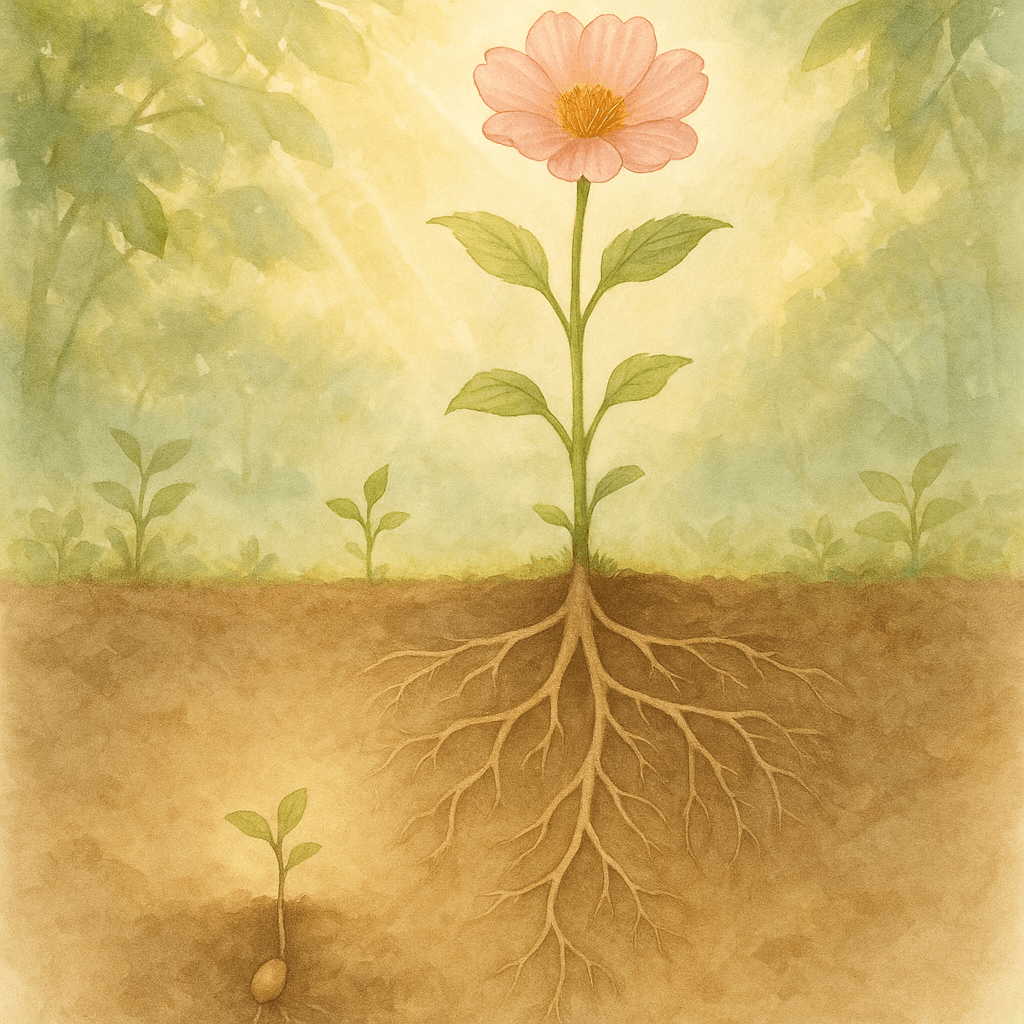
True strength blooms quietly from the seeds of patience. — Thich Nhat Hanh
—What lingers after this line?
The Subtle Emergence of Strength
Thich Nhat Hanh’s words invite us to reconsider the nature of strength—not as a loud or forceful display, but as something that develops quietly over time. Like seeds planted deep within the soil, real resilience and fortitude often unfold out of sight, born out of waiting and gentle persistence rather than momentary bursts of power.
Patience as the Gardener’s Virtue
Building on this organic metaphor, consider how gardeners know that rushing growth can harm rather than help a plant. In *Peace Is Every Step* (1991), Thich Nhat Hanh describes peace and strength as qualities that must be nurtured with mindfulness and time. In this sense, patience is not passive—it is an active tending, a deliberate choice to allow roots to deepen before blossoms appear.
Lessons from Nature’s Cycles
Transitioning to nature, the slow unfolding of a tree’s growth embodies this wisdom. Rings accumulate year by year, invisible until revealed but crucial to the tree’s endurance. Similarly, in *Walden* (1854), Henry David Thoreau wrote that ‘nature does not hurry, yet everything is accomplished.’ True strength, like the oaks in Thoreau’s woods, is a gradual accumulation.
Patience and Inner Transformation
Moreover, on the path to personal growth, patience acts as a stabilizing force. Thich Nhat Hanh’s mindfulness teachings show that facing difficulties calmly allows resilience to mature beneath the surface. Each challenge met with patience becomes a seedling of inner strength, ready to support us through greater storms.
Cultivating Calm in a Hasty World
Finally, in a culture often obsessed with immediate results, Thich Nhat Hanh reminds us of the quiet power in waiting. By sowing patience in our interactions and aspirations, we allow true strength to blossom organically, crafting lives rooted in steadiness and quiet confidence—much like a tree that endures generations because its growth was never rushed.
Recommended Reading
As an Amazon Associate, we earn from qualifying purchases.
One-minute reflection
What feeling does this quote bring up for you?
Related Quotes
6 selectedPatience is the ability to be present with your own heart. — Pema Chödrön
Pema Chödrön
Pema Chödrön’s line shifts patience from something we perform for the outside world into something we practice within. Instead of merely “waiting well” while life changes, patience becomes the willingness to stay close t...
Read full interpretation →Do not hurry; the right path reveals itself with patience. — Thich Nhat Hanh
Thich Nhat Hanh
Thich Nhat Hanh's words highlight patience as a fundamental virtue for navigating life's uncertainties. Rather than urging immediate action or hasty decisions, he suggests that clarity comes when we allow time for truth...
Read full interpretation →Temper ambition with patience; greatness grows in the quiet between efforts. — Marcus Aurelius
Marcus Aurelius
Marcus Aurelius’ counsel begins with an acknowledgment: ambition itself is not condemned; it is the fuel that drives achievement. Yet, like fire, uncontained ambition can scorch rather than strengthen.
Read full interpretation →In the face of every challenge, there lies a hidden strength. It sleeps within every heartbeat, waiting to be awakened. Embrace every setback, for it is the sprout of self-growth and steadfast conviction.
growth and steadfast conviction.
The quote suggests that every individual possesses an inherent strength that is not always apparent. This strength resides deep within, waiting to be discovered and harnessed during difficult times.
Read full interpretation →Strength does not come from physical capacity. It comes from an indomitable will. - Mahatma Gandhi
Mahatma Gandhi
Gandhi’s quote highlights that true strength arises from within oneself. It is not about physical power or ability but about mental and emotional resilience.
Read full interpretation →The two most powerful warriors are patience and time. — Leo Tolstoy
Leo Tolstoy
This quote underscores the importance of patience as a powerful tool. It suggests that being able to wait and endure challenges over time can lead to successful outcomes.
Read full interpretation →More From Author
More from Thich Nhat Hanh →We have to be careful not to spend our lives anticipating the next thing. — Thich Nhat Hanh
Thich Nhat Hanh’s warning points to a quiet but pervasive habit: living in the mental future. Anticipation can feel productive—planning, improving, preparing—but it can also become a way of postponing life itself.
Read full interpretation →We are so obsessed with doing that we have no time and no room left for being. — Thich Nhat Hanh
Thich Nhat Hanh’s remark points to a modern dilemma: busyness can become so normal that it feels virtuous, even when it quietly erodes our inner life. When our days are packed with tasks, notifications, and goals, “doing...
Read full interpretation →It is very important that we re-learn the art of resting and relaxing. It allows us to clear our minds. — Thich Nhat Hanh
Thich Nhat Hanh frames resting and relaxing not as luxuries but as arts—skills that can be lost and recovered. In a culture that rewards constant activity, many people come to treat stillness as unproductive or even guil...
Read full interpretation →The feeling that any task is a nuisance will soon disappear if it is done in mindfulness. — Thich Nhat Hanh
Thich Nhat Hanh begins with an everyday truth: much of our irritation comes not from the task itself, but from the label we attach to it. When we decide something is a nuisance—washing dishes, replying to emails, standin...
Read full interpretation →