
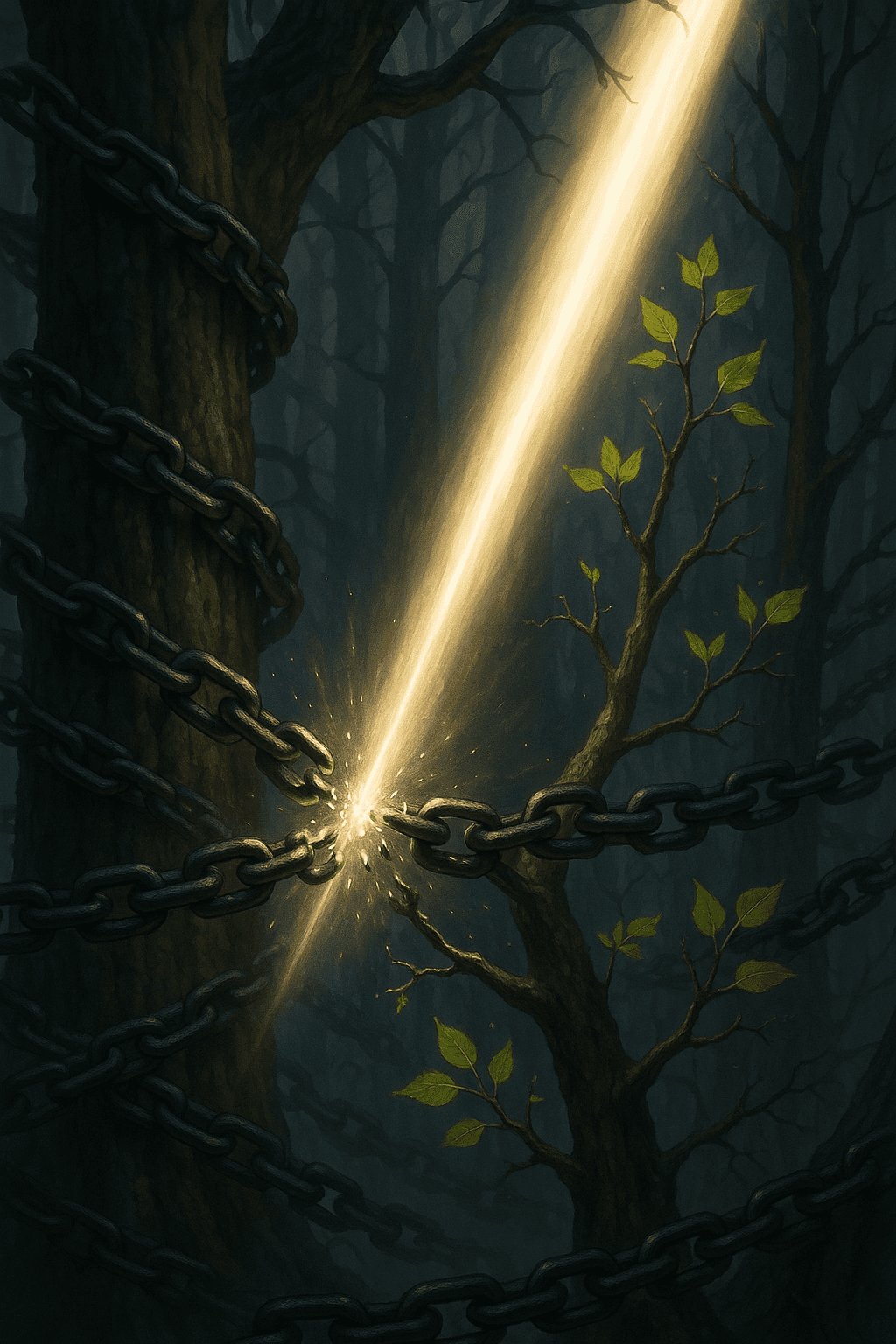
A single act of courage can shatter a thousand chains. — Ai Weiwei
—What lingers after this line?
Defining Courage in a Constrained World
At its core, Ai Weiwei’s statement spotlights the transformative power of individual bravery. In societies bound by oppression or fear, a single act of courage can seem inconsequential. Yet, throughout history, we have seen that even small acts of defiance—whether outspoken words, creative expression, or civil resistance—can break through barriers that once seemed unmovable.
Historical Examples of Courageous Acts
Transitioning from theory to practice, history presents myriad instances where personal bravery changed collective destinies. Rosa Parks’ refusal to surrender her seat in 1955 is emblematic; her quiet defiance ignited the Montgomery Bus Boycott, a pivotal moment in the American Civil Rights Movement. This illustrates how a single courageous gesture can set off a chain reaction, liberating not just oneself but an entire community.
Art and Expression as Acts of Defiance
Building on this, Ai Weiwei’s own life demonstrates how creative expression can serve as an act of courage. His installations, such as ‘Sunflower Seeds’ (2010), challenge political constraints and invite viewers to question authority. Here, artistry is not just aesthetic but an open act of rebellion, showing how the brush, camera, or spoken word can function as powerful tools for liberation.
The Psychological Dynamics of Breaking Chains
Moreover, courage tends to be contagious—a phenomenon psychologists call ‘social modeling.’ When one person breaks free from fear, it emboldens others to do the same. The ‘bystander effect’ can be reversed when individuals witness singular acts of bravery, paving the way for collective action and societal transformation.
The Enduring Legacy of a Single Act
Ultimately, the metaphor of shattering a thousand chains reminds us that the consequences of courage extend far beyond the initial act. Gandhi’s salt march or Malala Yousafzai’s advocacy for education are modern parallels, demonstrating how one person’s resolve can inspire widespread change. Thus, Ai Weiwei’s words serve as a clarion call to recognize—and enact—the liberating force of even the smallest brave deed.
One-minute reflection
Where does this idea show up in your life right now?
Related Quotes
6 selectedTo be courageous is to act with the heart. — Molière
Molière
Molière’s line suggests that courage is not merely the absence of fear, but the decision to move despite it. By connecting courage with the heart, he frames bravery as an emotional and moral act rather than a simple disp...
Read full interpretation →The best people possess a feeling for beauty, the courage to take risks, the discipline to tell the truth, the capacity for sacrifice. — Ernest Hemingway
Ernest Hemingway
Hemingway’s line presents goodness not as politeness or success, but as a demanding inner code. The “best people” are those who combine sensitivity, bravery, honesty, and self-denial—qualities that do not always coexist...
Read full interpretation →If you are not willing to look stupid, nothing great is ever going to happen to you. — Julia Cameron
Julia Cameron
Julia Cameron’s remark begins with a hard truth: many people do not fail because they lack talent, but because they fear embarrassment. In that sense, ‘looking stupid’ becomes shorthand for being seen trying, stumbling,...
Read full interpretation →You don't have to bully yourself out of feeling fear. You just have to move while it's still there. — Annie Wright
Annie Wright
At its core, Annie Wright’s quote challenges the common belief that courage begins only after fear has disappeared. Instead, it reframes fear as something that can accompany action rather than prevent it.
Read full interpretation →For what matters in life is not whether we receive a round of applause; what matters is whether we have the courage to venture forth despite the uncertainty of acclaim. — Amor Towles
Amor Towles
At its core, Amor Towles shifts attention away from public approval and toward private resolve. The quote argues that a life’s value is not determined by applause—those visible signs of recognition—but by the willingness...
Read full interpretation →Confidence doesn't mean being fearless. It means creating, even when your hands shake. — Lisa Golightly
Lisa Golightly
At first glance, Lisa Golightly’s quote overturns a common myth: that confident people move through life without fear. Instead, she presents confidence as action taken in spite of fear, not in the absence of it.
Read full interpretation →More From Author
More from Ai Weiwei →Authenticity is a habit. It is a road we are comfortable with. — Ai Weiwei
At first glance, Ai Weiwei’s statement shifts authenticity away from dramatic self-revelation and toward repetition. By calling it a habit, he suggests that being genuine is not an occasional act of courage but a pattern...
Read full interpretation →You don't need a formal license to be an artist; you only need the courage to claim your own perspective. — Ai Weiwei
Ai Weiwei’s statement immediately dismantles the idea that artistic legitimacy must be granted by institutions, critics, or official credentials. Instead, he shifts the center of gravity inward: what makes someone an art...
Read full interpretation →If you want to be free, be as you are. Authenticity is the only currency that doesn't lose value. — Ai Weiwei
Ai Weiwei’s statement opens with a striking condition: freedom is not merely granted by laws or institutions, but discovered in the courage to remain fully oneself. In this sense, “be as you are” is less a passive descri...
Read full interpretation →The artist's job is not to succumb to despair, but to find the light in the cracks. Art is the act of bringing your internal world into the light for others to share. — Ai Weiwei
At its core, Ai Weiwei’s statement defines art not as surrender, but as resistance. Despair may be an honest response to injustice, loss, or confusion; however, the artist’s task is to move beyond mere collapse and searc...
Read full interpretation →