
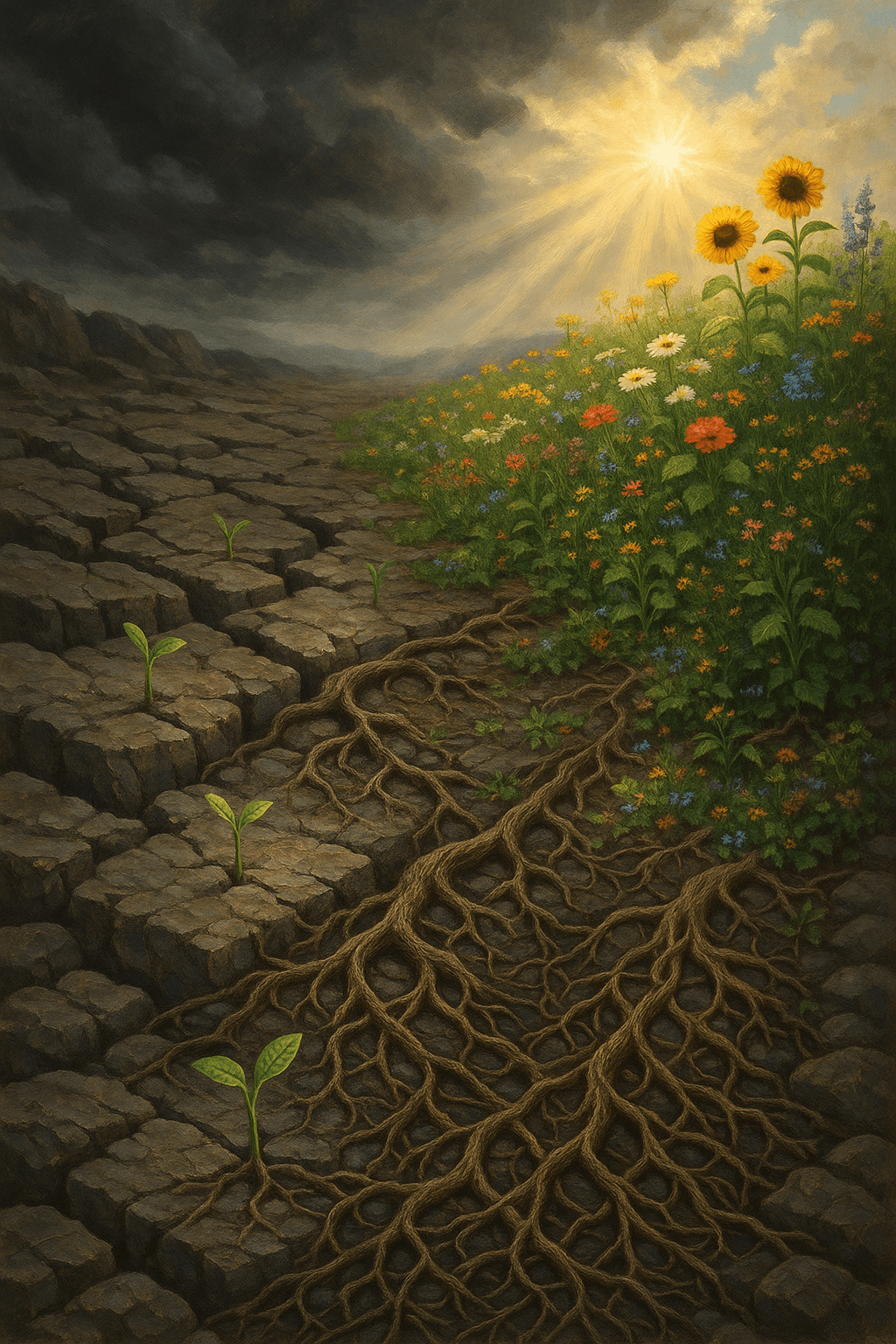
Resistance is fertile; endurance is a seed. — Nigerian Proverb
—What lingers after this line?
Unpacking the Proverb's Imagery
At its core, the Nigerian proverb 'Resistance is fertile; endurance is a seed' uses agricultural metaphors to convey the value of perseverance. 'Fertile' land is rich with possibilities, while a 'seed' embodies future potential. This language frames resistance and endurance not as obstacles, but as the first stages of growth—a notion deeply rooted in agrarian cultures across Africa, where patience and resilience are vital for crops to thrive.
Resistance as a Creative Force
Building on this metaphor, the proverb asserts that resistance is not merely opposing hardship, but is generative. Like fertile soil nurturing seeds, acts of resistance can breed change and renewal. In Nigeria's history—such as during periods of political unrest or colonial rule—grassroots resistance often gave rise to new movements and ideas, turning adversity into a breeding ground for innovation and societal progress.
Endurance as an Investment in the Future
Furthermore, describing endurance as a 'seed' emphasizes its long-term impact. Much like planting seeds requires faith in the unseen harvest, enduring hardship is an act of hope. This is evident in the lives of figures such as Chinua Achebe, whose perseverance in narrating African stories seeded a renaissance in world literature. In this way, endurance is both an act of survival and a foundation for transformation.
From Individual Struggle to Collective Growth
Transitioning from the individual to the collective, the proverb’s wisdom resonates in social movements worldwide. When communities unite in resistance—be it against injustice, oppression, or inequality—they sow the seeds of change collectively. The civil rights movement in the United States and the anti-apartheid struggle in South Africa both exemplify how collective endurance and resistance can yield profound societal shifts, proving that fertile ground for justice is cultivated through shared persistence.
Harvesting the Fruits of Perseverance
Ultimately, the Nigerian proverb teaches us to reframe adversity. Rather than viewing hardship as barren or fruitless, we are invited to see it as the beginning of something greater. Through patient endurance and active resistance, individuals and communities prepare the soil for growth, allowing the seeds of effort to blossom into lasting change. Thus, embracing the fertility of resistance and the latent power of endurance can help us shape a more hopeful future.
One-minute reflection
Where does this idea show up in your life right now?
Related Quotes
6 selectedResilience is not just enduring the storm; it is learning to harvest the rain to nourish the roots you've already planted. — Elizabeth Edwards
Elizabeth Edwards
At first glance, Elizabeth Edwards rejects the common image of resilience as simple endurance. To ‘endure the storm’ suggests gritting one’s teeth and waiting for suffering to pass, yet her metaphor quickly moves further...
Read full interpretation →A good-enough novel violently written now is better than a perfect novel meticulously written never. — Elizabeth Gilbert
Elizabeth Gilbert
Elizabeth Gilbert’s line immediately shifts the argument from artistic purity to artistic existence. A “good-enough” novel, even one “violently written,” has entered the world and can move, provoke, or comfort someone; b...
Read full interpretation →Just because your light flickers does not mean it is about to go out. — Yohancé Salimu
Yohancé Salimu
At first glance, Yohancé Salimu’s line separates appearance from reality. A flicker suggests instability, fatigue, or interruption, yet it does not automatically signal extinction.
Read full interpretation →There is no road too long to the man who advances deliberately and without undue haste; there are no honors too distant to the man who prepares himself for them with patience. — Jean de La Bruyère
Jean de La Bruyère
At its core, La Bruyère’s line praises steady movement over restless speed. A long road feels intimidating only when seen all at once; once it is broken into deliberate steps, distance loses much of its power.
Read full interpretation →When something in your life dies—whether it be a job, a hobby, or a dream—I encourage you not to focus on what could have been but instead to look for the new life and the new opportunities that result. — Ryan Hall
Ryan Hall
Ryan Hall frames loss as a kind of death, and that metaphor immediately broadens the quote beyond grief in the literal sense. A job can end, a cherished hobby can fade, and a long-held dream can collapse; yet in each cas...
Read full interpretation →Dreams are made of sturdy stuff. — William Carlos Williams
William Carlos Williams
At first glance, William Carlos Williams’s line reverses a familiar assumption: dreams are often treated as airy, fleeting, and insubstantial, yet he insists they are made of “sturdy stuff.” In that compact phrase, he gi...
Read full interpretation →More From Author
More from Nigerian Proverb →Carve out your own niche, and you will leave your mark on the world. — Nigerian Proverb
This proverb emphasizes the importance of embracing one's individuality and creating a unique path in life. By doing so, one can make a significant impact on the world.
Read full interpretation →To reach the stars, you must take the first step on the ground. — Nigerian Proverb
This proverb highlights that every great achievement begins with a small step. No matter how ambitious your goals are, progress is only possible if you start from where you are.
Read full interpretation →Do not give up, the beginning is always the hardest. — Nigerian Proverb
The Nigerian proverb, 'Do not give up, the beginning is always the hardest,' captures a universal truth about starting anew. Whether embarking on a new job, learning a skill, or forming a relationship, initial steps are...
Read full interpretation →The future is no place to place your better days. — Nigerian Proverb
At first glance, the Nigerian proverb, 'The future is no place to place your better days,' offers succinct but profound advice about the dangers of deferring happiness. Rather than treating the future as a magical reposi...
Read full interpretation →