
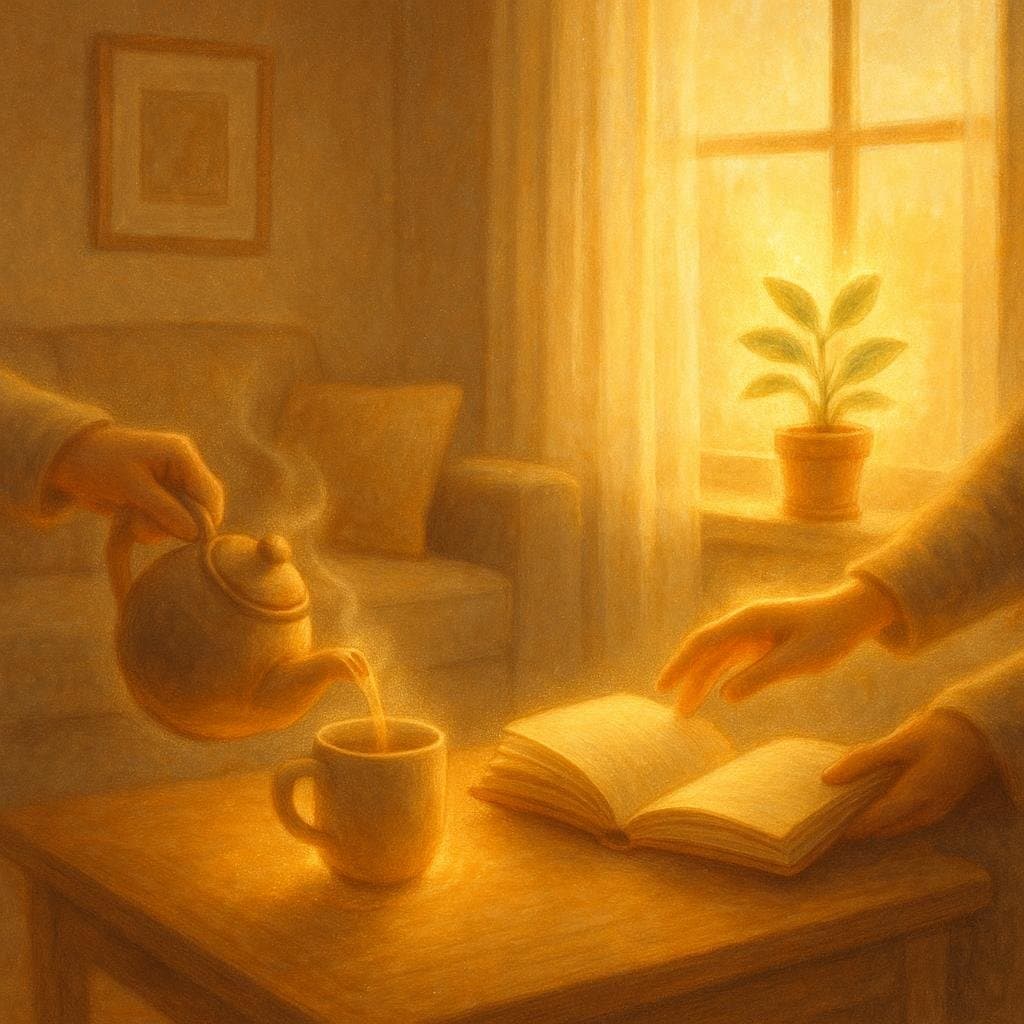
The ordinary acts we practice every day at home are of more importance to the soul than their simplicity might suggest. — Thomas Moore
—What lingers after this line?
Unveiling the Hidden Power of Routine
Thomas Moore’s reflection urges us to reconsider the subtle significance of our daily habits. Activities such as preparing meals, tidying up, or sharing a conversation may appear mundane on the surface. Yet, Moore suggests, these actions possess a transformative potential that often escapes our notice, acting as quiet architects of emotional and spiritual well-being.
The Home as a Spiritual Sanctuary
Expanding on this, the home emerges as more than a physical space—it becomes a crucible where the soul is nurtured through repeated gestures of care and attention. This echoes traditions from monastic life, where Brother Lawrence, in *The Practice of the Presence of God* (17th century), found profound spiritual meaning in kitchen chores. The ordinary, performed mindfully, acquires extraordinary depth.
Family Traditions and Emotional Stability
Moreover, these habitual acts form the bedrock of family identity and resilience. Psychological studies, such as those by Marshall Duke at Emory University, demonstrate that shared routines foster a sense of belonging and continuity through generations. Simple acts—like eating dinner together—serve as anchors, especially in turbulent times, offering children and adults alike a source of comfort and connection.
Mindfulness Cultivated by Simple Practices
Further, by paying attention to the present moment during household tasks, we cultivate mindfulness. Thich Nhat Hanh, in his teachings on conscious living, emphasizes how washing dishes or sweeping can become meditative rituals that center the mind. Over time, these practices can deepen our sense of presence and contentment, subtly shaping the soul’s character.
Elevating the Simple to the Sacred
In summary, the cumulative effect of seemingly trivial actions performed with intention cannot be overstated. What Moore articulates is a timeless truth: the soul is shaped not by grand gestures alone, but through a mosaic of daily deeds. By valuing and honoring these rituals, we allow the ordinary to transcend its simplicity, nurturing a life of meaning and inner richness.
One-minute reflection
What feeling does this quote bring up for you?
Related Quotes
2 selectedWe need people in our lives with whom we can be as open as possible. To have real conversations may seem simple, but it involves courage and risk. — Thomas Moore
Thomas Moore
Thomas Moore’s quote begins with a simple human need: we require people with whom we can speak honestly, without performance or self-protection. At first glance, that sounds ordinary, yet his wording suggests something d...
Read full interpretation →The soul is partly in time and partly in eternity. We might remember the part that resides in eternity when we feel despair over the part that is in life. — Thomas Moore
Thomas Moore
Thomas Moore’s reflection begins with a striking duality: the soul belongs both to the changing world of time and to the changeless dimension of eternity. On one hand, we live through deadlines, aging, grief, and uncerta...
Read full interpretation →More From Author
More from Thomas Moore →We need people in our lives with whom we can be as open as possible. To have real conversations may seem simple, but it involves courage and risk. — Thomas Moore
Thomas Moore’s quote begins with a simple human need: we require people with whom we can speak honestly, without performance or self-protection. At first glance, that sounds ordinary, yet his wording suggests something d...
Read full interpretation →The soul is partly in time and partly in eternity. We might remember the part that resides in eternity when we feel despair over the part that is in life. — Thomas Moore
Thomas Moore’s reflection begins with a striking duality: the soul belongs both to the changing world of time and to the changeless dimension of eternity. On one hand, we live through deadlines, aging, grief, and uncerta...
Read full interpretation →