
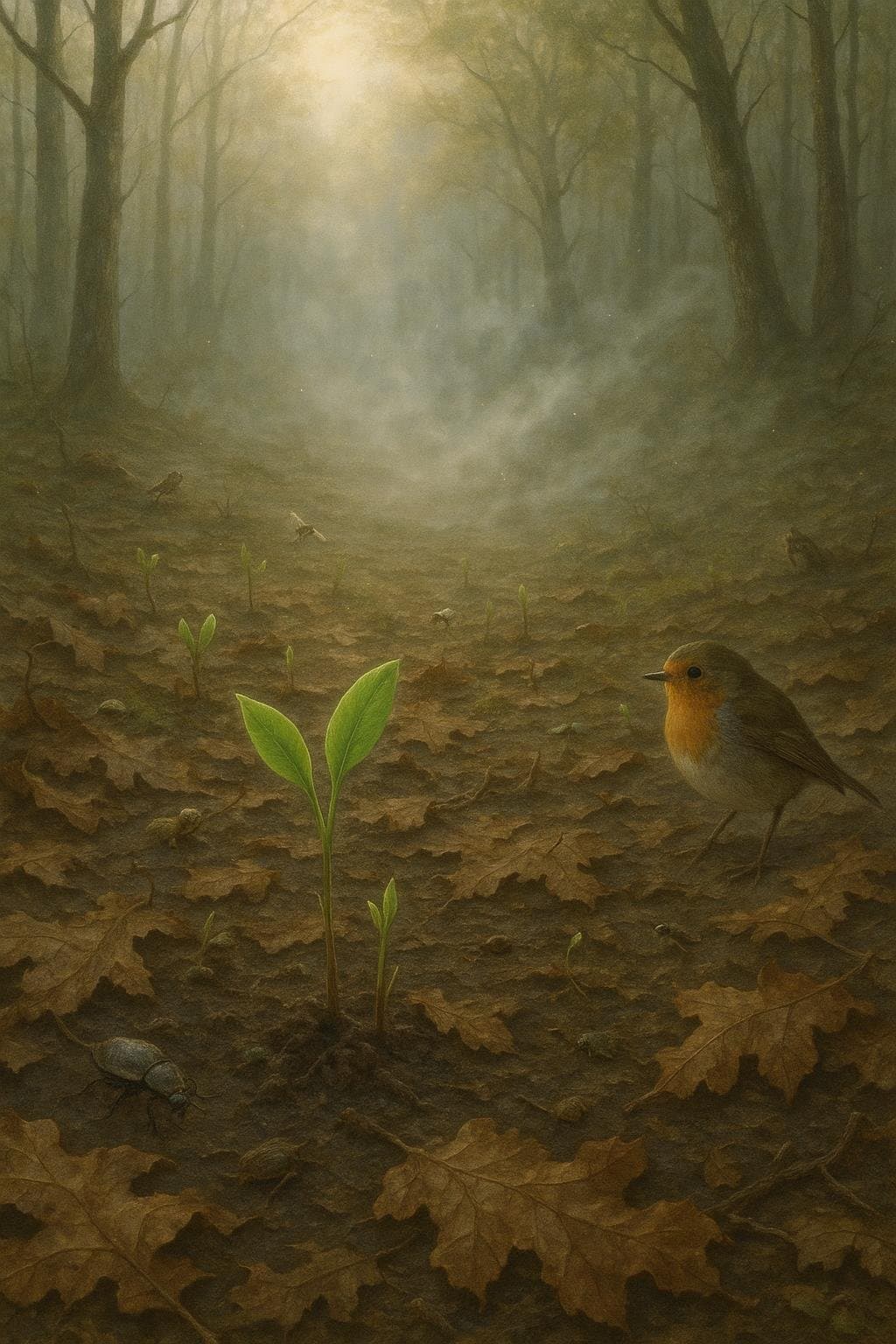
The miracle is not to fly in the air, or to walk on the water, but to walk on the earth. — Chinese Proverb
—What lingers after this line?
Redefining the Meaning of Miracles
To begin, this Chinese proverb challenges us to reconsider our understanding of miracles. While many marvel at supernatural feats like flying through the skies or treading upon water, the proverb shifts our attention to the more humble, everyday act of walking on earth. This redirection implies that the extraordinary can, in fact, reside within the ordinary, encouraging a sense of wonder in daily existence.
Cultural Roots in Eastern Philosophy
Delving deeper, Eastern philosophical traditions have long valued harmony with the natural world over the pursuit of grandiose displays. In the teachings of Laozi’s *Tao Te Ching* (c. 6th century BCE), for example, wisdom is found in simplicity and alignment with the Tao, or 'the Way.' Much like the proverb, such teachings suggest that living mindfully and appreciating the present moment holds greater significance than seeking miraculous prowess.
The Value of Presence and Mindfulness
Flowing from these traditions, the significance of 'walking on the earth' lies in the cultivation of presence. Practicing mindfulness—fully immersing oneself in the sensations and experiences of everyday life—has been shown by Buddhist teachings and contemporary psychology alike to foster contentment and inner peace. Thus, recognizing the miracle of mere existence becomes a transformative act.
Contrasts with Western Notions of Achievement
In contrast, Western narratives often equate miracles with extraordinary accomplishments or the defiance of natural laws. Yet, as illustrated in Thoreau’s *Walden* (1854), even Western thinkers occasionally echo this proverb’s sentiment, advocating for the profound beauty in leading a 'life of simplicity.' Bridging these perspectives, one finds that cultural appreciation for everyday acts can be universal, though it is often overshadowed by a preference for spectacle.
Embracing Everyday Gratitude
Ultimately, the proverb urges us to cultivate gratitude for the ability to walk on this earth—to experience life in its most basic form. By recognizing that survival, interpersonal connection, and the sensations offered by our environment are themselves miraculous, we build a lasting foundation for joy. In doing so, life’s ordinary rhythms emerge as sources of inspiration, inviting us all to acknowledge and celebrate the daily miracles within reach.
One-minute reflection
What does this quote ask you to notice today?
Related Quotes
6 selectedThe miracle is not to fly in the air, or to walk on the water, but to walk on the earth. — Chinese Proverb
Chinese Proverb
The proverb begins by challenging common assumptions about miracles, suggesting that spectacular feats like flying or walking on water are not the ultimate marvels. Instead, it draws attention to the subtle wonder inhere...
Read full interpretation →Beauty does not reserve itself for special elite moments or instances; it does not wait for perfection but is present already secretly in everything. — John O'Donohue
John O'Donohue, Ireland.
At its core, John O'Donohue’s line rejects the idea that beauty belongs only to exceptional events, refined settings, or culturally approved masterpieces. Instead, he proposes something more generous: beauty is not ratio...
Read full interpretation →Create a small miracle each morning, and the world will learn its name. — Toni Morrison
Toni Morrison
Toni Morrison’s line treats “miracle” not as a rare, thunderclap event but as something intentionally made—small, repeatable, and close at hand. By placing it “each morning,” she frames renewal as a daily craft rather th...
Read full interpretation →Make the ordinary miraculous by tending it with persistent love. — Albert Camus
Albert Camus
Camus’s line shifts “the miraculous” away from rare spectacle and toward deliberate attention. Instead of waiting for life to become extraordinary on its own, he implies we can cultivate wonder through how we show up eac...
Read full interpretation →The spark of the universe can be found in the smallest actions. — W.G. Sebald
W.G. Sebald
This quote emphasizes how seemingly insignificant actions can hold profound meaning. Even the tiniest gesture can carry immense weight and reflect universal truths or connect us to something greater.
Read full interpretation →Life is a combination of magic and pasta. — Federico Fellini
Federico Fellini
This quote highlights the beauty of life in its simplest pleasures. For Fellini, the magic of life can be found in everyday moments and the joy of something as simple and comforting as a meal of pasta.
Read full interpretation →More From Author
More from Chinese Proverb →Tension is who you think you should be. Relaxation is who you are. — Chinese Proverb
The proverb draws a clean line between two inner experiences: tension and relaxation. Tension arises when a person is braced against themselves, trying to meet an imagined standard—what you think you should be—rather tha...
Read full interpretation →One joy scatters a hundred griefs. - Chinese Proverb
This proverb suggests that a single moment of joy or happiness has the power to diminish or overshadow numerous moments of sadness or grief. It emphasizes the impact of positive emotions on our overall well-being.
Read full interpretation →He who has never been to the Great Wall is not a true man. - Chinese Proverb
The quote reflects the immense pride that Chinese culture holds for the Great Wall. It represents the idea that experiencing this monumental structure is crucial to truly understanding and appreciating Chinese heritage a...
Read full interpretation →Keep a green tree in your heart and perhaps a singing bird will come. - Chinese Proverb
This proverb suggests that maintaining hope and positivity within oneself can attract joy and good fortune.
Read full interpretation →