
Perseverance: The Subtle Voice of True Growth
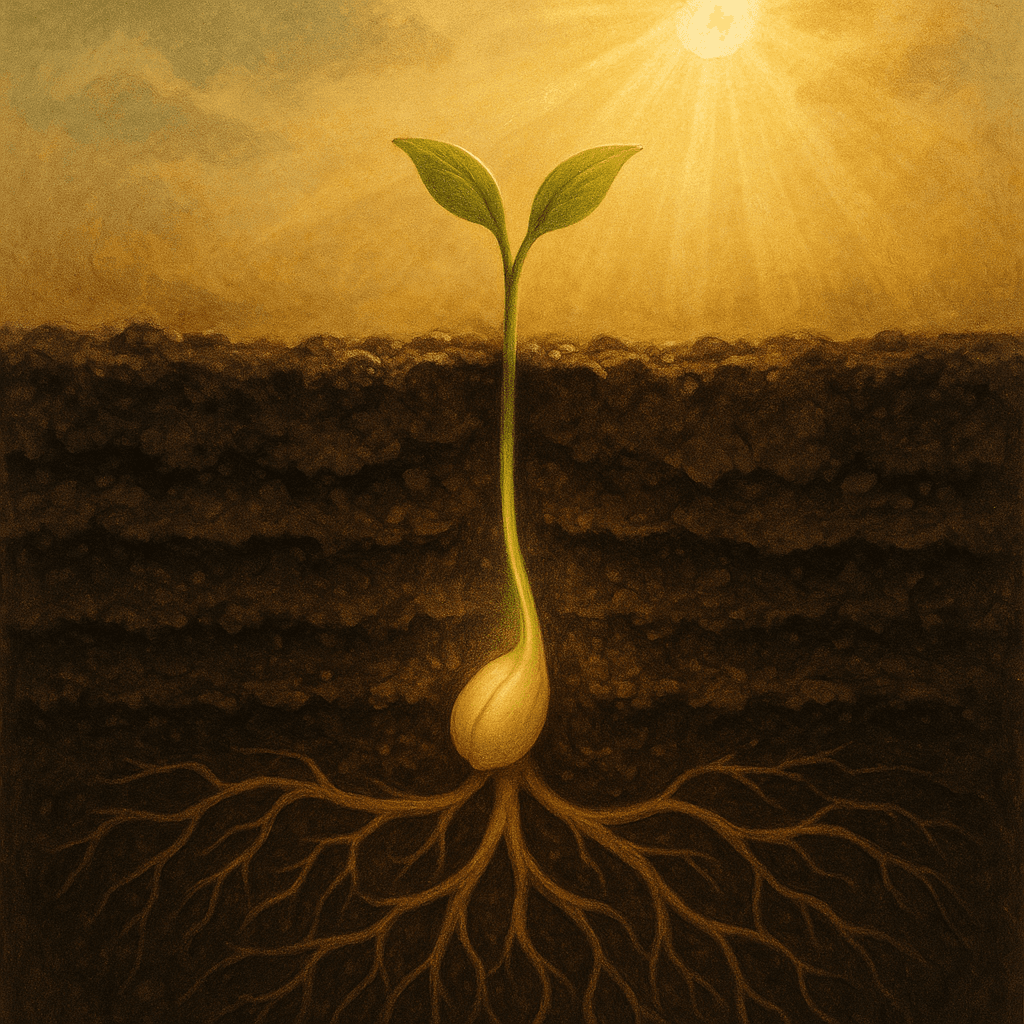
Growth whispers softly in the language of perseverance. — Chimamanda Ngozi Adichie
—What lingers after this line?
Growth as a Gentle Transformation
At the core of Adichie’s observation lies the idea that growth rarely announces itself with fanfare. Instead, progress often occurs in small, almost imperceptible increments. This quiet transformation might be overlooked, yet it accumulates power over time—gradually reshaping an individual’s skills, character, or worldview.
Perseverance as the Unseen Engine
Flowing from this notion is the understanding that perseverance acts as the engine behind enduring change. Rather than grand gestures, it is the patient, repeated effort that moves us forward. As in Maya Angelou’s autobiography, ‘I Know Why the Caged Bird Sings’ (1969), small daily acts of resilience gradually enable transformation, even amid adversity.
Quiet Persistence in Everyday Life
Expanding on this, the language of perseverance is neither loud nor boastful. Its presence can be observed in the student who reviews material one more time, the artist who refines a draft for weeks, or the activist who refuses to abandon a cause despite setbacks. Their steady actions often go unnoticed, but each repetition cements growth more deeply.
Cultural and Personal Resonance
Furthermore, Adichie’s Nigerian heritage and her literary works repeatedly highlight perseverance as a cultural and personal force. In her novel ‘Half of a Yellow Sun’ (2006), characters endure political and personal upheaval through sustained courage. This illustrates how perseverance, though quiet, is a powerful catalyst for both survival and flourishing within communities.
Embracing Subtlety in Self-Development
Ultimately, recognizing growth means embracing its nuanced, subtle nature. In a world that prizes quick results, Adichie’s words remind us that self-improvement often arises from persistence rather than dramatic breakthroughs. By listening for these ‘soft whispers’ of perseverance in our own lives, we learn to appreciate the profound, gentle power of true growth.
Recommended Reading
As an Amazon Associate, we earn from qualifying purchases.
One-minute reflection
What's one small action this suggests?
Related Quotes
6 selectedMake today the workshop where your best self is assembled piece by piece. — Chimamanda Ngozi Adichie
Chimamanda Ngozi Adichie
Chimamanda Ngozi Adichie’s line turns “today” from a deadline into a worksite: a place where something is being made. Instead of waiting for a future version of life to begin, she suggests the present is where constructi...
Read full interpretation →We make progress by turning intentions into habits and habits into change. — Chimamanda Ngozi Adichie
Chimamanda Ngozi Adichie
Adichie’s line traces a clear arc: resolve is not enough until it crystallizes into repeatable behavior. This advances a classic problem in psychology—the intention–behavior gap—where good aims stall without structure.
Read full interpretation →When you feel like quitting, remember why you started. But more importantly, remember that the work does not care how you feel. — Steven Pressfield
Pressfield’s line begins where many self-improvement slogans end: with the reminder to reconnect to your original purpose. Remembering why you started can reignite motivation, especially when progress feels slow or invis...
Read full interpretation →It is not the critic who counts; not the man who points out how the strong man stumbles. The credit belongs to the man who is actually in the arena. — Theodore Roosevelt
Roosevelt draws an immediate line between observation and participation, arguing that commentary alone is not the measure of character. The “critic” may be eloquent, even accurate about mistakes, yet still remains safely...
Read full interpretation →You are built not to shrink down to less but to blossom into more. — Oprah Winfrey
Oprah Winfrey
Oprah Winfrey’s line hinges on a vivid contrast: “shrink down” suggests self-erasure, caution, and living smaller than one’s nature, while “blossom into more” evokes organic growth—slow, embodied, and inevitable when con...
Read full interpretation →If you want to change the fruits, you will first have to change the roots. Stop fixing the symptoms and start healing the source. — T. Harv Eker
T. Harv Eker
T. Harv Eker’s metaphor is straightforward: the “fruits” are the visible outcomes of your life—money, health, relationships, work performance—while the “roots” are the hidden drivers beneath them, such as beliefs, habits...
Read full interpretation →More From Author
More from Chimamanda Ngozi Adichie →Your job is not to be likable. Your job is to be yourself. — Chimamanda Ngozi Adichie
Adichie’s line begins by stripping away a common social bargain: if you act agreeable enough, you’ll be accepted. By saying your job is not to be “likable,” she points to how easily a person can become an employee of oth...
Read full interpretation →Make today the workshop where your best self is assembled piece by piece. — Chimamanda Ngozi Adichie
Chimamanda Ngozi Adichie’s line turns “today” from a deadline into a worksite: a place where something is being made. Instead of waiting for a future version of life to begin, she suggests the present is where constructi...
Read full interpretation →Let curiosity be your compass and effort your map. — Chimamanda Ngozi Adichie
Taken together, the compass-and-map metaphor suggests a repeatable rhythm. First, you ask a real question that matters to you; next, you try something concrete; then you reflect on the results and adjust.
Read full interpretation →Claim the small truths you live by; they become the maps for others. — Chimamanda Ngozi Adichie
Adichie’s line begins with an intimate proposition: the “small truths” you live by—quiet convictions, daily choices, personal boundaries—are not minor at all. They are the substance of character, formed in the unglamorou...
Read full interpretation →