
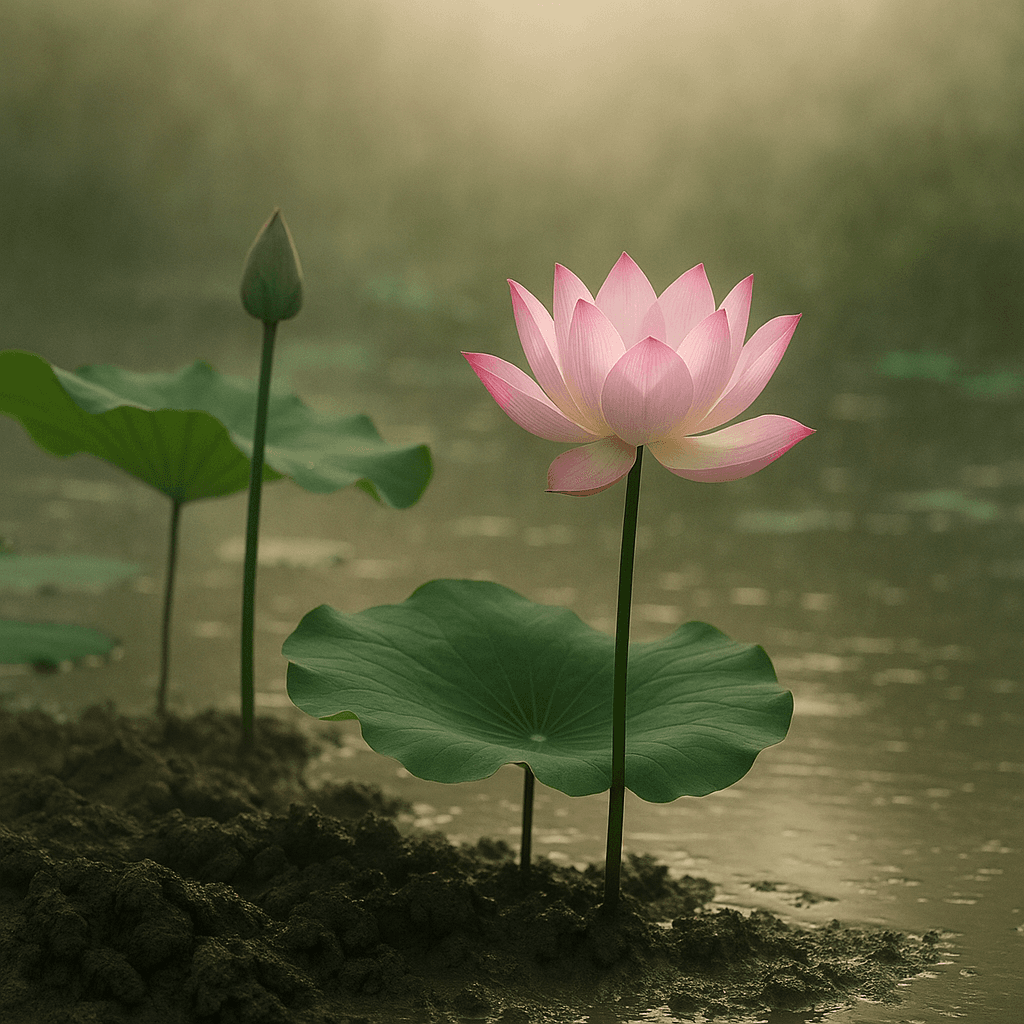
The lotus does not bloom without the mud. — Indian Proverb
—What lingers after this line?
Symbolism of the Lotus and the Mud
The Indian proverb draws upon the evocative imagery of the lotus flower, renowned for its beauty and purity. Yet, its pristine petals emerge only from muddy, murky waters. This pairing symbolizes the necessity of adversity for the emergence of true grace or success. Without the struggle and darkness symbolized by the mud, the beauty of the lotus—representing realization, virtue, or enlightenment—remains unattainable.
Roots in Eastern Philosophy and Spirituality
Transitioning from botanical symbolism to philosophical meaning, this proverb is deeply ingrained in Hindu and Buddhist thought. Both traditions use the lotus to signify spiritual awakening achieved through perseverance in the face of suffering. For instance, Buddhist scriptures often describe wisdom as blooming from life’s difficulties, much as the lotus overcomes swampy origins to reach the sunlight. The mud, therefore, is not an obstacle but a prerequisite.
Resilience Through Adversity
Building upon this spiritual foundation, the proverb highlights the transformative power inherent in hardship. Just as the lotus develops its strength drawing nutrients from the mud, individuals often acquire resilience and wisdom by navigating challenging circumstances. Contemporary psychology echoes this theme—post-traumatic growth research shows that people frequently emerge stronger and more capable after periods of personal struggle (Tedeschi & Calhoun, 2004).
Anecdotes Across Cultures
Similar motifs appear across cultures. In Japanese art, for instance, the practice of kintsugi—the repairing of broken pottery with gold—celebrates flaws and adversity as integral to beauty. Such shared ideas reinforce the universality of the lotus metaphor, suggesting that every society recognizes the value of overcoming obstacles as a means to achieve true distinction and depth of character.
Practical Wisdom for Everyday Life
In daily life, this proverb inspires patience and perspective. During moments of difficulty, the imagery of the lotus reminds us that struggles are not merely to be endured but embraced as sources of growth. By reframing setbacks as the ‘mud’ necessary for our eventual ‘bloom,’ individuals can foster a sense of hope and persistence—qualities essential for navigating the complexities of modern existence.
One-minute reflection
What's one small action this suggests?
Related Quotes
6 selectedMountains don’t rise without earthquakes. — Indian Proverb
Indian Proverb
This proverb suggests that significant progress or greatness often emerges from hardship or disruption.
Read full interpretation →Every flower must grow through dirt. - Anonymous
Unknown
This quote suggests that beautiful and positive outcomes often arise from difficult, challenging, or less-than-ideal beginnings. Just as a flower must push through soil to blossom, people often need to endure hardships b...
Read full interpretation →In the midst of difficulty, there lies opportunity. - Albert Einstein
Albert Einstein
This quote encourages a positive outlook even during challenging times. It suggests that difficulties often come with hidden opportunities if one is willing to look for them.
Read full interpretation →Adversity is the mother of progress. — Mahatma Gandhi
Mahatma Gandhi
This quote implies that facing hardships and challenges is a key driver of growth and progress. It is through adversity that individuals and societies are forced to innovate, adapt, and improve.
Read full interpretation →The old skin has to be shed before the new one can come. — Joseph Campbell
Joseph Campbell
Joseph Campbell’s image of old skin being shed before new skin can appear turns personal growth into something vivid and bodily. At its core, the quote suggests that renewal is not simply about adding better habits or br...
Read full interpretation →We don't develop courage by being happy in our relationships every day. We develop it by surviving difficult times and challenging adversity. — Epicurus
Epicurus
At first glance, Epicurus seems to challenge the common belief that healthy relationships are defined by uninterrupted happiness. Instead, he points to a deeper truth: courage is not formed in comfort, but in the moments...
Read full interpretation →More From Author
More from Indian Proverb →The person who has many desires is poor; the person who is content is rich. — Indian Proverb
The proverb begins by redefining poverty and wealth as inner conditions rather than bank balances. Someone with “many desires” is described as poor because longing creates a constant sense of lack, even when possessions...
Read full interpretation →The lotus does not hesitate to bloom even in the muddiest waters. — Indian Proverb
The proverb highlights the ability to thrive and flourish despite challenging or unpleasant circumstances.
Read full interpretation →Mountains don’t rise without earthquakes. — Indian Proverb
This proverb suggests that significant progress or greatness often emerges from hardship or disruption.
Read full interpretation →The silk thread of hope is woven into every fiber of adversity. — Indian Proverb
The Indian proverb likens hope to a silk thread running through the fabric of difficulty, emphasizing their inseparable connection. Even when life’s challenges seem overwhelming, a subtle resilience—hope—remains present.
Read full interpretation →