
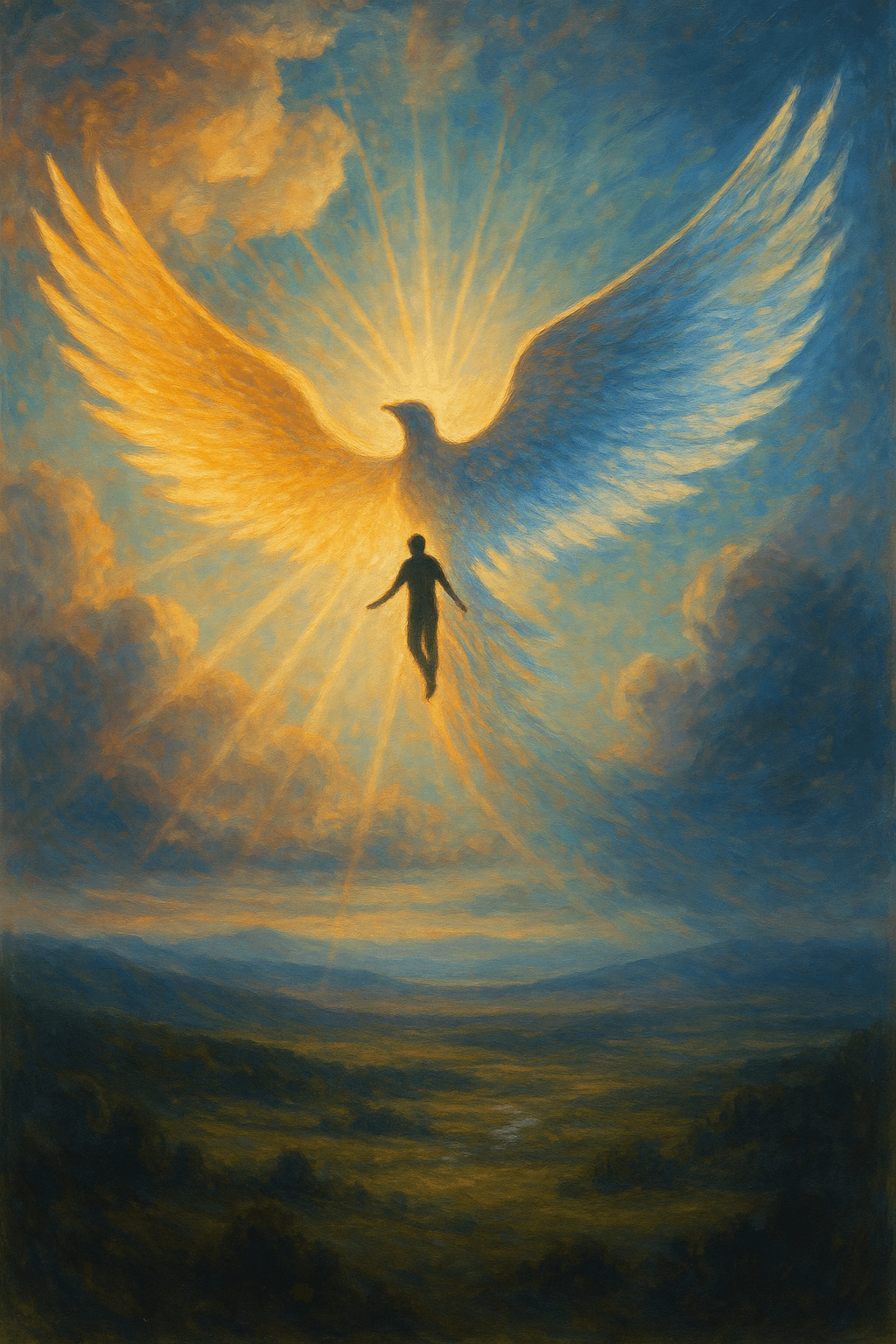
To soar in the air you need two wings: one is courage, the other is imagination. — Mehmet Murat ildan
—What lingers after this line?
The Metaphor of Flight
Mehmet Murat ildan’s image of soaring relies on the symbolism of flight, a universal metaphor for personal growth and achievement. By invoking wings, he evokes freedom and elevation—states often associated with transcendence and breaking boundaries. Flight represents the ability to rise above limitations, suggesting that true progress demands more than mere desire; it requires concrete qualities that propel us upward.
Courage: The Drive to Take Off
Transitioning from metaphor to action, courage emerges as the wing that initiates movement. Many historic figures, such as Amelia Earhart, demonstrated that venturing into the unknown demands boldness. Without courage, even the grandest ambitions remain earthbound. It is the quality that allows individuals to face risk, discomfort, and failure, launching them into new challenges with determination.
Imagination: The Vision to Navigate
Yet, courage alone is not sufficient. Here, imagination provides the essential counterpart. As seen in the creative leaps of innovators like Leonardo da Vinci, the ability to envision possibilities turns raw bravery into purposeful motion. Imagination carves out the path in the sky; it enables dreamers to see not what is, but what could be, guiding courageous efforts with vision and direction.
Interdependence of Courage and Imagination
Moreover, it is the interplay between courage and imagination that enables true flight. Consider the Wright brothers, who not only dreamed of flying machines but also dared to build and test them. Their story illuminates how imagination generates daring ideas, while courage undertakes the struggle of transforming visions into reality. Without both wings, aspirations remain grounded, hindered by fear or limited vision.
Applying the Lesson to Everyday Life
Ultimately, ildan’s metaphor extends beyond personal ambitions to everyday life. Whether embarking on a new career, pursuing creative passions, or forging relationships, every leap forward relies on the balance of fearless action and inventive thought. By nurturing both qualities, individuals invite growth and innovation into their lives, ensuring their journey is not just upward, but also guided and meaningful.
One-minute reflection
What does this quote ask you to notice today?
Related Quotes
6 selectedTo be courageous is to act with the heart. — Molière
Molière
Molière’s line suggests that courage is not merely the absence of fear, but the decision to move despite it. By connecting courage with the heart, he frames bravery as an emotional and moral act rather than a simple disp...
Read full interpretation →The best people possess a feeling for beauty, the courage to take risks, the discipline to tell the truth, the capacity for sacrifice. — Ernest Hemingway
Ernest Hemingway
Hemingway’s line presents goodness not as politeness or success, but as a demanding inner code. The “best people” are those who combine sensitivity, bravery, honesty, and self-denial—qualities that do not always coexist...
Read full interpretation →If you are not willing to look stupid, nothing great is ever going to happen to you. — Julia Cameron
Julia Cameron
Julia Cameron’s remark begins with a hard truth: many people do not fail because they lack talent, but because they fear embarrassment. In that sense, ‘looking stupid’ becomes shorthand for being seen trying, stumbling,...
Read full interpretation →You don't have to bully yourself out of feeling fear. You just have to move while it's still there. — Annie Wright
Annie Wright
At its core, Annie Wright’s quote challenges the common belief that courage begins only after fear has disappeared. Instead, it reframes fear as something that can accompany action rather than prevent it.
Read full interpretation →For what matters in life is not whether we receive a round of applause; what matters is whether we have the courage to venture forth despite the uncertainty of acclaim. — Amor Towles
Amor Towles
At its core, Amor Towles shifts attention away from public approval and toward private resolve. The quote argues that a life’s value is not determined by applause—those visible signs of recognition—but by the willingness...
Read full interpretation →Confidence doesn't mean being fearless. It means creating, even when your hands shake. — Lisa Golightly
Lisa Golightly
At first glance, Lisa Golightly’s quote overturns a common myth: that confident people move through life without fear. Instead, she presents confidence as action taken in spite of fear, not in the absence of it.
Read full interpretation →More From Author
More from Mehmet Murat ildan →If you enter a noisy street and add noise to it, you are doing an ordinary thing! If you want to do something extraordinary, add calm to the chaos! — Mehmet Murat İldan
At first glance, Mehmet Murat İldan’s remark turns a simple observation into a moral challenge. Anyone can amplify disorder in a loud, frantic world; that requires little imagination or discipline.
Read full interpretation →If you want to be useful to others, you must put yourself first; relieve your fatigue, become stronger, clear your mind, and revitalize your body. — Mehmet Murat Ildan
At first glance, Ildan’s statement may sound selfish, yet it quickly reveals a deeper ethic of responsibility. He argues that usefulness to others does not begin with self-sacrifice alone, but with self-maintenance.
Read full interpretation →