
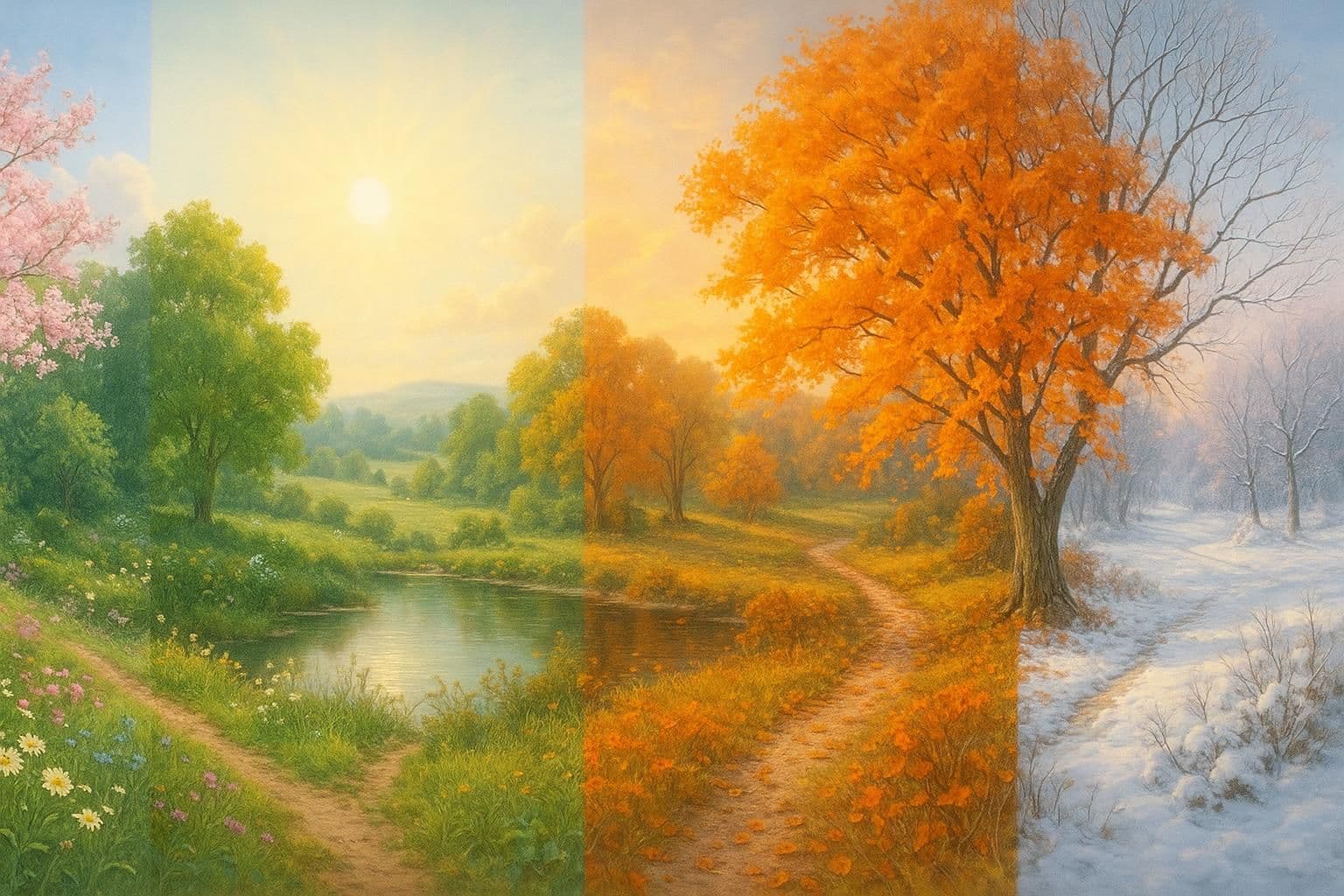
The pleasure we derive from journeys is perhaps dependent more on the mindset with which we travel than on the destination we travel to. — Alain de Botton
—What lingers after this line?
The Importance of Perspective in Travel
Alain de Botton’s observation invites us to reconsider what truly shapes our travel experiences. Instead of focusing solely on picturesque destinations or famous landmarks, de Botton underscores the influence of our attitudes and expectations. Whether entering a bustling city or a secluded village, the state of mind we bring can transform even the most mundane journey into a source of delight.
Historical Reflections on the Traveler’s Mind
Throughout history, thinkers have echoed the sentiment that perspective shapes experience. For example, Montaigne in his 'Essays' (1580) suggested that one who travels with curiosity discovers wonders everywhere, whereas a restless mind finds dissatisfaction even in paradise. This perspective suggests that cultivating openness and awareness is more powerful than the lure of distant places.
Modern Psychology and the Power of Mindfulness
Transitioning into contemporary psychology, mindfulness research supports de Botton’s idea. Studies published in journals like 'Mindfulness' highlight that travelers who remain present and attentive report greater satisfaction, regardless of where they go. Even seemingly minor details—a street musician’s melody or the way sunlight strikes a wall—can become sources of pleasure for those attentive to the present moment.
Anecdotes from Everyday Explorers
Personal anecdotes further illustrate this principle. Many seasoned travelers recall moments when unexpected train delays or unplanned detours led to meeting locals or discovering hidden gems. Rather than lamenting an imperfect itinerary, those who embrace adaptability and openness often recount their most meaningful experiences from these unanticipated moments.
Reframing Our Goals as Travelers
Ultimately, de Botton’s perspective encourages us to shift our focus from collecting destinations to nurturing a traveler’s mindset. Rather than obsessing over bucket-list sites, we find richer rewards by approaching each step—whether across continents or through our own neighborhoods—with curiosity, patience, and gratitude. In doing so, the act of journeying itself becomes the destination.
Recommended Reading
As an Amazon Associate, we earn from qualifying purchases.
One-minute reflection
What feeling does this quote bring up for you?
Related Quotes
6 selectedThe soul is a garden; whatever you plant in it will grow. Your thoughts are the seeds of your reality. — Sister Shivani
Sister Shivani
Sister Shivani’s metaphor begins with a simple but powerful image: the soul is not a fixed object but a living garden. In that sense, the inner self is always receiving impressions, storing tendencies, and responding to...
Read full interpretation →Gratitude is not a passive emotion; it is an active discipline that changes the chemistry of your day. — Mel Robbins
Mel Robbins, United States.
At first glance, gratitude can seem like a warm but temporary emotion, something that appears when circumstances go well. Mel Robbins’ quote challenges that assumption by defining gratitude as a discipline—an intentional...
Read full interpretation →If you focus on results, you will never change. If you focus on change, you will get results. — Jack Dixon
Jack Dixon
At first glance, Jack Dixon’s statement seems counterintuitive because most people are taught to chase outcomes directly. Yet his insight reverses that instinct: results are usually the visible consequence of deeper habi...
Read full interpretation →The soul becomes dyed with the color of its thoughts; treat yours with gentle care. — Marcus Aurelius
Marcus Aurelius
Marcus Aurelius frames the mind as something porous, capable of taking on the tint of whatever it repeatedly holds. In his *Meditations* (c.
Read full interpretation →Defeat is a state of mind; no one is ever defeated until defeat has been accepted as a reality. — Bruce Lee
Bruce Lee
Bruce Lee frames defeat not as an external event but as an internal judgment. Losing a match, missing an opportunity, or being outperformed may be factual outcomes, yet he argues they don’t automatically become “defeat”...
Read full interpretation →Empty pockets never held anyone back. Only empty heads and empty hearts can do that. — Norman Vincent Peale
Norman Vincent Peale
Norman Vincent Peale’s line begins by stripping poverty of its assumed power: “Empty pockets never held anyone back.” In other words, lacking money can be a condition, but it doesn’t have to be a verdict. By reframing fi...
Read full interpretation →More From Author
More from Alain de Botton →Anxiety is just the imagination working overtime, and most of that overtime is completely unpaid. — Alain de Botton
At first glance, Alain de Botton’s remark frames anxiety with disarming humor: the mind behaves like an overworked employee, generating scenarios, rehearsing disasters, and collecting no reward for the effort. By calling...
Read full interpretation →If you want to move forward, you must first give yourself permission to stand still. Perspective is often the result of stopping long enough to actually see. — Alain de Botton
At first glance, Alain de Botton’s line seems contradictory: how can standing still help us move forward? Yet that tension is precisely his point.
Read full interpretation →Intimacy is the capacity to be rather weird with someone – and finding that that's okay with them. — Alain de Botton
At first glance, Alain de Botton’s remark shifts intimacy away from grand declarations and toward something quieter: the freedom to reveal one’s oddities without fear. In this view, closeness is not built on flawless com...
Read full interpretation →A good half of the art of living is resilience. — Alain de Botton
Alain de Botton’s remark reframes resilience not as a heroic extra, but as a basic life skill. By saying that a good half of the art of living consists in resilience, he implies that much of human flourishing depends les...
Read full interpretation →