
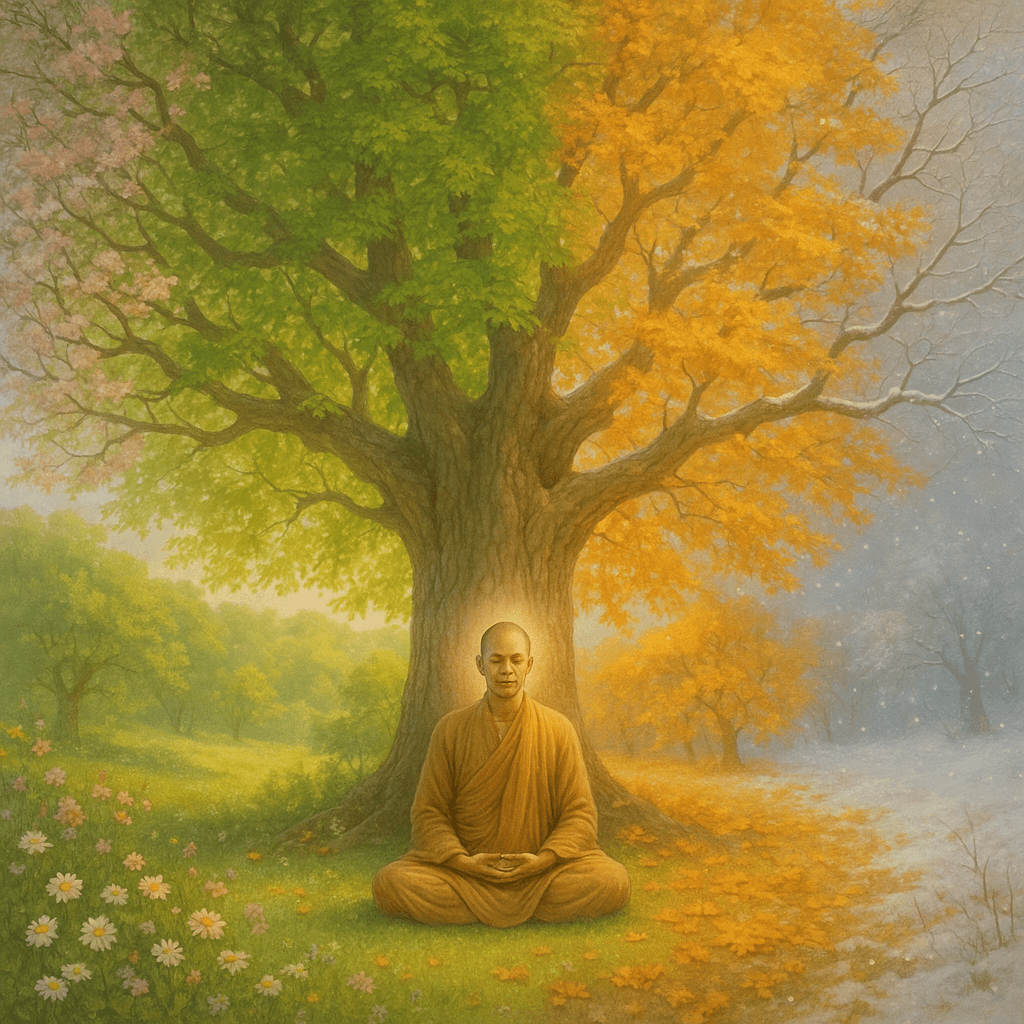
The greatest art is to sit, wait, and let it come. — Yogi Bhajan
—What lingers after this line?
Embracing Stillness as a Creative Force
Yogi Bhajan’s assertion that 'the greatest art is to sit, wait, and let it come' challenges the modern obsession with constant productivity. Rather than pushing relentlessly, he elevates the act of stillness—suggesting that insight, inspiration, and even life’s answers often emerge only when we make space for them. This approach is not about passivity, but about deliberate patience.
Patience in Artistic and Spiritual Traditions
Throughout history, many artistic and spiritual traditions have echoed this wisdom. For instance, in Zen Buddhism, the practice of zazen (seated meditation) centers on quieting the mind so that clarity and creativity can arise naturally. Similarly, Leonardo da Vinci reputedly spent hours simply observing, allowing ideas to simmer until they coalesced into masterpieces. These examples show that waiting actively, in a receptive state, can be deeply generative.
The Paradox of Non-Striving
This principle introduces a paradox: sometimes, striving too intently blocks the very outcomes we seek. The Tao Te Ching advocates 'wu wei'—action through non-action—asserting that the natural flow of events often brings the best results. By letting go of the urge to force solutions, we invite them to emerge organically, much as seeds sprout in their own time, not when we tug at them.
Modern Psychology and Flow States
Modern psychology offers further insight into the relationship between patience and creativity. Mihaly Csikszentmihalyi’s concept of 'flow' describes a state where one’s skills and challenges harmonize perfectly, but attaining flow often requires periods of frustration, reflection, and waiting for inspiration. Recognizing when to pause and trust the process is as integral as the effort itself.
Applying Stillness in Daily Life
Ultimately, Yogi Bhajan’s wisdom extends beyond the artist’s studio or meditation cushion. In daily life—whether making decisions, solving problems, or nurturing relationships—moments of quiet patience can unlock deeper understanding. By learning to sit, wait, and allow things to unfold, we cultivate resilience and openness, transforming waiting itself into an art form that enriches every area of our existence.
Recommended Reading
As an Amazon Associate, we earn from qualifying purchases.
One-minute reflection
What feeling does this quote bring up for you?
Related Quotes
6 selectedPatience is not passive waiting; it is the courage to stand in the middle of a process and trust that the bloom is coming. — Mary Oliver
Mary Oliver
At first glance, patience is often mistaken for mere delay or resignation, yet Mary Oliver overturns that assumption immediately. In her view, patience is not passive waiting but an active inner stance: a decision to rem...
Read full interpretation →Patience is the ability to be present with your own heart. — Pema Chödrön
Pema Chödrön
Pema Chödrön’s line shifts patience from something we perform for the outside world into something we practice within. Instead of merely “waiting well” while life changes, patience becomes the willingness to stay close t...
Read full interpretation →Anything worth having is worth waiting for, and everything worth doing is worth doing with patience. — Confucius
Confucius
At its core, this saying ties value to delay. Confucius suggests that truly meaningful things do not arrive instantly; instead, they ask us to endure uncertainty, effort, and time.
Read full interpretation →To move forward, you must first give yourself permission to be still. — Yung Pueblo
Yung Pueblo
At first glance, Yung Pueblo’s line seems contradictory: how can stillness help us move forward? Yet that tension is precisely the point.
Read full interpretation →The digital age made us forget the value of slow accumulation. Of craftsmanship. Of skills that require years to refine. But that value has not disappeared. It is waiting for those willing to cultivate it. — Zat Rana
Zat Rana
At first glance, Zat Rana’s observation captures a defining tension of modern life: digital culture rewards immediacy, visibility, and constant output. In a world of instant downloads, rapid feedback, and algorithmic tre...
Read full interpretation →Stillness reveals what noise hides. — Marcus Aurelius
Marcus Aurelius
At its core, Marcus Aurelius’ line suggests that silence is not emptiness but a way of seeing. In the rush of constant chatter, distraction, and reaction, important truths are often drowned out.
Read full interpretation →More From Author
More from Yogi Bhajan →