
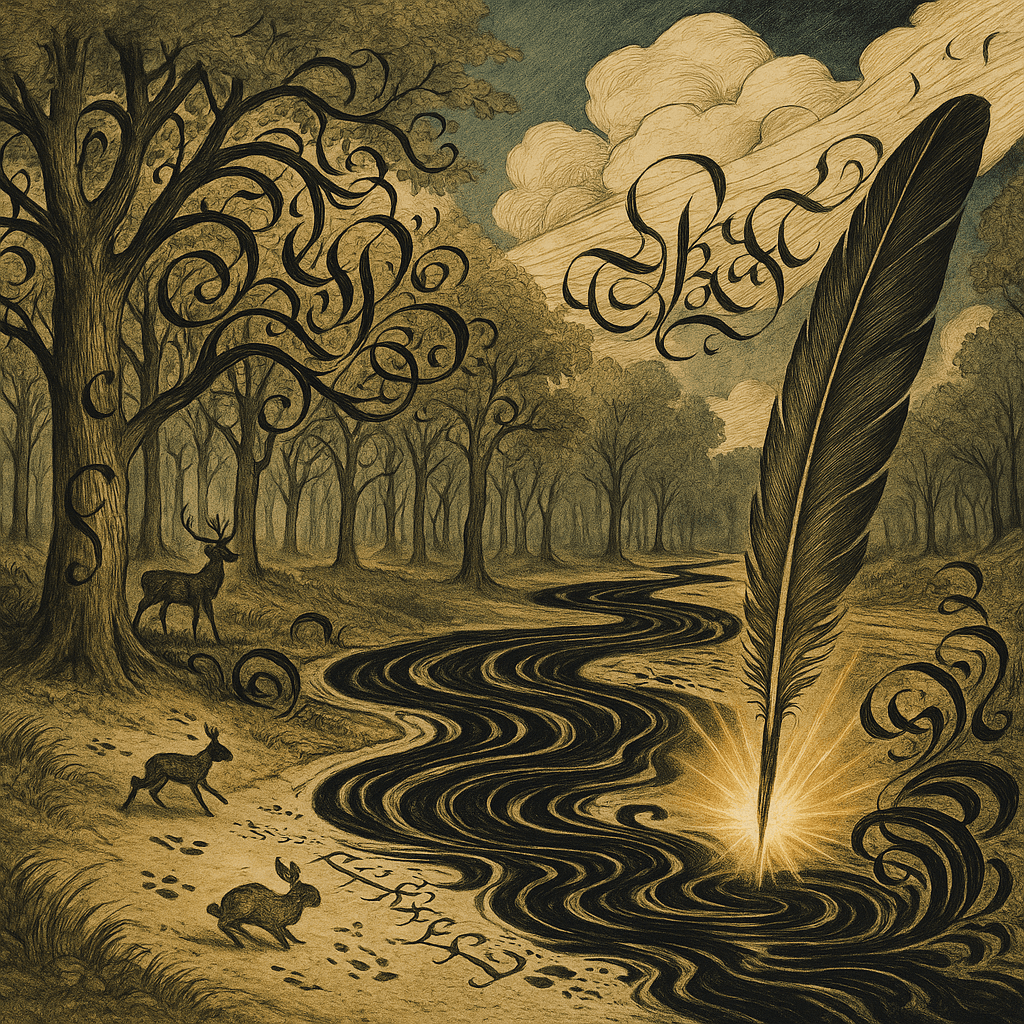
To hold a pen is to be at war. — Voltaire
—What lingers after this line?
Voltaire and the Power of the Written Word
Voltaire’s succinct statement likens writing to a form of combat, suggesting that every time one picks up a pen, they engage in a struggle—not with swords, but with ideas. In 18th-century France, Voltaire faced fierce opposition from religious and political authorities for his satirical and often radical writings. His quip encapsulates the dangerous potency of the pen, which throughout history has challenged conventions and incited change.
Words as Weapons Against Oppression
Building on Voltaire’s perspective, writers have long wielded words to battle social injustice and tyranny. For instance, Harriet Beecher Stowe’s novel 'Uncle Tom’s Cabin' (1852) profoundly influenced attitudes toward slavery in America, fueling abolitionist movements. Such texts serve as ammunition in larger cultural wars, demonstrating that written arguments and stories can undermine oppressive systems more effectively than brute force.
The Risks Faced by Writers
Transitioning from influence to consequence, the ‘war’ of writing often exacts a steep price. Throughout history, authors and journalists have faced censorship, imprisonment, or even exile for their works. Voltaire himself was imprisoned in the Bastille and later exiled for his writings. These risks exemplify the very real hazards inherent to wielding the pen in contentious times.
Contemporary Echoes: Writing in the Digital Age
Today, Voltaire’s metaphor endures amidst the rapid spread of information online. Journalists mapping corruption, bloggers critiquing governments, and everyday citizens exposing injustices on social media all continue the tradition of fighting with words. The digital world amplifies both the reach and the risks of this intellectual battlefield, as seen in contemporary cases of online harassment or government crackdowns on dissenting voices.
Writing as a Catalyst for Progress
Ultimately, the persistent warfare Voltaire describes drives societal evolution. Throughout centuries, the pen has toppled dogmas, challenged dictatorships, and given a voice to the silenced. Just as wars on physical battlefields shape nations, the never-ending struggle played out on pages—literal and virtual—shapes minds and, in turn, the course of history.
Recommended Reading
As an Amazon Associate, we earn from qualifying purchases.
One-minute reflection
Where does this idea show up in your life right now?
Related Quotes
6 selectedWe realize the importance of our voices only when we are silenced. — Malala Yousafzai
Malala Yousafzai
This quote highlights how people often take the freedom to speak for granted until it is taken away. Being silenced reveals just how vital it is to have a voice in society.
Read full interpretation →Man cannot remake himself without suffering, for he is both the marble and the sculptor. — Alexis Carrel
Alexis Carrel
The quote implies that personal growth and change require conscious effort and pain.
Read full interpretation →Freedom is the right to tell people what they do not want to hear. — George Orwell
George Orwell
The quote defines real freedom as the ability to express unpopular or uncomfortable opinions.
Read full interpretation →To write means to struggle with ideas, and to fight what is alien inside us. — Chimamanda Ngozi Adichie
Chimamanda Ngozi Adichie
Chimamanda Ngozi Adichie’s reflection frames writing not as a tranquil act, but as a courageous confrontation with the ideas that stir within us. Every blank page becomes a battlefield where known beliefs encounter unfam...
Read full interpretation →Words want to be free, and stories want to be told. — Chimamanda Ngozi Adichie
Chimamanda Ngozi Adichie
Chimamanda Ngozi Adichie’s statement begins with the assertion that ‘words want to be free.’ This personification suggests that language itself inherently resists confinement. Throughout history, from the censored verses...
Read full interpretation →No person is your friend who demands your silence, or denies your right to grow. — Alice Walker
Alice Walker
At the outset, Alice Walker’s line sets a bright line: friendship is incompatible with enforced quiet or stunted potential. True companions make room for your voice and the changes that voice produces over time.
Read full interpretation →More From Author
More from Voltaire →Perfection is attained by slow degrees; it requires the hand of time. — Voltaire
Voltaire’s remark begins with a quiet correction to human impatience: perfection is not seized in a moment but approached step by step. By saying it is attained “by slow degrees,” he frames excellence as a process of acc...
Read full interpretation →Appreciation is a wonderful thing. It makes what is excellent in others belong to us as well. — Voltaire
At first glance, Voltaire’s remark seems simple, yet it contains a generous idea: when we truly appreciate another person’s excellence, we do not merely observe it from a distance—we participate in it. Admiration becomes...
Read full interpretation →To my wonderful family, I'm so grateful for every moment we share. — Voltaire
At first glance, this line reads like a brief note of thanks, yet its emotional power comes from how directly it ties gratitude to shared life. By addressing ‘my wonderful family,’ the speaker does more than praise relat...
Read full interpretation →Originality is nothing but judicious imitation. — Voltaire
At first glance, Voltaire’s remark seems self-defeating: how can originality come from imitation? Yet his point is subtler than it appears.
Read full interpretation →