
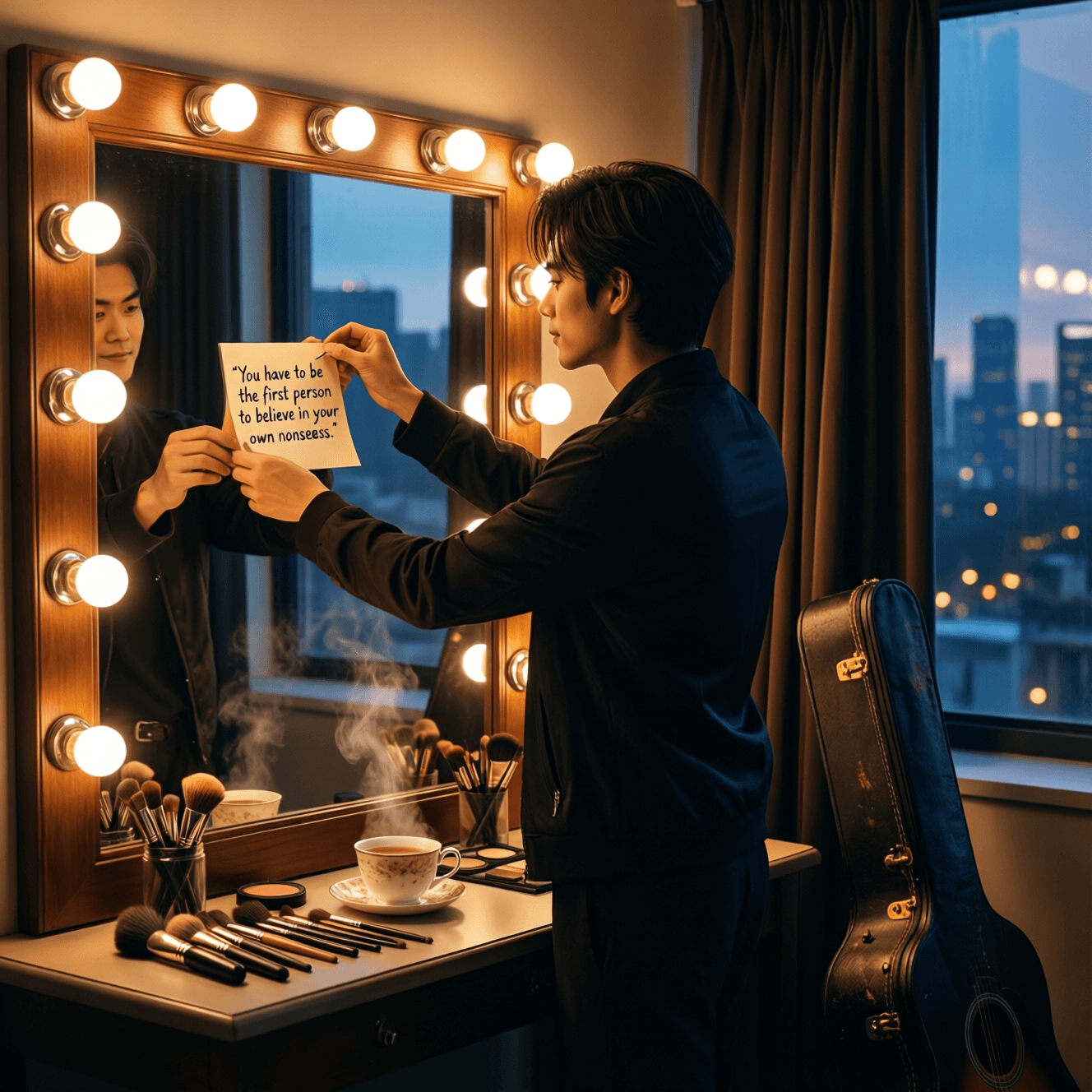
You have to be the first person to believe in your own nonsense. — Dolly Parton
—What lingers after this line?
A Provocative Word for a Practical Truth
Dolly Parton’s line startles on purpose: calling your dream “nonsense” punctures the solemnity that often surrounds ambition. Yet the joke carries a serious instruction—if your idea sounds improbable, that is exactly when belief becomes a job, not a mood. In other words, confidence is not something you wait to earn after applause; it’s something you supply before the world agrees. This framing also hints at an uncomfortable reality: many worthwhile projects begin as stories only one person can see. By admitting the possibility of “nonsense” up front, Parton clears space for experimentation, where conviction can coexist with uncertainty.
Self-Belief as the First Investment
From there, the quote reads like an entrepreneurial rule: before anyone invests money, time, or reputation, someone must invest belief. That initial commitment is often invisible—early mornings, small stages, rejected drafts—and it functions as the proof of seriousness when external proof is unavailable. This is why Parton’s advice is not mere positivity. It treats belief as a resource you allocate deliberately, the way an artist allocates hours to practice. Only after that internal investment does it become plausible for others to risk their own support.
Selling a Vision Before It Looks Sensible
Next comes the social dimension: people usually evaluate ideas by what already resembles success. A new sound, a new product, or a new career move can feel “nonsensical” simply because it lacks precedent in the observer’s experience. Believing first is how you bridge that gap long enough for results to emerge. Parton’s broader career offers an implied anecdote—building a distinctive persona and songwriting voice that could have been dismissed as too bold or too playful. The point is not that confidence guarantees admiration, but that without it, the vision never survives long enough to be understood.
The Psychology of Commitment and Momentum
Psychologically, the quote aligns with the idea that small acts of commitment reinforce identity over time. As you keep showing up, the brain updates the story: “I’m someone who does this,” which then makes future effort less dependent on fleeting motivation. In that sense, believing your “nonsense” is a way to stabilize behavior until skill and evidence catch up. At the same time, the line warns against outsourcing your self-concept to other people’s reactions. External validation arrives late—if it arrives at all—so internal validation becomes the mechanism that carries you through the quiet middle.
Confidence Without Delusion
Even so, Parton’s humor leaves room for humility. Believing in your own “nonsense” doesn’t mean refusing feedback; it means refusing premature dismissal. The healthy version is a two-track approach: you protect the core dream while constantly testing methods, learning, and revising. This is the difference between conviction and delusion. Conviction says, “This matters and I’ll work for it,” while delusion says, “This is true without work or evidence.” Parton’s phrasing nudges you toward the first: strong belief paired with the grind that turns unlikely ideas into real outcomes.
Turning the Quote into a Daily Practice
Finally, the quote becomes actionable when translated into routines. You “believe” by taking the next concrete step before you feel ready—writing the song, pitching the project, practicing the skill—because action is what makes belief legible to both you and others. Over time, that repeated choice changes what “nonsense” even means. What once sounded absurd becomes your normal, and the world’s skepticism starts to look less like a verdict and more like background noise. In Parton’s terms, being first to believe is how you give your future a chance to exist.
One-minute reflection
What feeling does this quote bring up for you?
Related Quotes
6 selectedBelieve in yourself and all that you are. Know that there is something inside you that is greater than any obstacle. – Christian D. Larson
Christian D. Larson
This quote emphasizes the importance of believing in one's own abilities and self-worth. It suggests that confidence in oneself is a fundamental key to overcoming challenges.
Read full interpretation →Believe in the magic that is inside you, because what you believe, you become. — Unknown
Unknown
This quote emphasizes the importance of believing in one's own abilities and potential. It suggests that self-belief is a powerful force that can shape one's destiny.
Read full interpretation →Believe in the magic that’s inside you, because what you believe is what you become. — Unknown
Unknown
This quote emphasizes the importance of believing in oneself. It suggests that internal confidence and belief in your abilities can transform your potential into reality.
Read full interpretation →Believe in the magic that is within you. — Unknown
Unknown
This quote encourages individuals to have faith in their own abilities and potential. Believing in oneself is the first step towards achieving great things.
Read full interpretation →Believe in the magic that’s inside you, and it will change the world around you. — Unknown
Unknown
This quote emphasizes the importance of believing in your own abilities and inner potential. It suggests that the key to making a difference in the world starts with self-belief.
Read full interpretation →You are what you believe yourself to be. — Paulo Coelho
Paulo Coelho
This quote emphasizes the power of self-perception and how it shapes one's identity. The way you view yourself significantly influences who you become and how you act in the world.
Read full interpretation →More From Author
More from Dolly Parton →I'm not offended by all the dumb blonde jokes because I know I'm not dumb and I also know I'm not blonde. — Dolly Parton
Dolly Parton’s line works first as a shield: she meets a belittling kind of joke with a sharper joke of her own. Instead of arguing with the premise, she sidesteps it, showing that the insult can’t land where there’s no...
Read full interpretation →I'm not going to limit myself just because people won't accept the fact that I can do something else. — Dolly Parton
Dolly Parton’s statement begins as a clear refusal to outsource her identity to public opinion. Rather than negotiating with other people’s comfort levels, she frames her life as something she authors—choosing action ove...
Read full interpretation →If you see someone without a smile, give them one of yours. — Dolly Parton
Dolly Parton’s line reframes a smile as a gift—portable, renewable, and immediately shareable. Like any small kindness, it operates within a quiet, human gift economy where the value lies not in price but in connection.
Read full interpretation →Find out who you are and do it on purpose. — Dolly Parton
This quote highlights the importance of self-exploration. Knowing who you are means understanding your strengths, weaknesses, passions, and values.
Read full interpretation →