
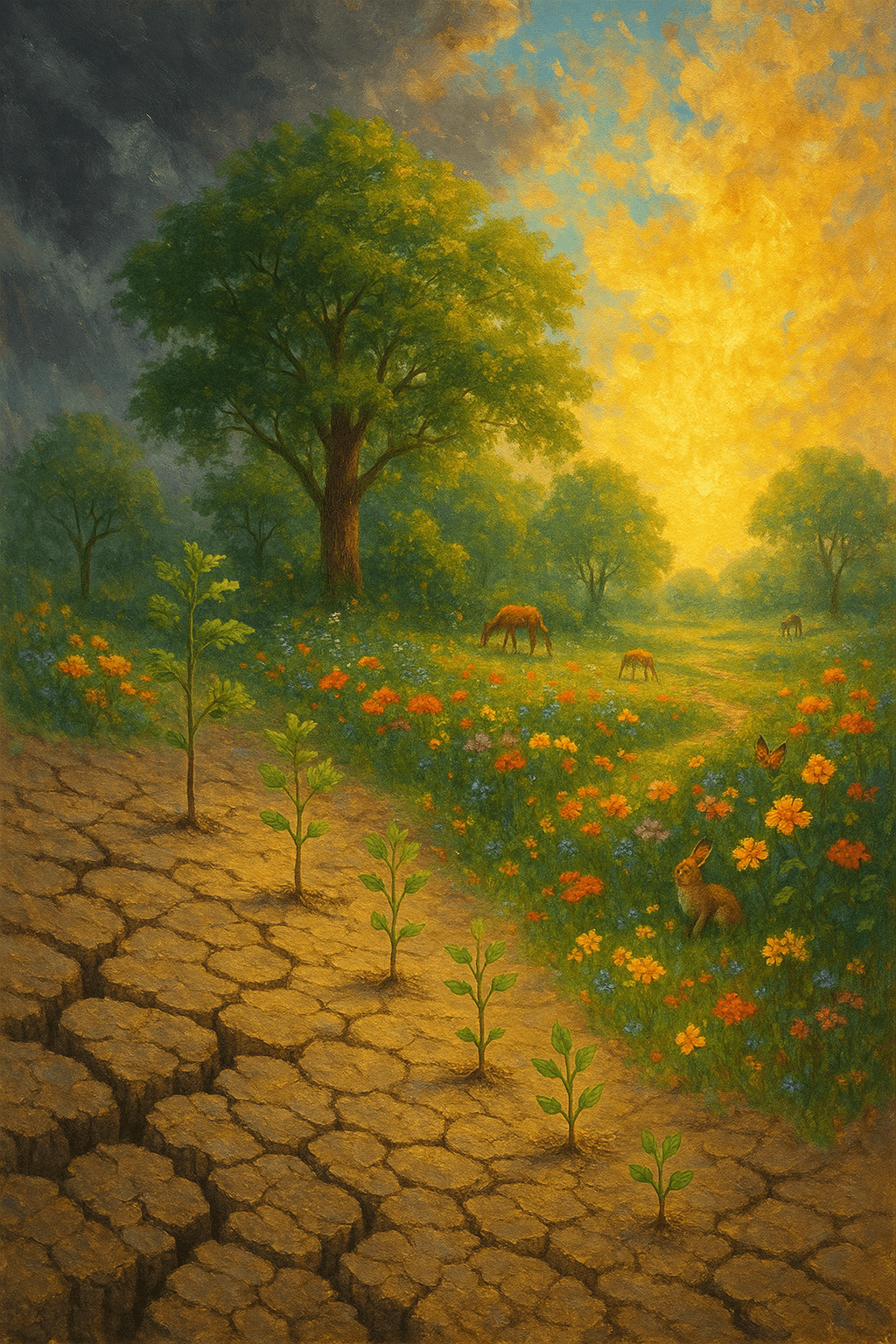
Change is the art of creating the impossible from the seeds of today. — Akira Kurosawa
—What lingers after this line?
Understanding Change as Creative Practice
Akira Kurosawa’s metaphor positions change not as a passive event but as an intentional, artistic act. Like an artist with a blank canvas, he suggests we have the power to transform present realities into extraordinary outcomes. This framing elevates change from mere adaptation to a dynamic process of creative invention, emphasizing our role as active agents in shaping tomorrow.
Seeds of Today: Opportunity in the Ordinary
Transitioning from the broader theory, the ‘seeds of today’ symbolize humble beginnings. Everyday choices, routines, and ideas become the raw material for tomorrow’s transformation. In the spirit of Kurosawa’s own filmmaking—where simple human stories grow into epic narratives—recognizing these seeds means acknowledging the latent potential within ordinary circumstances.
Impossibility as a Motivation
Furthermore, the phrase ‘creating the impossible’ shifts our perception of limits. Instead of barriers, impossibilities become frontiers, inciting innovation. Historical events, such as the moon landing in 1969, demonstrate how collective vision and persistence turn far-flung dreams into reality. Kurosawa’s words invite us to see impossibility as a call to bold action rather than a verdict of defeat.
Artistry Manifested in Change
Continuing, Kurosawa merges artistry with progress. Just as a film director melds disparate elements into a cohesive story, change requires imagination, deliberate choice, and adaptability. His films, like ‘Seven Samurai’ (1954), showcase individuals leveraging what little they have to protect their future—a cinematic mirror of real-life transformation fueled by resourcefulness and hope.
From Vision to Reality: Practical Implications
Ultimately, this perspective carries a vital lesson: the future is an open canvas, painted with today’s intentions and actions. In personal growth, business, or social change, every innovation—no matter how sweeping—begins with a first step. Kurosawa’s wisdom compels us to nurture today’s seeds, trusting that with artistry and persistence, even the most improbable possibilities can blossom into reality.
One-minute reflection
What does this quote ask you to notice today?
Related Quotes
6 selectedThe old skin has to be shed before the new one can come. — Joseph Campbell
Joseph Campbell
Joseph Campbell’s image of old skin being shed before new skin can appear turns personal growth into something vivid and bodily. At its core, the quote suggests that renewal is not simply about adding better habits or br...
Read full interpretation →If seeds in the black earth can turn into such beautiful roses, what might not the heart of man become in its long journey toward the stars? — G.K. Chesterton
G. K. Chesterton
Chesterton begins with a striking contrast: black earth, dark and ordinary, somehow gives rise to roses of astonishing beauty. From that image, he invites us to see human nature in the same light.
Read full interpretation →A blazing fire makes flame and brightness out of everything that is thrown into it. — Marcus Aurelius
Marcus Aurelius
Marcus Aurelius compresses a central Stoic lesson into a vivid image: a strong fire does not merely endure what is cast into it, but transforms it into more flame and light. In that sense, adversity is not just something...
Read full interpretation →It doesn't happen all at once. You become. It takes a long time. — Margery Williams
Margery Williams
Margery Williams’s line from The Velveteen Rabbit (1922) begins with a gentle refusal of sudden change. ‘It doesn’t happen all at once’ suggests that becoming—whether becoming real, mature, or fully oneself—is not an eve...
Read full interpretation →To create is to destroy the old version of yourself that no longer fits the new truth you have found. — Martha Graham
Martha Graham
Martha Graham’s statement presents creativity not as decoration, but as a radical act of inner change. To create something genuine, she suggests, a person must let go of an earlier self—the habits, beliefs, and identitie...
Read full interpretation →Art is a wound turned into light. — Georges Braque
Georges Braque
At its core, Georges Braque’s line suggests that art does not erase suffering; instead, it converts injury into meaning. A wound is intimate, raw, and often hidden, while light is what reveals, guides, and makes things v...
Read full interpretation →More From Author
More from Akira Kurosawa →