
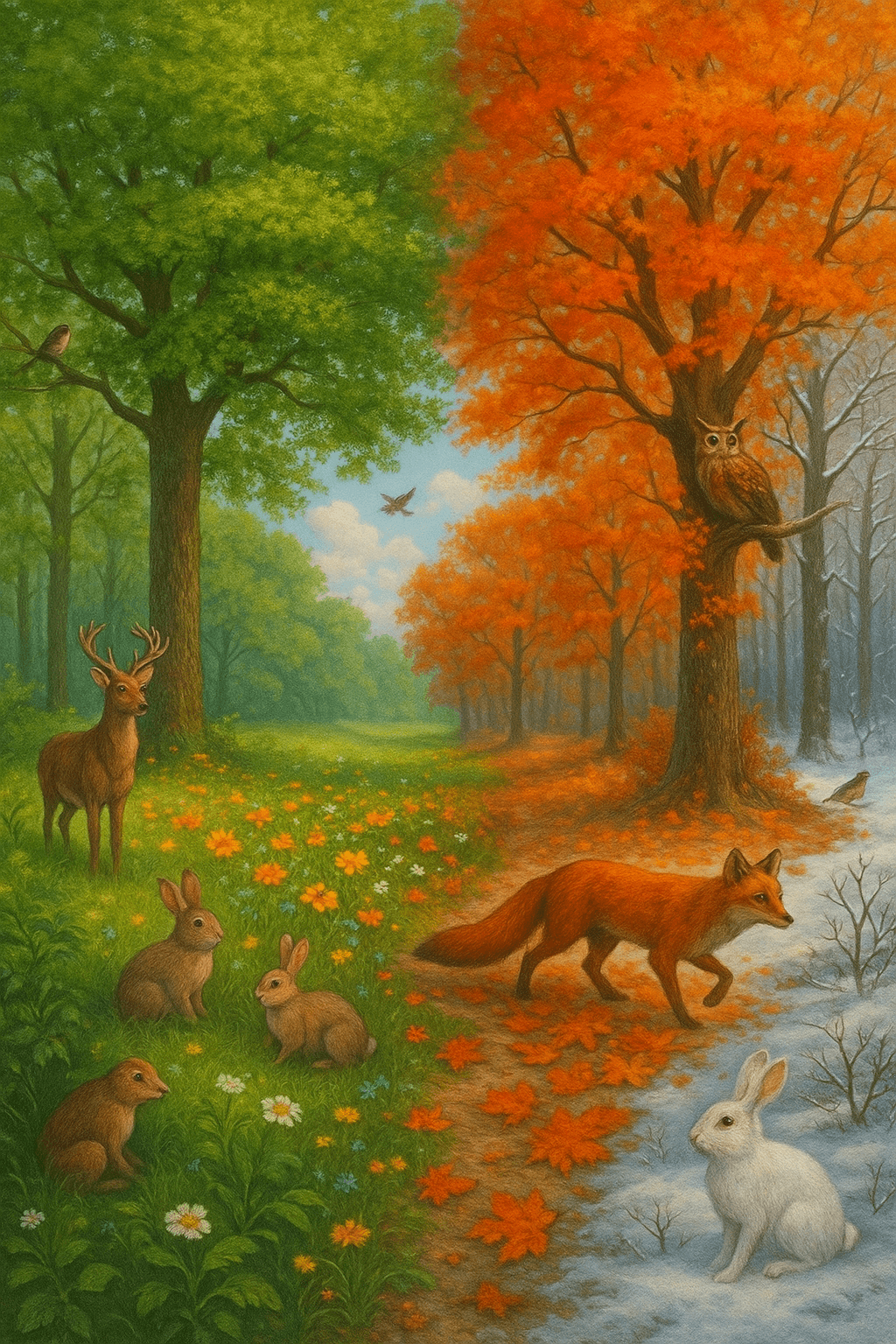
One touch of nature makes the whole world kin. — William Shakespeare
—What lingers after this line?
Nature as a Universal Bond
Shakespeare’s observation that 'One touch of nature makes the whole world kin' points to our shared connection through the natural world. This metaphorical 'touch' suggests that despite differences in culture or circumstance, people resonate on a fundamental level when faced with the wonders and challenges of the natural environment. The sentiment reflects a timeless truth—nature offers a space where human differences can melt away, revealing our essential relatedness.
Historical Resonance of Nature’s Kinship
Throughout history, various cultures have recognized the equalizing effect of nature. For example, ancient storytellers often depicted forests and rivers as places where social hierarchies dissolve. Shakespeare himself, in plays like *As You Like It* (c. 1599), illustrates characters from diverse backgrounds finding common ground in the forest of Arden. These narratives reinforce the concept that nature’s influence makes us collectively human.
Scientific Perspective on Shared Humanity
From a scientific viewpoint, the natural world reveals our common ancestry and interconnectedness. Genetic research, such as the discoveries following the Human Genome Project, shows that humans share the vast majority of their DNA, regardless of geographic or cultural origin. Similarly, ecological studies illustrate how all living beings depend on the same planetary systems for survival, reinforcing Shakespeare’s poetic insight with empirical evidence.
Modern Environmental Movements and Global Unity
In the contemporary era, global challenges like climate change have made nature’s unifying force even more apparent. Activists and leaders often invoke our shared responsibility to protect the earth, transcending national divides. Greta Thunberg’s international climate campaigns, for instance, have mobilized millions based on the simple truth that environmental issues respect no borders—making us, inextricably, kin.
Personal Encounters With Nature’s Connection
On an individual level, experiences in nature can foster immediate empathy among strangers. Whether gathering around a campfire, marveling at a sunset, or weathering a storm together, such moments remind us that we all are subject to the same forces and beauty of the world. Shakespeare’s phrase, then, continues to echo in our daily lives, inviting us to find unity amidst diversity through the gentle, equalizing touch of nature.
One-minute reflection
Where does this idea show up in your life right now?
Related Quotes
6 selectedThere is nothing pleasanter than spading when the ground is soft and damp. — John Steinbeck
John Steinbeck
At first glance, Steinbeck’s line seems almost modest, yet its pleasure is precise and deeply felt. Spading soft, damp ground turns labor into something nearly sensual: the tool enters easily, the earth yields without re...
Read full interpretation →Nature is not only all that is visible to the eye, it also includes the inner pictures of the soul. — Edvard Munch
Edvard Munch
At first glance, Munch’s statement expands the ordinary idea of nature beyond forests, skies, and seas. He argues that nature is not limited to what the eye can measure; it also includes the emotional and imaginative ima...
Read full interpretation →The glory of gardening: hands in the dirt, head in the sun, heart with nature. — Alfred Austin
Alfred Austin
Alfred Austin’s line condenses the appeal of gardening into one vivid scene: the body grounded in soil, the mind lifted by sunlight, and the emotions attuned to the natural world. At once physical and poetic, the quote s...
Read full interpretation →It is not the language of painters but the language of nature which one should listen to. — Pablo Picasso
Pablo Picasso
At first glance, Picasso’s remark challenges the authority of artistic convention. By contrasting ‘the language of painters’ with ‘the language of nature,’ he suggests that art should not merely imitate established techn...
Read full interpretation →Great art picks up where nature ends. — Marc Chagall
Marc Chagall
At its core, Marc Chagall’s remark suggests that art does not compete with nature but continues its unfinished conversation. Nature gives us raw forms—color, light, movement, emotion—while art reshapes them into meaning.
Read full interpretation →Your home is your larger body. It grows in the sun and sleeps in the stillness of the night. — Kahlil Gibran
Kahlil Gibran
At first glance, Gibran transforms the idea of home from a mere structure into something intimate and organic: “your larger body.” In this image, a dwelling is not separate from the person who inhabits it, but an outward...
Read full interpretation →More From Author
More from William Shakespeare →Talk less than you know; have more than you show. — William Shakespeare
At first glance, Shakespeare’s line praises restraint: speak with care, and let your words carry only what is necessary. “Talk less than you know” suggests that wisdom is not proven by constant display, but by the abilit...
Read full interpretation →Screw your courage to the sticking-place. — William Shakespeare
At its core, Shakespeare’s line is a vivid call to steady oneself before decisive action. In Macbeth (c.
Read full interpretation →You do not have to announce your progress to the world. Let your growth be private, your silence be your strength, and your results be your only witness. — William Shakespeare
At its core, this saying praises the discipline of developing without constant display. Instead of broadcasting every ambition, setback, or small victory, it suggests that real growth often happens best in protected spac...
Read full interpretation →We know what we are, but know not what we may be. — William Shakespeare
Shakespeare’s line captures a striking human tension: we feel certain about who we are now, yet remain unable to fully imagine who we might become. At first glance, the statement sounds simple, but it opens a profound ga...
Read full interpretation →