
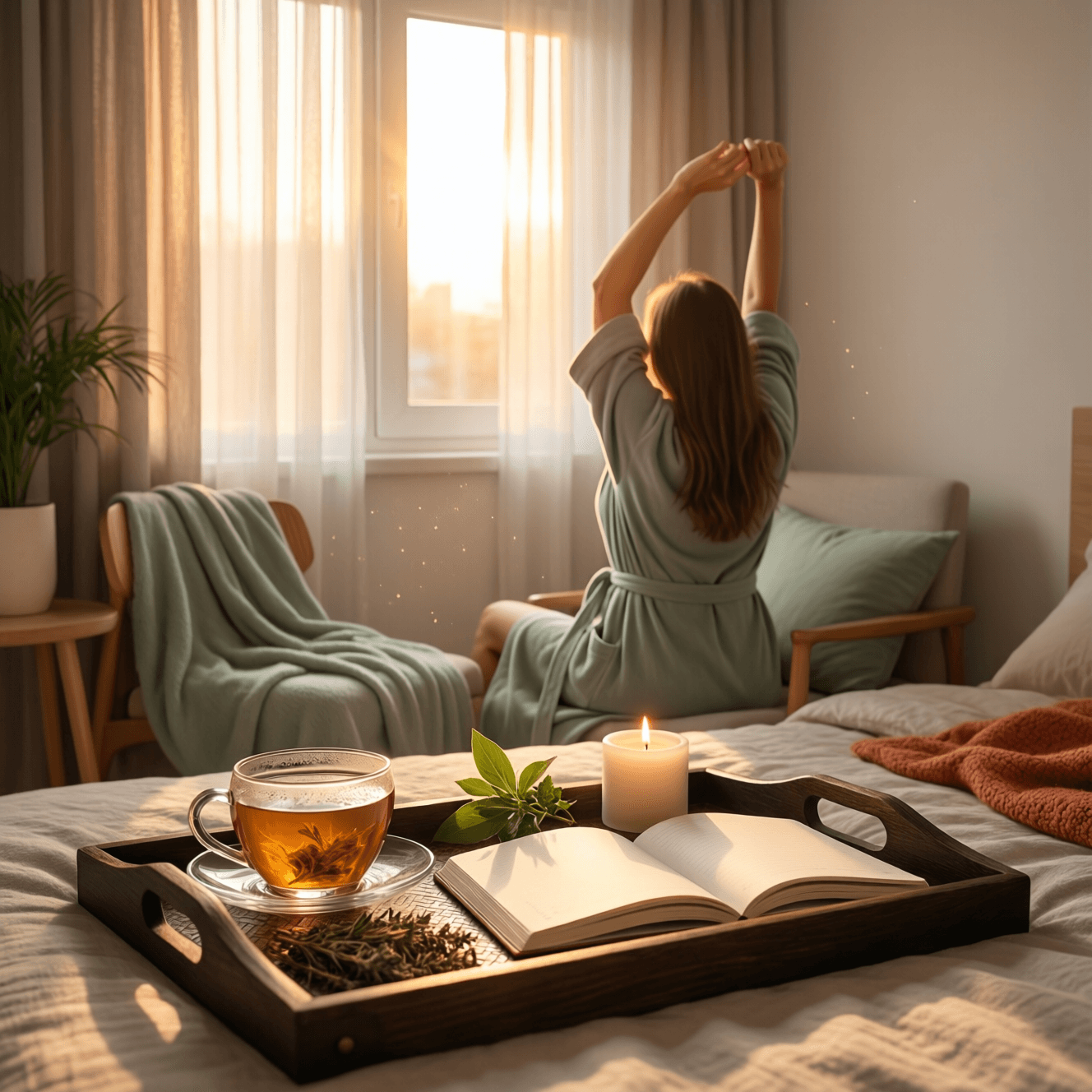
Self-care is how you take your power back. — Lalah Delia
—What lingers after this line?
Reframing Self-Care as Agency
Lalah Delia’s line treats self-care not as pampering but as a deliberate reclaiming of agency. When life feels demanding—work deadlines, family needs, social pressures—our choices can shrink until we’re mostly reacting. In that context, self-care becomes the moment you stop running on other people’s schedules and start making decisions that protect your wellbeing. From there, the quote suggests a subtle shift: power isn’t always seized through big confrontations. Often it’s recovered through small, repeatable acts—sleeping enough, feeding yourself well, asking for help—that restore your capacity to choose what happens next.
Power Lost Through Chronic Depletion
To see why self-care can feel like “taking power back,” it helps to notice how power is often lost: gradually, through depletion. Constant stress narrows attention, increases irritability, and makes even simple tasks feel heavier; over time, you may accept conditions you would otherwise challenge because you don’t have the energy to respond differently. Consequently, self-care is less about escaping reality and more about rebuilding the inner resources needed to meet it. Once you’re not operating from exhaustion, your boundaries become clearer and your choices become less impulsive—both signs that power is returning to your hands.
Boundaries as the Practical Form of Self-Care
Next, self-care often expresses itself as boundaries—the everyday policies you set for your time, body, and attention. Saying “I can’t take that on,” turning off notifications, or declining a last-minute request can feel uncomfortable, especially if you’re used to earning approval through availability. Yet these decisions protect the very space in which your values can live. In that way, boundaries convert a private intention into a public reality. They signal that your needs matter, not as an argument, but as a fact—making self-care a direct method of reclaiming control over how you’re treated and how you spend your life.
Rest and Regulation Restore Choice
However, power is not only social; it is also physiological. Rest, movement, hydration, and moments of quiet help regulate the nervous system, reducing the “fight-flight-freeze” intensity that can make everything feel urgent. When you’re calmer and more rested, you can respond rather than react, which is one of the clearest expressions of personal power. Consider a simple example: a person who sleeps well is more likely to pause before agreeing to an unfair demand, while a person running on four hours of sleep may say yes just to end the conversation. Self-care changes that outcome by restoring choice.
Self-Care as Self-Respect and Identity
Building on that, self-care also communicates self-respect to yourself. The routines you keep—therapy appointments, journaling, preparing meals, taking breaks—become evidence that you are worthy of care even when no one else is watching. Over time, that evidence shapes identity: you begin to see yourself as someone who is allowed to have needs and to meet them. As this identity strengthens, it becomes easier to resist manipulation, guilt, or internalized beliefs that you must sacrifice yourself to be valuable. The power you “take back” is partly the authority to define who you are and what you will no longer tolerate.
From Private Practice to Public Impact
Finally, Delia’s statement hints that reclaimed power doesn’t stay private. When you practice self-care consistently, you show up with clearer thinking, steadier emotions, and more reliable energy—qualities that improve work, relationships, and community involvement. Paradoxically, caring for yourself can make you more available for others in a healthy way, because you’re not giving from emptiness. In the end, self-care is not a retreat from responsibility; it is the foundation for sustainable responsibility. By protecting your wellbeing, you protect your ability to act with intention—and that is what power looks like in daily life.
One-minute reflection
What feeling does this quote bring up for you?
Related Quotes
6 selectedSelf-care is how you take your power back. — Lalah Delia
Lalah Delia
Lalah Delia’s line frames power not as something granted by others, but as something we can recover through daily choices. In this view, self-care is less about indulgence and more about returning to oneself—restoring cl...
Read full interpretation →Caring for myself is not self-indulgence, it is self-preservation. — Audre Lorde
Audre Lorde
Audre Lorde’s statement turns a common accusation on its head: what some call “self-indulgence” may actually be the basic work of staying whole. By drawing a sharp line between luxury and necessity, she insists that care...
Read full interpretation →Caring for myself is not self-indulgence, it is self-preservation. — Audre Lorde
Audre Lorde
Audre Lorde’s line begins by overturning a familiar accusation: that attending to one’s own needs is frivolous or vain. By naming self-care “self-preservation,” she shifts it from the realm of luxury into the realm of ne...
Read full interpretation →Caring for myself is not self-indulgence, it is self-preservation. — Audre Lorde
Audre Lorde
Audre Lorde’s line begins by challenging a common moral reflex: the tendency to treat personal care as a luxury or a guilty pleasure. By rejecting “self-indulgence,” she separates self-care from vanity, consumption, or e...
Read full interpretation →Caring for myself is not self-indulgence, it is self-preservation. — Audre Lorde
Audre Lorde
Audre Lorde’s line begins by correcting a common moral confusion: care for the self is often treated as vanity, softness, or an unnecessary perk. By naming it “not self-indulgence,” she challenges the suspicion that rest...
Read full interpretation →Caring for myself is not self-indulgence, it is self-preservation. — Audre Lorde
Audre Lorde
Audre Lorde’s statement turns a common accusation on its head: what many dismiss as pampering can, in reality, be a necessary act of staying alive. By contrasting “self-indulgence” with “self-preservation,” she draws a f...
Read full interpretation →More From Author
More from Lalah Delia →You teach people how to treat you by what you allow and what you refuse. — Lalah Delia
At its core, Lalah Delia’s quote suggests that treatment is not shaped by words alone, but by repeated patterns of permission and resistance. Every time someone crosses a line and we stay silent, we may unintentionally s...
Read full interpretation →Self-care is how you take your power back. — Lalah Delia
Lalah Delia’s line frames power not as something granted by others, but as something we can recover through daily choices. In this view, self-care is less about indulgence and more about returning to oneself—restoring cl...
Read full interpretation →She remembered who she was and the game changed. — Lalah Delia
The quote emphasizes the transformative power of self-awareness. When the individual recalls their true identity and worth, their entire approach to life shifts.
Read full interpretation →Trust the process, even when you do not understand it. — Lalah Delia
Delia’s quote urges us to release the need for complete understanding and instead trust in the journey itself. This act of surrender does not mean passivity, but rather an acceptance that not every outcome or detour can...
Read full interpretation →