
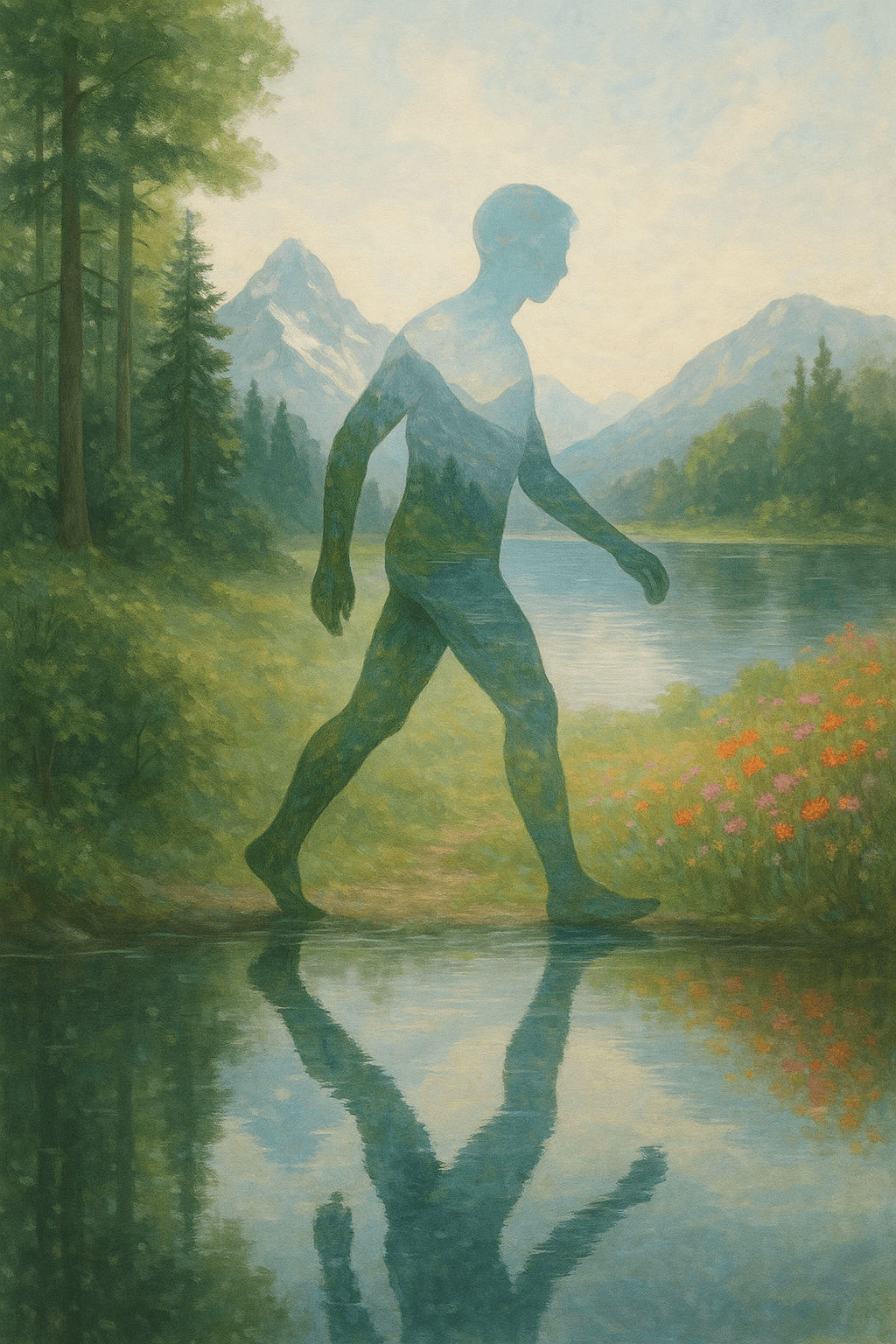
Wherever you go becomes a part of you somehow. — Anita Desai
—What lingers after this line?
The Imprint of Places on Identity
Anita Desai’s words invite us to reflect on how each place we visit becomes a woven thread in the fabric of our identity. Every journey, whether across continents or within our own city, leaves subtle imprints—be it a new worldview, unfamiliar scents, or the memory of local customs. These experiences blend into who we are, much as a traveler accumulates stamps in a well-worn passport.
Memory as a Living Map
This interconnectedness is especially evident in the way memories are catalogued geographically. Psychologists suggest that environments anchor our recollections—recalling the cobblestone streets of Prague may evoke the sounds of distant music and the taste of warm pastry. Places are thus more than locations; they serve as living maps that guide our sense of self through time.
Cultural Encounters and Personal Growth
As we move from one locale to another, encounters with diverse cultures foster empathy and adaptability. For example, Desai herself, through her novels like 'Clear Light of Day' (1980), explores characters whose inner transformations mirror their shifting coordinates. This literary tradition underscores that travel is not mere movement but a process of becoming—taking in and being changed by the unfamiliar.
Nature’s Quiet Influence
Beyond bustling cities and vibrant cultures, even the natural world exerts its influence. Sitting beside a tranquil lake or traversing a dense forest lingers in our subconscious, often resurfacing in dreams or moments of contemplation. Henry David Thoreau’s retreat to Walden Pond exemplifies this phenomenon: nature imprints peace, resilience, or longing onto the soul.
A Tapestry of Experiences
Ultimately, Desai’s quote encapsulates the idea that our identities are rich tapestries woven from all the places we’ve been. Transitioning through life’s varied landscapes, we accumulate not just souvenirs, but perspectives and emotions that shape our future choices. In embracing the mosaic of our journeys, we recognize a profound truth—everywhere we go, we collect fragments of the world, which, in turn, become facets of ourselves.
One-minute reflection
What does this quote ask you to notice today?
Related Quotes
6 selectedI am a part of all that I have met. — Alfred Lord Tennyson
Alfred Lord Tennyson
Tennyson’s line suggests that identity is not sealed within us from birth; rather, it is gradually formed by every person, place, hardship, and joy we encounter. Each meeting leaves a trace, sometimes obvious and sometim...
Read full interpretation →I am not a glitch in the system; I am the system evolving. — Octavia Butler
Octavia Butler
At first glance, Octavia Butler’s line transforms a defensive statement into a declaration of power. To say “I am not a glitch in the system” rejects the idea of being an error, an anomaly, or an inconvenience to the est...
Read full interpretation →The only difference between me and a madman is that I'm not mad. — Salvador Dalí
Salvador Dalí
At first glance, Dalí’s line sounds like a clever contradiction: he claims closeness to a madman while insisting on a decisive difference. Yet that tension is precisely the point.
Read full interpretation →Confidence is knowing who you are and not changing it a bit because someone's version of your reality is not their reality. — Shannon L. Alder
Shannon L. Alder
At its core, Shannon L. Alder’s quote defines confidence not as loudness or display, but as a steady knowledge of one’s own identity.
Read full interpretation →Your personal boundaries protect the inner core of your identity and your right to choices. — Gerard Manley Hopkins
Gerard Manley Hopkins
At its heart, Hopkins’s statement presents personal boundaries as more than social preferences; they are safeguards around the deepest parts of the self. The “inner core” suggests identity, dignity, and private convictio...
Read full interpretation →You walk in the rain and you feel the rain, but, importantly, you are not the rain. — Matt Haig
Matt Haig
Matt Haig’s line begins with an ordinary scene—walking in the rain—then pivots into a psychological distinction: sensation is real, but identity is separate. You can be soaked, cold, and uncomfortable, and none of that c...
Read full interpretation →More From Author
More from Anita Desai →