
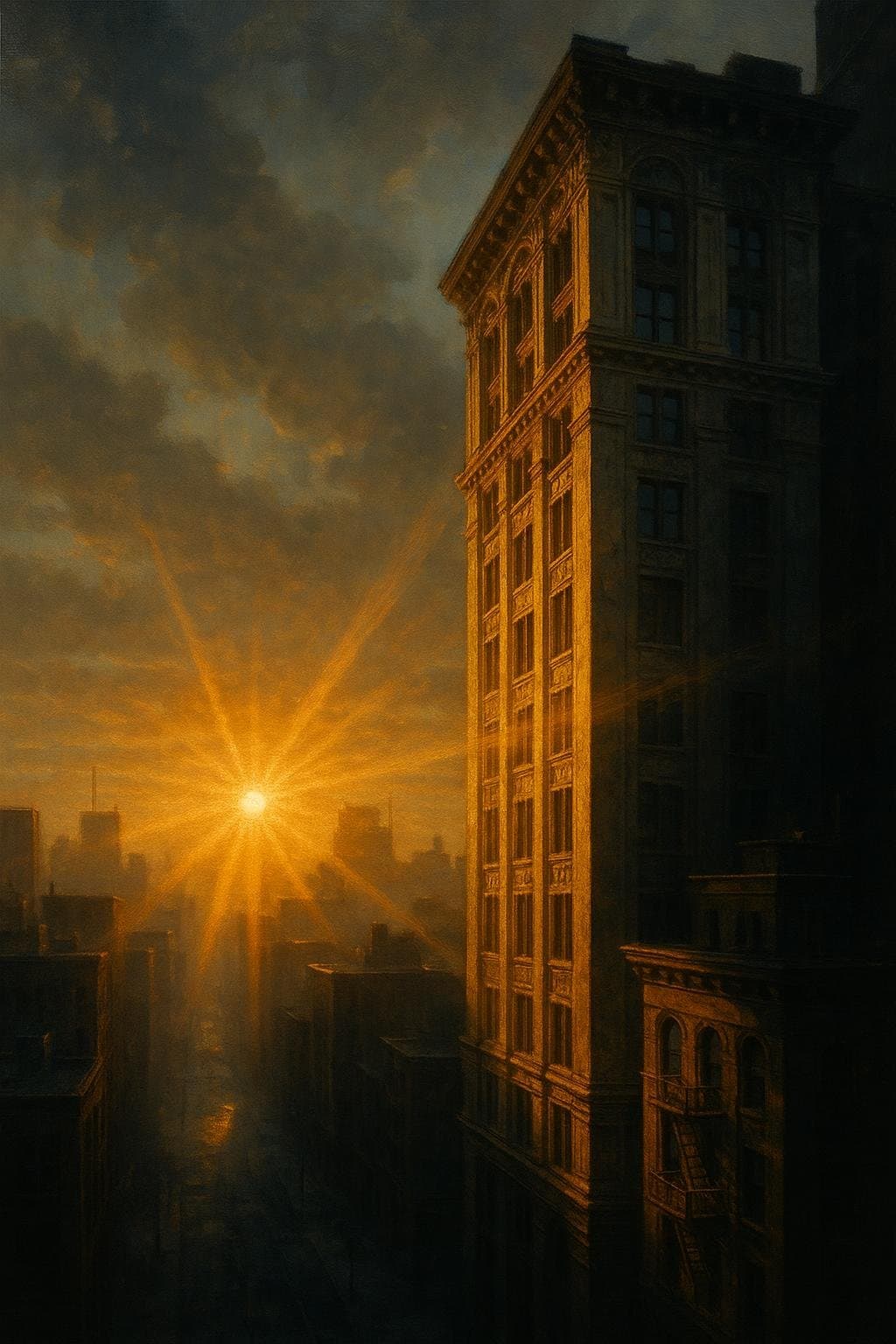
The sun never knew how great it was until it hit the side of a building. — Louis Kahn
—What lingers after this line?
Revelation Through Interaction
Kahn’s remark highlights that potential is often realized through interaction with others or the environment. Light, though powerful in itself, achieves dramatic visual meaning only when cast upon a surface—turning abstraction into something tangible and beautiful. In architecture, this echoes how design brings out the character of both materials and context: for instance, Frank Lloyd Wright’s Fallingwater reveals both nature's vigor and the harmony of constructed space.
Importance of Context and Medium
The quote underlines how greatness is magnified by the context in which it appears. The sun’s rays, otherwise unnoticed in the sky, become visually unforgettable when a building’s wall transforms them into dramatic shadows and colors. Michelangelo’s sculptures similarly gained prominence because their placement in specific churches and squares brought out their full expressive power (Vasari, *Lives of the Artists*).
Mutual Enhancement in Creative Acts
The interaction between sun and building represents how different elements can mutually elevate each other. In music, a melody may be pleasant, but when played with harmony, its beauty is enhanced—Beethoven’s symphonies illustrate how each instrument gains prominence within the whole. Likewise, an architect designs with the understanding that light will animate and define the forms they create.
Self-Realization Through Service
Kahn’s aphorism can be interpreted metaphorically: individuals discover their own strengths and influence through serving or illuminating others. In the novel *To Kill a Mockingbird*, Atticus Finch demonstrates his true integrity and value most clearly when he advocates for Tom Robinson—his virtues become ‘visible’ in the service of justice.
Architecture’s Dependence on Light
Kahn, famed for his luminous spaces such as the Salk Institute, considered light the ‘giver of all presences.’ His buildings are designed to harness and celebrate sunlight, making visible both form and texture. The interplay of sun and structure transforms a simple wall into an artwork with shifting moods and meanings, proving the transformative power of thoughtful design.
One-minute reflection
Where does this idea show up in your life right now?
Related Quotes
6 selectedI am learning to love the sound of my feet walking away from things not meant for me. — A.G.
A.G.
At first glance, A.G.’s line transforms an ordinary sound—one’s own footsteps—into a symbol of inner change. To love that sound is to find beauty not in being chosen, but in choosing oneself.
Read full interpretation →When you honor your time, you honor your value. — Suze Orman
Suze Orman
At its core, Suze Orman’s statement links time to self-respect. To honor your time is not merely to stay busy or organized; rather, it is to recognize that your hours are a finite expression of your life itself.
Read full interpretation →Your worth is not a spreadsheet. You are not a project to be completed, but a life to be experienced. Stop measuring and start breathing. — Anne Lamott
Anne Lamott
Anne Lamott’s quote begins by confronting a habit many people barely notice: treating human value as if it could be tabulated. A spreadsheet symbolizes order, productivity, and comparison, yet it also reduces complexity...
Read full interpretation →The most powerful relationship you will ever have is the relationship with yourself. — Nedra Glover Tawwab
Nedra Glover Tawwab
Nedra Glover Tawwab’s quote places self-relationship at the center of human life, suggesting that every other bond is filtered through the one we have with ourselves. In other words, the way we speak to ourselves, interp...
Read full interpretation →Your life is your own to build. Do not reserve space in your heart for those who do not make an effort to stay. — Angel Chernoff
Angel Chernoff
At its core, Angel Chernoff’s line begins with a declaration of personal agency: your life is yours to shape. Rather than treating identity as something determined by other people’s approval or absence, the quote redirec...
Read full interpretation →Your worth is not a spreadsheet, and your output is not your identity. Protect your energy like it's the only currency you have. — Glennon Doyle
Glennon Doyle
At its core, Glennon Doyle’s statement rejects a modern habit of turning human value into something quantifiable. A spreadsheet can track hours, profits, tasks, and metrics, but it cannot measure dignity, tenderness, res...
Read full interpretation →More From Author
More from Louis Kahn →