
Plant your intentions like seeds, then tend them with honest work. — Pablo Neruda
—What lingers after this line?
Seeds, Soil, and the Shape of Resolve
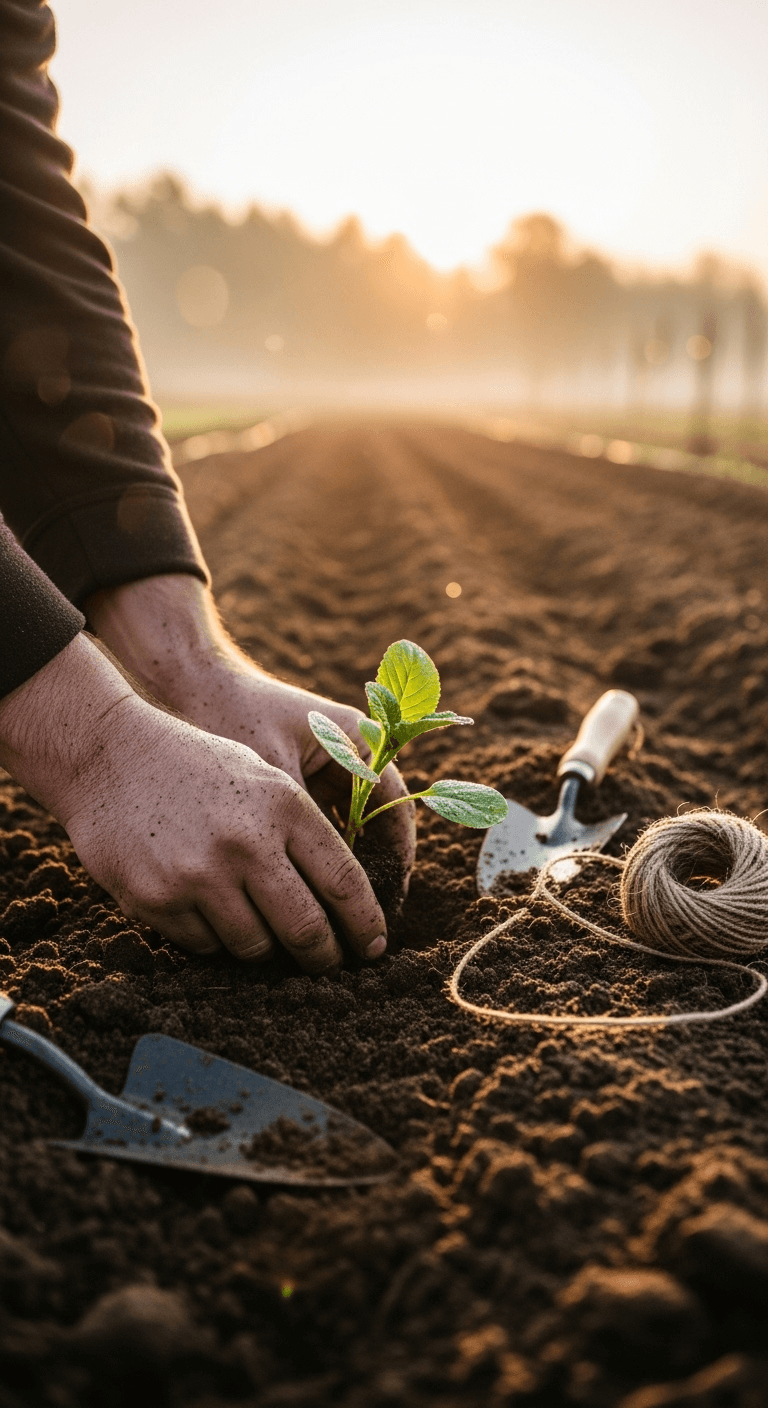
At the outset, the seed image reframes intention as something both fragile and forceful: tiny, yet encoded with form. Planting implies commitment—you place the seed where it can no longer be admired abstractly; it must grow or wither. Likewise, specifying a goal and giving it a real context—time, place, and tools—turns wish into direction. The soil is your environment, the water your daily practice, the sunlight your feedback, and the seasons your patience. In this way, intention stops being a mood and becomes a living project that demands care.
Neruda’s Everyday Odes to Growth and Labor
In Neruda’s world, humble things carry grandeur. His Odas elementales (1954)—including “Oda al tomate” and “Oda a la cebolla”—lift ordinary growth and kitchen labor into lyric ceremony, insisting that attention dignifies work. Earlier, Canto General (1950) sang of earth, miners, and farmers, tying human effort to the continent’s body. This aesthetic of care connects directly to the quote’s second clause: tending. For Neruda, cultivation is not an afterthought but the heart of the matter—where beauty arises from patient, unglamorous consistency.
From Metaphor to Method: Plans That Take Root
Beyond poetry, practical psychology shows how intentions sprout when anchored in concrete cues. Implementation intentions—if-then plans—help seeds of resolve break the surface: “If it’s 7 a.m., then I write 200 words” (Gollwitzer, 1999). Likewise, WOOP—Wish, Outcome, Obstacle, Plan—turns friction into foresight (Oettingen, 2014). Habit stacking builds trellises for growth by linking new actions to stable routines (James Clear, Atomic Habits, 2018). Thus the gardener’s logic becomes a method: plant specifically, water daily, and train the vine to the structure it needs.
The Integrity of Effort: Why Honesty Matters
Moreover, the phrase “honest work” insists on means as much as ends. John Ruskin’s The Seven Lamps of Architecture (1849) praised truth in materials; the same ethic applies to craft, study, or service. Shortcuts may mimic harvests, but they deplete the soil of skill and trust. Self-determination theory suggests that when actions align with one’s values—autonomy, competence, and relatedness—motivation endures (Deci & Ryan, 2000). Honesty, then, is not moral decoration; it is fertility itself, renewing the ground from which future intentions will grow.
Seasons, Patience, and the Art of Pruning
Even so, not every sprout should reach full height. Gardeners prune to strengthen the whole, and so must we cull projects to feed the vital few. The cadence of seasons—sowing, tending, harvesting, fallowing—prevents exhaustion and invites reflection. Kaizen’s small, continuous improvements (Masaaki Imai, 1986) acknowledge growth as a series of subtle tilts, not sudden leaps. Setbacks, meanwhile, can be compost: broken attempts decompose into insight, enriching the next planting. In this rhythm, patience becomes a tool rather than a test.
An Anecdote: The Lemon Tree and a Line a Day
Finally, consider a young translator on Chile’s coast who planted a lemon sapling and a practice: one line rendered each dawn. She tied effort to a cue—coffee’s first aroma—and noted obstacles the night before. Weeks later, the sapling showed its first glossy leaves as her notebook filled with careful drafts; months later, small blossoms appeared as chapters cohered. There was no heroic sprint, only honest work and steady tending. When the first fruit ripened, she pressed its zest over fish and read her finished pages aloud—a quiet harvest, earned in increments.
One-minute reflection
What feeling does this quote bring up for you?
Related Quotes
6 selectedPlant the seeds of your intentions today and tend them with steady hands — Langston Hughes
Langston Hughes
Langston Hughes frames intention not as a passing wish but as something alive—small at first, yet capable of becoming substantial. A seed holds potential, but it also requires placement in the right ground; likewise, an...
Read full interpretation →Striving for success without hard work is like trying to harvest where you haven't planted. — David Bly
David Bly
This quote highlights the inescapable need for hard work when trying to achieve success. Just as a farmer cannot expect to collect crops if they haven't sown seeds, individuals cannot expect results without putting in th...
Read full interpretation →Most people work just hard enough not to get fired and get paid just enough money not to quit. — George Carlin
George Carlin
George Carlin’s line works because it compresses an uncomfortable workplace truth into a clean exchange: employees give just enough effort to remain employed, while employers give just enough compensation to retain labor...
Read full interpretation →Work is not a punishment for man; it is his reward and his strength, his glory and his pleasure. — George Sand
George Sand
George Sand’s statement begins by overturning a familiar complaint: that work is merely a burden imposed on human life. Instead, she recasts labor as something affirmative, even dignifying.
Read full interpretation →Doing the work is the only way to find out if the work is worth doing. — Flannery O'Connor
Flannery O'Connor
Flannery O’Connor’s line turns a common assumption upside down: we often think we must know a task’s value before we begin, yet she argues the opposite. The worth of serious work is rarely visible from a distance.
Read full interpretation →A man at work, making something which he feels will exist because he is working at it and wills it, is exercising the energies of his mind and soul as well as of his body. — William Morris
William Morris
At its core, William Morris presents work not as drudgery but as an act of creation. A person who makes something with the conviction that it will endure is doing more than completing a task; he is shaping reality throug...
Read full interpretation →More From Author
More from Pablo Neruda →Let the rain kiss you. Let the rain beat upon your head with silver liquid drops. — Pablo Neruda
Neruda’s lines open as a gentle imperative: instead of bracing against bad weather, we are asked to welcome it. “Let the rain kiss you” reframes rain as a gesture offered to the body rather than an inconvenience imposed...
Read full interpretation →Build a bridge of resolve and walk across it one brave step at a time. — Pablo Neruda
Neruda’s image begins with a striking implication: resolve is not merely a feeling you wait for, but a structure you build. A bridge doesn’t appear because the river is intimidating; it exists because someone decided to...
Read full interpretation →Let each sunrise find you leaning toward action. — Pablo Neruda
Neruda’s line frames each sunrise as more than scenery; it’s a daily reset that gently pressures us to move. “Leaning” matters because it suggests a posture, not a perfect performance—an inclination toward doing, even be...
Read full interpretation →Make your hands busy with making—words, gardens, music—and life answers back. — Pablo Neruda
Neruda’s line frames creativity less as self-expression and more as initiation: when you keep your hands busy making, you open a channel through which the world can respond. The emphasis on “hands” matters, because it gr...
Read full interpretation →