
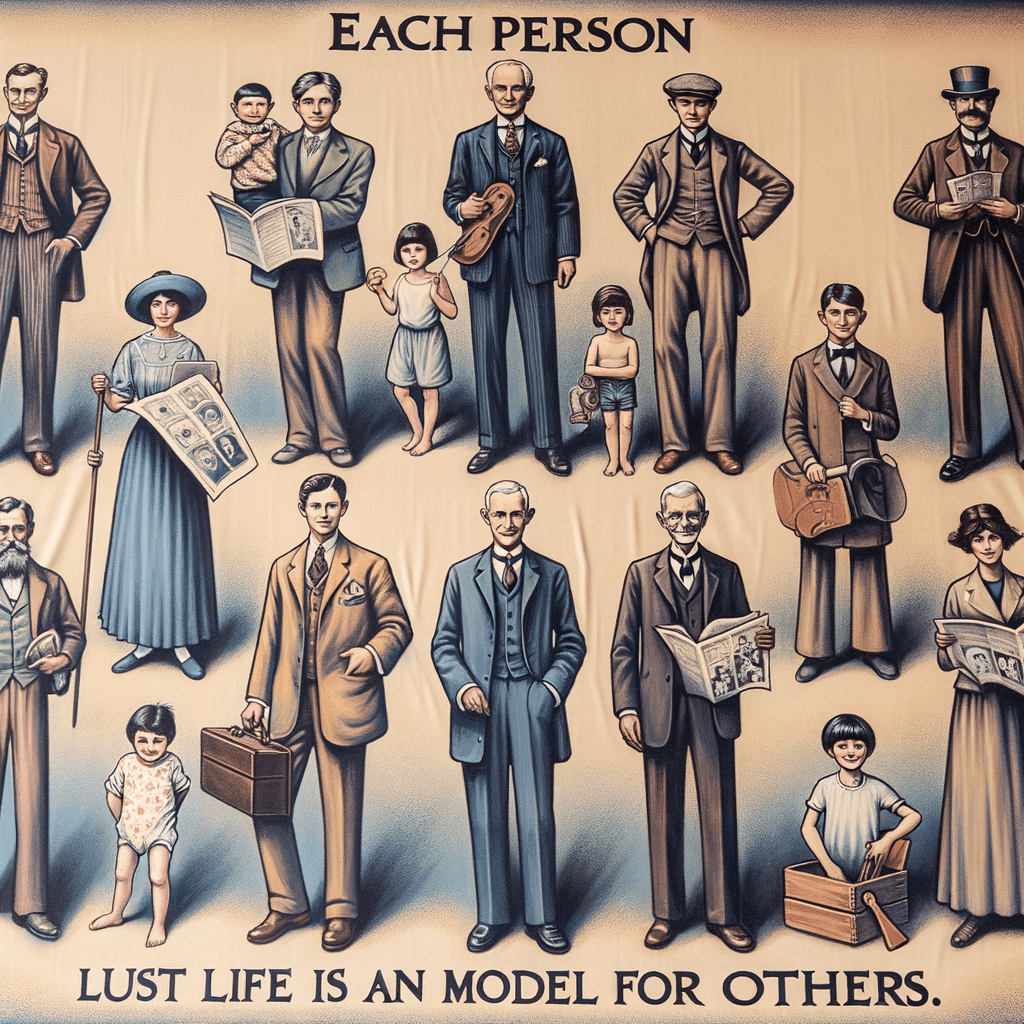
Each person must live their life as a model for others. — Rosa Parks
—What lingers after this line?
Role Model Responsibility
This quote emphasizes the importance of personal responsibility in setting a positive example for others. It suggests that one's actions and behavior can influence and inspire those around them.
Ethical Living
Rosa Parks is highlighting the necessity of living with integrity and moral character. By doing so, individuals contribute to a more ethical and just society.
Impact on Community
The quote underscores the impact one person can have on their community. By leading a life worthy of emulation, an individual can help foster positive change and uplift those around them.
Legacy and Influence
It also speaks to the idea of legacy. The way a person lives their life can leave a lasting impression, inspiring future generations to follow in their footsteps.
Historical Context
Rosa Parks, an iconic figure in the civil rights movement, exemplified these principles through her courageous actions. Her refusal to give up her bus seat to a white person was a pivotal moment in the struggle for racial equality, demonstrating how one individual's actions can serve as a model for others.
One-minute reflection
What does this quote ask you to notice today?
Related Quotes
6 selectedWe are not victims of our impulses or emotions; we have the power to control them. It is time to relinquish the excuses. — Allie Brosh
Allie Brosh
At its core, Allie Brosh’s quote rejects the comforting idea that emotions and impulses are irresistible forces. Instead, it insists that human beings possess agency: the ability to pause, choose, and act deliberately ev...
Read full interpretation →My will shall shape my future. Whether I fail or succeed shall be no man's doing but my own. — Elaine Maxwell
Elaine Maxwell
At its core, Elaine Maxwell’s statement is a declaration of personal agency. By saying that her will shall shape her future, she rejects the idea that destiny is merely handed down by circumstance, luck, or the judgments...
Read full interpretation →You cannot build a life of meaning on a foundation of excuses. Your circumstances are the starting point, not the excuse for staying still. — David Goggins
David Goggins
At its core, David Goggins’s statement redraws the map between hardship and identity. He does not deny that circumstances can be painful, unfair, or limiting; instead, he insists they are only the opening conditions of a...
Read full interpretation →If it is to be, it is up to me. — William H. Johnsen
William H. Johnsen
At first glance, William H. Johnsen’s line compresses an entire philosophy into a few plain words: desired outcomes do not arrive by wish alone, but through personal action.
Read full interpretation →If you want to be successful, you must take 100% responsibility for everything that you experience in your life. — Jack Canfield
Jack Canfield
At its heart, Jack Canfield’s statement argues that success starts when a person stops treating life as something that merely happens to them. To take “100% responsibility” does not mean blaming oneself for every event i...
Read full interpretation →You are not responsible for fixing everything that is broken. You are only responsible for showing up to your own life. — Elizabeth Gilbert
Elizabeth Gilbert
Elizabeth Gilbert’s quote begins by dismantling a common illusion: that a good, caring person must somehow repair every failure, soothe every conflict, and hold together every fraying edge of life. Instead, she draws a b...
Read full interpretation →More From Author
More from Rosa Parks →