
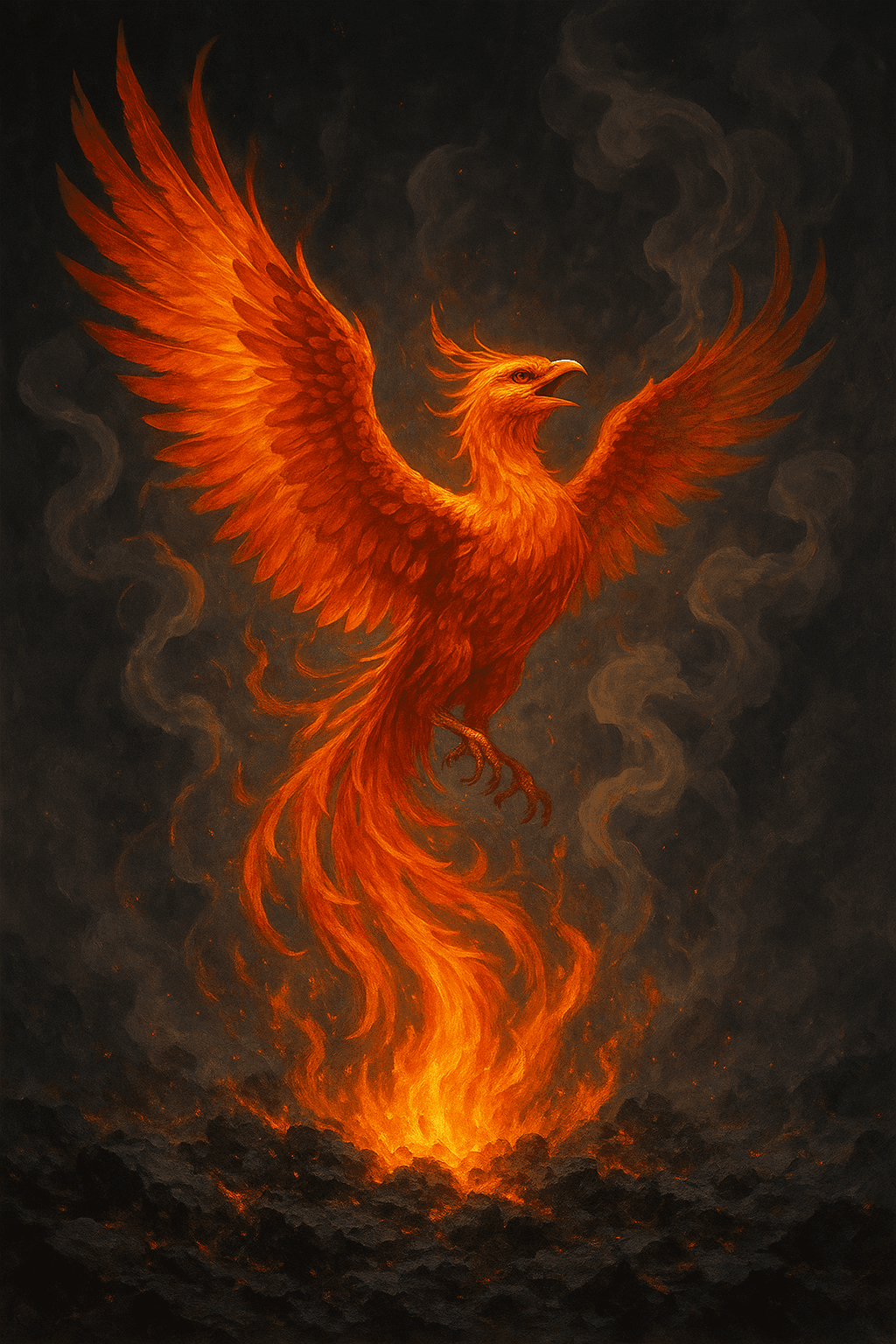
From the ashes of doubt, rises the phoenix of certainty. — Khalil Gibran
—What lingers after this line?
Doubt as a Crucible for Growth
Khalil Gibran’s evocative metaphor positions doubt not as a weakness but as a necessary precursor to clarity. Much like a fire that consumes the old, doubt challenges our existing beliefs, subjecting them to scrutiny and re-evaluation. This process, while often uncomfortable, sets the stage for more enduring and robust convictions to emerge.
The Phoenix: Symbol of Renewal
By likening certainty to a phoenix, Gibran harnesses an ancient symbol of rebirth. The phoenix, a mythical bird that rises anew from its own ashes, represents transformation through destruction. In this context, doubts ‘burn away’ uncertainties, allowing a rejuvenated sense of certainty to be born, stronger and wiser than before.
Philosophical Reflections on Certainty
This idea echoes throughout philosophical history. René Descartes, in his *Meditations* (1641), famously began by doubting everything he believed, only to arrive at his foundational certainty: ‘I think, therefore I am.’ Such philosophical traditions highlight how foundational truths often emerge from a rigorous process of skepticism.
Personal Development Through Uncertainty
Moving from philosophy to personal experience, many individuals find their moments of greatest doubt are often followed by profound breakthroughs. For example, individuals questioning their life path may experience anxiety, but this questioning spurs exploration and, ultimately, deeper understanding and renewed direction.
Embracing Doubt for Enduring Certainty
In conclusion, Gibran’s metaphor invites us to embrace doubt rather than fear it. By engaging with our uncertainties instead of suppressing them, we fuel the transformative fire that gives rise to genuine certainty. Just as the phoenix requires ashes to ascend, our clarity often depends on the trials of doubt we have courageously endured.
One-minute reflection
Why might this line matter today, not tomorrow?
Related Quotes
6 selectedThe seed must die to give birth to the flower. — Kahlil Gibran
Kahlil Gibran
Gibran’s evocative metaphor highlights a profound truth: true creation often necessitates a letting go of former states. Just as the seed must surrender its identity to become a flower, growth in life frequently requires...
Read full interpretation →Nothing causes us to hurt more than our certainties. — George Saunders
George Saunders
George Saunders’ line reframes suffering as something we often manufacture internally rather than merely endure from the outside. Instead of blaming pain on loss, rejection, or misfortune, he points to a subtler culprit:...
Read full interpretation →Starve the need for certainty and feed the appetite for meaning. — Vincent van Gogh
Vincent van Gogh
Vincent van Gogh’s line urges a deliberate reversal of instinct: instead of constantly soothing ourselves with clear, final conclusions, we should loosen our grip and make room for significance. Certainty can feel like s...
Read full interpretation →From the ashes of disaster grow the roses of success. — Napoleon Hill
Napoleon Hill
The quote speaks to the idea that failure or disaster can be a breeding ground for eventual success. Just as roses can grow from ashes, so too can success arise from hardship and setbacks.
Read full interpretation →From the ashes, a fire shall be woken. — J.R.R. Tolkien
J.R.R. Tolkien
This quote highlights the theme of overcoming adversity and starting anew. It suggests that even in the aftermath of destruction or despair, there is potential for rebirth and renewal.
Read full interpretation →The bird fights its way out of the egg. The egg is the world. Who would be born must destroy a world. — Hermann Hesse
Hermann Hesse
The egg symbolizes the constraints and limitations of the current world or state of being. It represents a safe but restrictive environment that one must break free from to grow and transform.
Read full interpretation →More From Author
More from Kahlil Gibran →Your home is your larger body. It grows in the sun and sleeps in the stillness of the night. — Kahlil Gibran
At first glance, Gibran transforms the idea of home from a mere structure into something intimate and organic: “your larger body.” In this image, a dwelling is not separate from the person who inhabits it, but an outward...
Read full interpretation →March on. Do not tarry. To go forward is to move toward perfection. — Kahlil Gibran
Gibran’s opening imperative—“March on. Do not tarry.”—sets a tone of disciplined urgency.
Read full interpretation →There must be spaces in your togetherness, and let the winds of the heavens dance between you. — Kahlil Gibran
Gibran’s line opens with a gentle paradox: he speaks to people who are already “together,” yet insists that togetherness is healthiest when it includes room. Rather than portraying love as fusion, he frames it as a relat...
Read full interpretation →Our anxiety does not come from thinking about the future, but from wanting to control it. — Kahlil Gibran
Kahlil Gibran reframes anxiety as something more specific than mere anticipation. The future itself—uncertain, unfolding, and not yet real—doesn’t automatically distress us; rather, distress appears when we demand certai...
Read full interpretation →