
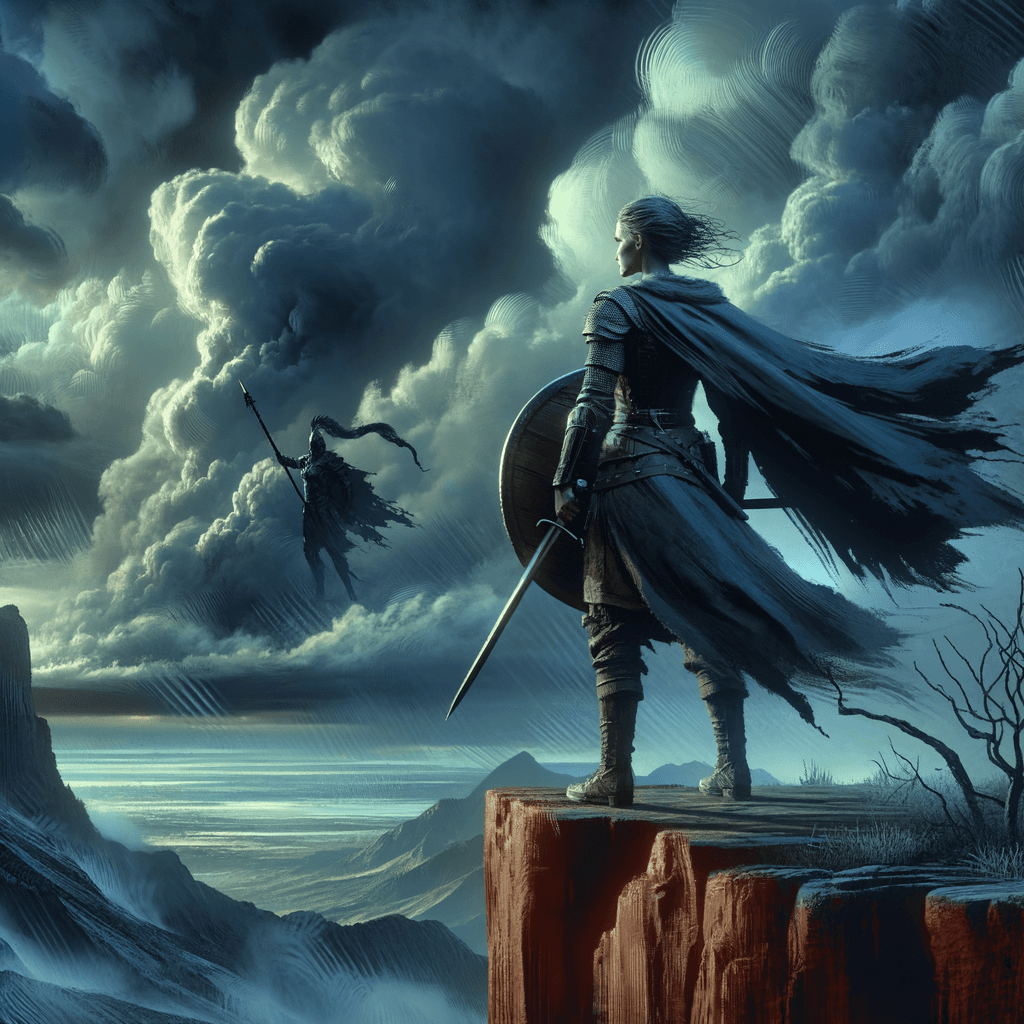
He who fears being conquered is sure of defeat. — Napoleon Bonaparte
—What lingers after this line?
Mindset and Mental Resilience
This quote highlights the significance of mindset in achieving success. A fear of defeat can undermine one's confidence and determination, making defeat more likely.
Fear as a Limiting Factor
Fear can paralyze individuals, preventing them from taking necessary risks or actions. This statement implies that allowing fear to dominate one's thoughts can lead to self-fulfilling prophecies.
Confronting Challenges
The quote encourages individuals to confront challenges head-on rather than succumb to fear. Facing obstacles with courage is crucial for overcoming them and attaining victory.
Historical Leadership
Napoleon Bonaparte, a prominent military leader and Emperor of France, often emphasized the importance of strategy and boldness in warfare. His experiences influenced his views on victory and defeat.
Psychological Warfare
This assertion can also reflect the principles of psychological warfare, where instilling fear in opponents can lead to their surrender, while fear within oneself can lead to internal defeat.
One-minute reflection
Where does this idea show up in your life right now?
Related Quotes
6 selectedFear is the first enemy of the man who wants to be free.
Unknown
This quote highlights that fear is a major obstacle to achieving freedom. It emphasizes the need to confront and overcome fear in order to attain true independence and liberation.
Read full interpretation →You don't have to bully yourself out of feeling fear. You just have to move while it's still there. — Annie Wright
Annie Wright
At its core, Annie Wright’s quote challenges the common belief that courage begins only after fear has disappeared. Instead, it reframes fear as something that can accompany action rather than prevent it.
Read full interpretation →The economy can take your money. A crisis can take your opportunities. But fear can take your judgment—and that is the loss most people never recover from. — Epictetus
Epictetus
At first glance, this saying draws a sharp line between what happens to us and what happens within us. Money can vanish in a recession, and opportunities can disappear when markets collapse, yet Epictetus argues that the...
Read full interpretation →The obsession with being 'productive' is just a mask for fear. True discipline is the courage to do what is necessary while leaving behind what is merely loud. — Ryan Holiday
Ryan Holiday
At first glance, Ryan Holiday’s quote challenges a deeply admired ideal: productivity. In many workplaces and digital spaces, being constantly busy is treated as proof of worth.
Read full interpretation →Perfectionism is a fear that kills more dreams, businesses, and joyful lives than I believe is countable. — Beth Kempton
Beth Kempton
At first glance, perfectionism can look like discipline, ambition, or high standards. Yet Beth Kempton’s quote reframes it as something darker: a form of fear that disguises itself as virtue.
Read full interpretation →I have accepted fear as part of life, especially the fear of change. I have gone ahead despite the pounding in the heart that says: turn back. — Erica Jong
Erica Jong
Erica Jong’s statement begins with an act of realism rather than defeat: she does not claim to conquer fear, only to accept it as part of life. That distinction matters, because it shifts courage away from fearlessness a...
Read full interpretation →More From Author
More from Napoléon Bonaparte →Impossible is a word to be found only in the dictionary of fools. — Napoléon Bonaparte
This quote suggests that those who believe in impossibilities lack the perseverance and determination to overcome challenges. It encourages a mindset that embraces persistence and relentless effort.
Read full interpretation →Until you spread your wings, you'll have no idea how far you can fly. — Napoleon Bonaparte
This quote highlights the importance of recognizing and embracing one's potential. Until individuals take risks and step outside their comfort zones, they remain unaware of the capabilities they possess.
Read full interpretation →Courage is like love; it must have hope for nourishment. — Napoleon Bonaparte
This quote draws a parallel between courage and love, suggesting that both require hope to thrive. Courage is fueled by the belief in a positive outcome or the possibility that challenges can be overcome.
Read full interpretation →The truest wisdom is a resolute determination. — Napoleon Bonaparte
This quote implies that true wisdom is not just about knowledge or contemplation but lies in the ability to take decisive action with determination.
Read full interpretation →