
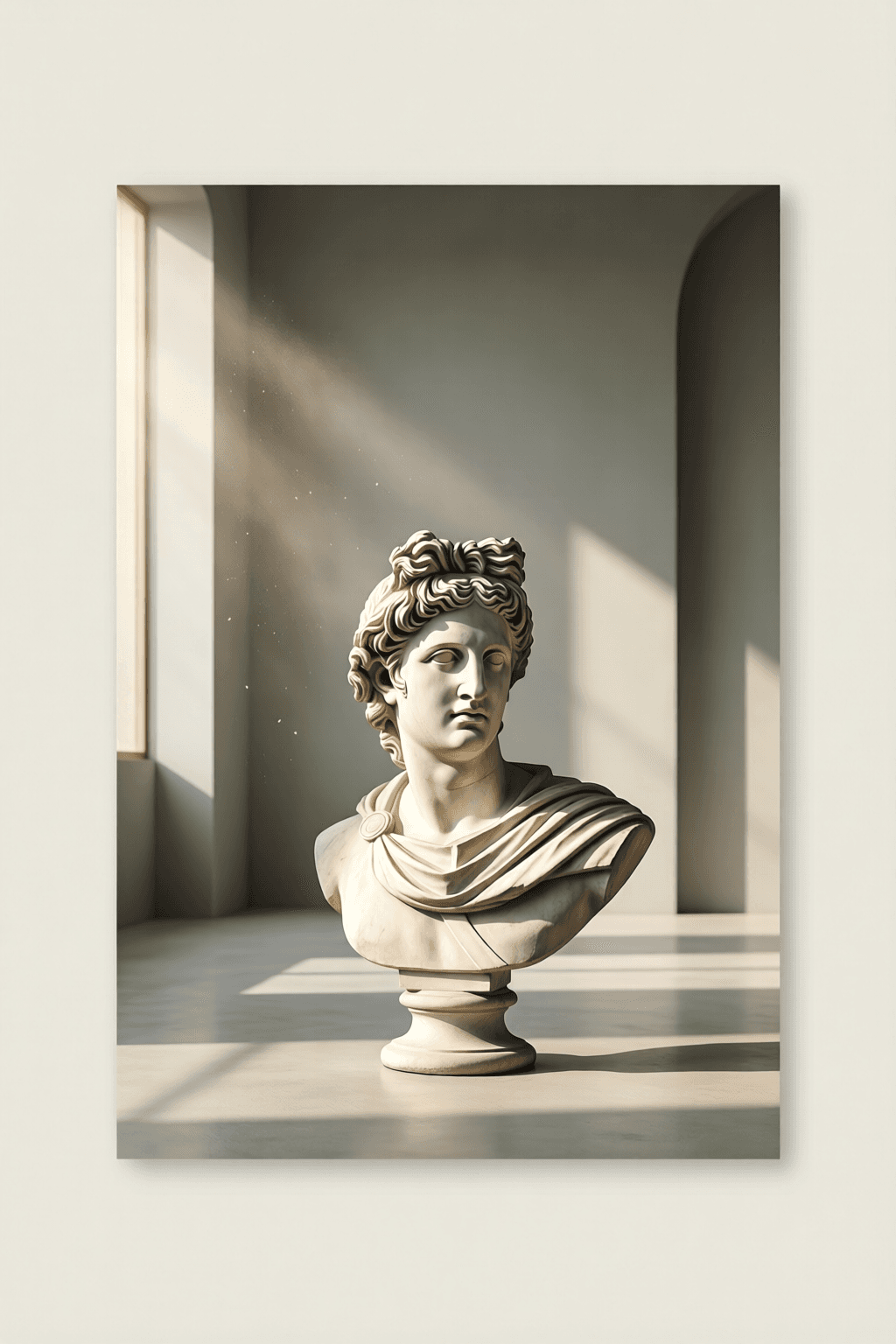
Silence the noise, strengthen the soul. — Marcus Aurelius
—What lingers after this line?
A Stoic Call to Inner Clarity
At first glance, Marcus Aurelius’s line condenses the heart of Stoic practice into a simple command: reduce distraction so that character can grow. In his Meditations (c. 170–180 AD), he repeatedly urges himself to withdraw from agitation, not by fleeing the world, but by disciplining attention within it. Silence here means more than the absence of sound; it is the refusal to let chaos govern the mind. From that perspective, the quote suggests that the soul is strengthened not through constant stimulation but through deliberate stillness. By quieting gossip, fear, vanity, and impulse, a person becomes more capable of judgment, endurance, and self-command.
What the "Noise" Really Means
More deeply, the noise Marcus Aurelius warns against is often internal before it is external. It includes anxious prediction, wounded pride, resentment, and the endless rehearsing of what others think. As Epictetus’s Discourses (early 2nd century AD) similarly argue, people are disturbed less by events than by their opinions about them, which makes mental noise a moral and practical problem at once. Accordingly, silencing noise does not require a remote monastery or perfect calm. Instead, it asks for discernment: to separate what deserves attention from what merely consumes it. That shift becomes the first real act of inner freedom.
Strength as Moral Endurance
Once noise is reduced, the soul can be strengthened in the Stoic sense—not hardened into coldness, but trained in steadiness. Marcus Aurelius presents strength as the ability to meet pain, praise, insult, and uncertainty without losing one’s governing principles. In Meditations 4.49, he reminds himself that the mind can preserve its own serenity if it does not surrender to disturbance. Thus, strength emerges as moral endurance rather than domination. A strong soul is not the loudest presence in the room; it is the one least ruled by panic, vanity, or anger when the room turns loud.
Silence as a Daily Discipline
From philosophy, the quote naturally turns toward practice. Silencing noise can mean pausing before reacting, limiting needless argument, or creating moments of reflection at the start and end of the day. Seneca’s Letters to Lucilius (c. 65 AD) describe nightly self-examination as a way of clearing the mind and correcting the self, showing that quiet was for the Stoics an active discipline rather than passive retreat. In modern life, this discipline may look modest: putting away the phone, resisting outrage, or sitting briefly with one’s thoughts. Yet precisely because these acts are small and repeatable, they steadily toughen the inner life.
A Remedy for Modern Overstimulation
Seen in contemporary terms, the quote feels strikingly current. Notifications, commentary, and perpetual comparison generate a kind of ambient unrest that scatters attention and weakens resolve. In that sense, Marcus Aurelius speaks across centuries: the battle for the soul is often a battle over what enters and occupies the mind. Therefore, his advice is not anti-world but anti-fragmentation. By choosing silence—literal and mental—we reclaim the ability to think clearly, act deliberately, and remain inwardly whole amid public turbulence.
The Quiet Path to Self-Mastery
Ultimately, the saying points toward self-mastery as a quiet achievement. Grand displays of power may impress others, but Stoic wisdom measures a person by how well they govern themselves when no one is watching. Plato’s Republic (c. 375 BC) had already linked justice in the soul to inner order, and Marcus Aurelius continues that tradition by treating inward calm as a foundation of ethical life. In the end, to silence the noise is to make room for what is most durable: reason, conscience, and resilience. The soul grows stronger not through clamor, but through the disciplined peace that allows it to hear itself truly.
One-minute reflection
What's one small action this suggests?
Related Quotes
6 selectedReal strength is not the absence of struggle, but the presence of a calm, steady mind. — Marcus Aurelius
Marcus Aurelius
At first glance, the quote overturns a common assumption: that strength means never suffering, wavering, or feeling pressure. Instead, it proposes a deeper standard.
Read full interpretation →The strength of a person is not measured by their achievements, but by their ability to remain centered when the world around them feels like it is unraveling. — Marcus Aurelius
Marcus Aurelius
At first glance, strength is often associated with visible accomplishments—titles earned, obstacles conquered, or victories displayed for others to admire. Yet this reflection attributed to Marcus Aurelius redirects atte...
Read full interpretation →The best answer to anger is silence. — Marcus Aurelius
Marcus Aurelius
At its heart, Marcus Aurelius’s line expresses a central Stoic conviction: not every provocation deserves a spoken response. In the *Meditations* (c.
Read full interpretation →It's time you realized that you have something in you more powerful and miraculous than the things that affect you. — Marcus Aurelius
Marcus Aurelius
Marcus Aurelius frames his thought as a timely realization: the truly decisive force in your life is not what happens to you, but what lives within you. Rather than denying hardship, he redirects attention to a “more pow...
Read full interpretation →You have power over your mind—not outside events. Realize this, and you will find strength. — Marcus Aurelius
Marcus Aurelius
Marcus Aurelius’ line distills a central Stoic distinction: our judgments, choices, and attention are ours to govern, while external events unfold according to forces beyond us. In Meditations (c.
Read full interpretation →Use each obstacle as a teacher; the stronger your will, the fewer things can unsettle you. — Marcus Aurelius
Marcus Aurelius
Marcus Aurelius frames hardship not as an interruption to life but as part of its curriculum. By calling obstacles “teachers,” he shifts the focus from what happens to us to what we can learn from it, which is a central...
Read full interpretation →More From Author
More from Marcus Aurelius →Consistency is the sum that equals what we become. — Marcus Aurelius
Marcus Aurelius’ line frames becoming as a kind of moral mathematics: each repeated action adds to the total of a life. Rather than imagining identity as a single grand decision, the quote suggests that character is accu...
Read full interpretation →If anyone can refute me—show me I'm making a mistake or looking at things from the wrong perspective—I'll gladly change. — Marcus Aurelius
Marcus Aurelius begins from a position that appears modest but is actually deeply disciplined: he is willing to be corrected. Rather than treating disagreement as an insult, he frames it as an opportunity to see more cle...
Read full interpretation →The art of life is more like the wrestler's art than the dancer's; stand ready and firm to meet sudden and unexpected onsets. — Marcus Aurelius
Marcus Aurelius contrasts two arts to clarify what living well demands. A dancer suggests elegance, rhythm, and practiced beauty; a wrestler, by contrast, suggests balance under pressure, resistance, and constant readine...
Read full interpretation →How much time he gains who does not look to see what his neighbour says or does or thinks, but only at what he does himself, to make it just and holy. — Marcus Aurelius
Marcus Aurelius argues that a great deal of life is wasted in watching other people—what they say, what they do, and even what they might be thinking. Instead, he recommends a disciplined inward turn: focus on your own c...
Read full interpretation →