
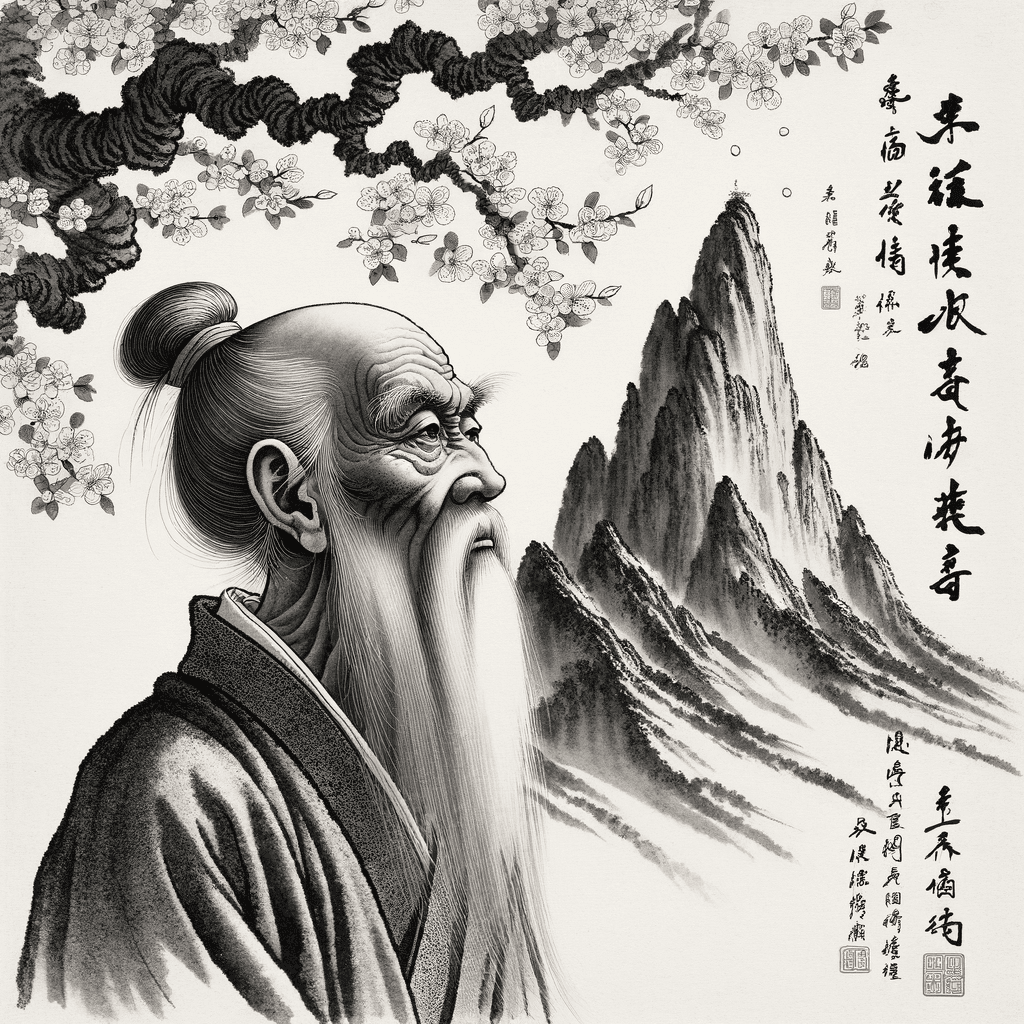
To see what is right and not do it is want of courage. — Confucius
—What lingers after this line?
Moral Responsibility
This quote emphasizes the duty individuals have to act upon their understanding of what is right. Recognizing justice and failing to advocate for it reflects a lack of moral responsibility.
Courage and Action
The quote highlights the relationship between courage and action. True bravery is demonstrated not only in recognizing what is right but also in taking the necessary steps to uphold it.
Ethical Integrity
Living in alignment with one's values requires the courage to act according to one's principles, even when it is difficult or risky. This integrity is a cornerstone of ethical behavior.
Consequences of Inaction
Confucius points to the negative consequences of inaction. Knowing what is morally right and choosing not to act upon it can lead to feelings of guilt and the perpetuation of injustice.
Philosophical Context
As a renowned Chinese philosopher, Confucius focused on themes of morality, social relationships, and justice. His teachings often encouraged individuals to seek wisdom and act virtuously, reflecting the ethical and philosophical concerns of his time.
One-minute reflection
What does this quote ask you to notice today?
Related Quotes
6 selectedAn upright heart and steady hands mend what fear unravels. — Confucius
Confucius
This aphorism links inner virtue to outward competence, arguing that integrity (“an upright heart”) must be joined to disciplined action (“steady hands”). Fear frays the bonds of trust and attention; panic scatters both...
Read full interpretation →Self-discipline is when your conscience tells you to do something and you don't talk back. — W. K. Hope
W. K. Hope
At its core, W. K.
Read full interpretation →Unfortunately, we've rewarded a sort of cowardice by calling it 'kindness', and this has made us utterly spineless when truth finally hits. — Criss Jami
Criss Jami
At its core, Criss Jami’s statement argues that not every gentle gesture is morally brave. Sometimes what society praises as kindness is really avoidance: a refusal to speak hard truths, set boundaries, or confront harmf...
Read full interpretation →It is a rare and ethical thing to be a person who is willing to be changed. — Ocean Vuong
Ocean Vuong
Ocean Vuong frames openness to transformation as both uncommon and ethically charged, suggesting that character is not merely what we defend but what we are willing to revise. In this view, the “rare” person is not the o...
Read full interpretation →Integrity is choosing courage over comfort; choosing what is right over what is fun. — Brené Brown
Brené Brown
Brené Brown frames integrity not as a fixed trait but as a sequence of decisions made in real time. Rather than asking whether someone “has” integrity, her line invites a more practical question: what do you choose when...
Read full interpretation →Keep a quiet hope alive and let it guide the brave choices you make. — Anne Frank
Anne Frank
Anne Frank’s line begins with a surprising premise: hope can be quiet. Instead of the loud optimism that denies fear or hardship, she points to a steadier inner posture—something you keep alive privately, even when circu...
Read full interpretation →More From Author
More from Confucius →Learning is a lifelong process of unlearning the need for immediate results. Patience is the discipline of trusting the slow, quiet compounding of your efforts. — Confucius
At its core, this saying presents learning not as a race toward instant achievement, but as a gradual reshaping of expectation. The phrase “unlearning the need for immediate results” suggests that education is not only a...
Read full interpretation →Anything worth having is worth waiting for, and everything worth doing is worth doing with patience. — Confucius
At its core, this saying ties value to delay. Confucius suggests that truly meaningful things do not arrive instantly; instead, they ask us to endure uncertainty, effort, and time.
Read full interpretation →A common man marvels at uncommon things. A wise man marvels at the commonplace. — Confucius
Confucius draws a quiet but profound distinction between two kinds of attention. The common man, in this saying, is captivated by what appears exceptional—spectacle, rarity, or public greatness.
Read full interpretation →To learn is to admit you do not know. The moment you stop being a student is the moment your growth ends. — Confucius
Confucius frames learning not as the display of knowledge but as the honest recognition of its limits. In that sense, to learn is to begin with humility: one must first admit, without shame, that there is something missi...
Read full interpretation →