
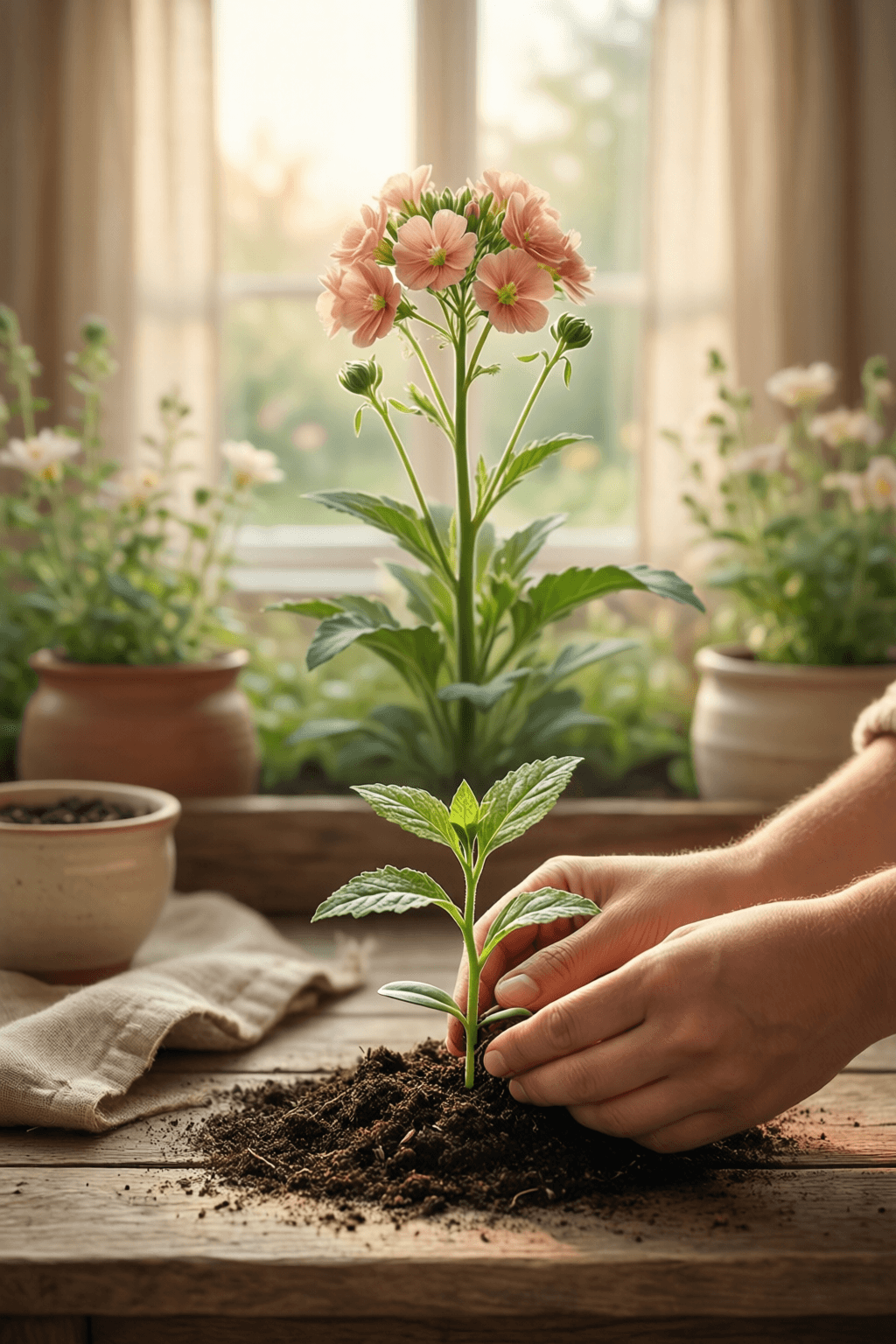
True cultivation is a slow, private process that eventually blooms into a public strength. — Anne Lamott
—What lingers after this line?
The Hidden Nature of Real Growth
At first glance, Anne Lamott’s line emphasizes a truth people often resist: meaningful self-development rarely looks dramatic while it is happening. True cultivation unfolds quietly, in habits, reflection, restraint, and repeated effort that may go unnoticed by everyone else. In that sense, growth resembles roots spreading underground long before any visible flower appears. Because of this, Lamott shifts attention away from performance and toward patience. What matters is not appearing transformed overnight, but allowing character to deepen in private. Only later does that inward work become visible as calm, resilience, wisdom, or courage that others can actually feel.
Why Slowness Matters
From there, the idea of slowness becomes essential rather than accidental. A hurried self-improvement project often aims at image, but cultivation suggests maturation, and maturation takes time. Aristotle’s Nicomachean Ethics (4th century BC) similarly presents virtue as something formed through repeated action, not sudden inspiration; we become steady by practicing steadiness. Consequently, the pace itself has value. Slowness allows lessons to settle into identity instead of remaining temporary enthusiasm. What emerges is more durable than a quick change of mood: a person gradually shaped by experience, discipline, and honest self-examination.
The Privacy of Inner Work
Equally important, Lamott’s use of “private” suggests that the most decisive transformations often occur away from applause. In solitude, people confront fear, envy, grief, or confusion without the convenience of an audience. Marcus Aurelius’ Meditations (c. AD 170), written as personal reflections rather than public speeches, show how inner dialogue can become a workshop for strength. This privacy protects sincerity. When growth is not performed for approval, it is more likely to be genuine. The person is not acting improved; rather, they are slowly becoming someone sturdier, often through unseen choices that feel small in the moment but prove decisive later.
When Inner Work Becomes Visible
Yet Lamott does not leave cultivation hidden forever; she says it eventually “blooms into a public strength.” That transition is crucial. Private effort does not stay sealed off from the world, because inward formation inevitably shapes outward presence. A person who has learned patience in hardship may later lead calmly in crisis, and that calm becomes visible to everyone around them. In this way, public strength is not theatrical power but the outward expression of inward preparation. Much like Abraham Lincoln’s reputation for steadiness during the American Civil War was tied to years of struggle, loss, and self-education, visible strength often rests on invisible apprenticeship.
Strength as Character, Not Display
As the thought develops, Lamott also redefines what strength means. Public strength is not mere loudness, dominance, or constant confidence. More often, it appears as composure, compassion, reliability, and the ability to endure without bitterness. Viktor Frankl’s Man’s Search for Meaning (1946) offers a powerful example of strength rooted not in force but in inwardly cultivated purpose. Therefore, the bloom Lamott describes is less about recognition than usefulness. A cultivated person becomes someone others can lean on, trust, or learn from. Their presence carries weight because it has been formed by long interior labor rather than surface polish.
A Lesson in Patience and Faithfulness
Finally, the quotation offers practical encouragement for anyone discouraged by invisible effort. Progress that feels obscure or lonely is not necessarily stalled; it may be ripening. Garden imagery is fitting here, because cultivation requires tending, waiting, and trust before any harvest appears. The private season is not separate from the public one; it prepares it. As a result, Lamott’s insight becomes both comforting and demanding. It comforts by reminding us that unseen work matters, and it demands that we remain faithful to that work even without immediate reward. In time, what was formed quietly within can become a strength large enough to serve the world.
Recommended Reading
As an Amazon Associate, we earn from qualifying purchases.
One-minute reflection
What feeling does this quote bring up for you?
Related Quotes
6 selectedYou cannot change what you refuse to confront. Growth begins when you stop hiding from your own truth. — Marc Chernoff
Marc Chernoff
Marc Chernoff’s quote turns growth into an act of courage rather than comfort. At its heart, the message is simple: real change cannot begin while we avoid the facts of our own lives.
Read full interpretation →Your potential is not a static state; it is a muscle that strengthens only through the resistance of consistent, daily effort. — Robert Kegan
Robert Kegan
At first glance, Robert Kegan’s statement overturns a comforting myth: potential is not something we simply possess in finished form. Instead, he portrays it as a living capacity, one that changes depending on how we use...
Read full interpretation →You cannot find peace by avoiding life. You must engage with the friction of your own growth. — Henri Nouwen
Henri Nouwen
At first glance, Henri Nouwen’s insight overturns a common fantasy: that peace can be reached by retreating from difficulty, conflict, or responsibility. Instead, he argues that genuine inner calm is not the reward of av...
Read full interpretation →A truly strong person does not need to dominate. They possess a quiet confidence that is recognized, not announced. — Joyce Rachelle
Joyce Rachelle
At its core, Joyce Rachelle’s quote redefines strength by separating it from force. Many people associate power with control, volume, or the ability to make others submit.
Read full interpretation →Stillness is the birthplace of strength. — Epictetus
Epictetus
At first glance, Epictetus turns a common assumption upside down: strength does not begin in noise, force, or visible struggle, but in stillness. The Stoic philosopher suggests that real power is born when the mind becom...
Read full interpretation →I am learning every day to allow the space between where I am and where I want to be to inspire me and not terrify me. — Tracee Ellis Ross
Tracee Ellis Ross
Tracee Ellis Ross frames personal growth as a lived experience of standing between the present self and the hoped-for future. At first glance, that gap can feel like proof of inadequacy; however, her wording shifts its m...
Read full interpretation →More From Author
More from Anne Lamott →Slow down. You are not a machine designed for constant output; you are a human meant for intentional being. — Anne Lamott
Anne Lamott’s line begins as a gentle interruption, yet it lands like a critique of modern life. By saying, “Slow down,” she challenges a culture that rewards constant motion and treats rest as weakness.
Read full interpretation →In the middle of all the mess, there's a quiet kind of magic waiting for you. — Anne Lamott
At first glance, Anne Lamott’s line suggests a contradiction: how can ‘magic’ exist in the middle of a mess? Yet that tension is precisely the point.
Read full interpretation →By choosing to be yourself, you have already won the most important battle. — Anne Lamott
At its core, Anne Lamott’s statement reframes victory in deeply personal terms. Rather than measuring success by status, approval, or comparison, she suggests that the most important win happens the moment a person stops...
Read full interpretation →Give your heart the space it needs to breathe; you do not have to carry everything all at once. — Anne Lamott
Anne Lamott’s line begins with a gentle permission: the heart, like the body, needs space, rhythm, and rest. Rather than treating emotional strength as endless endurance, she reframes care as breathing room—something nec...
Read full interpretation →