
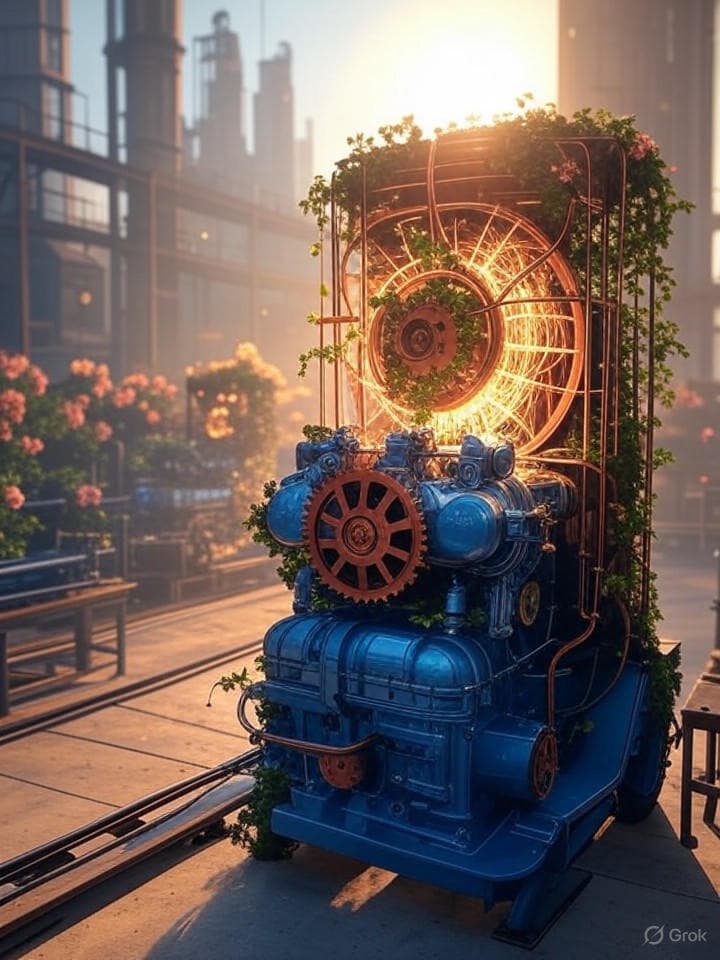
Let imagination be the engine of your toil; beauty births the world you build. — Percy Bysshe Shelley
—What lingers after this line?
Shelley’s Romantic Imperative
Shelley fuses effort and ideal in a single stroke: work should be driven by imagination, and the resulting world should be shaped by beauty. In A Defence of Poetry (1821), he insists that the imagination is the great instrument of moral good, and that poets are the unacknowledged legislators of the world. The quote distills that vision into a maker’s ethic: let creative vision power toil, and let aesthetic value guide outcomes. Seen this way, beauty is not embellishment but direction, while imagination provides the motive force. To grasp the depth of this claim, it helps to situate it within a longer history of how beauty generates reality.
Beauty as a Generative First Principle
From Plato’s Symposium (c. 385–370 BC), where the ladder of love ascends through beauty toward the Good, Western thought treats beauty as a pathway to truth and being. Plotinus’ Enneads (3rd c.) likewise suggests that beauty emanates from the One, drawing souls toward form and order. Centuries later, Keats compresses the intuition into Ode on a Grecian Urn (1819): beauty discloses truth. Shelley’s line inherits this lineage but redirects it toward making: beauty births the world you build. Yet lofty ideals matter only if they transform practice, so the next step is to see how imagination becomes disciplined labor.
From Vision to Toil: Imagination at Work
Coleridge’s Biographia Literaria (1817) distinguishes a primary imagination that perceives and a secondary imagination that shapes, a claim that turns creativity into a constructive power. William Blake embodies the transition from vision to craft through his illuminated printing (1790s), inventing techniques to manifest images only he could see. In modern terms, design thinking (Tim Brown, 2008) operationalizes imagination through cycles of empathy, prototyping, and iteration. Thus Shelley’s ‘engine’ is not daydreaming but disciplined re-seeing that organizes effort. Once imagination energizes toil, the criterion that steers it—beauty—must inform the choices makers face at every cut, join, and line.
Designing Worlds: Beauty as Productive Constraint
Good design treats beauty as a navigational star rather than mere ornament. The Bauhaus (1919–1933) aligned art, craft, and industry, showing that elegance can arise from purpose. Louis Sullivan’s 1896 dictum that form follows function guided modern architecture, while Dieter Rams’ ten principles (1970s) linked clarity, restraint, and longevity. Complementing these, Christopher Alexander’s A Pattern Language (1977) demonstrates how human-scale patterns can produce places that feel alive. Whether in neighborhoods or interfaces, beauty becomes a testable constraint that elevates use and care. This convergence hints that aesthetic judgment can even guide inquiry itself, which brings us to science.
The Aesthetic Sense in Scientific Discovery
Scientists often trust beauty as a compass for truth. Henri Poincaré’s Science and Method (1908) affirms that discovery is driven by a sense of elegance, while Paul Dirac famously preferred beautiful equations, even before full empirical confirmation. D’Arcy Thompson’s On Growth and Form (1917) shows how mathematics yields graceful structures in nature—from shells to bones—suggesting that beauty is a signature of coherence. In practice, aesthetic criteria like simplicity, symmetry, and inevitability help researchers prune messy conjectures. If beauty can discipline equations, it can also discipline ethics, since the worlds we build are social as much as material.
Moral Imagination and Civic Construction
Shelley’s moral claim finds reinforcement in Martha Nussbaum’s Poetic Justice (1995), which argues that narrative imagination cultivates empathy essential to democratic judgment. Adam Smith’s Theory of Moral Sentiments (1759) likewise roots sympathy in the imagination, inviting us to inhabit another’s standpoint. Beauty, then, is not just visual pleasure; it is the felt coherence of a just order, a city or company that ‘fits’ its people. By tying imagination to labor and beauty to outcome, Shelley urges builders—citizens, founders, planners—to fashion structures worthy of human flourishing. The question becomes practical: how do makers cultivate such imagination daily?
Practices That Harness Imagination and Beauty
Creative cultures institutionalize candor and iteration so vision can mature into form. Pixar’s Braintrust, described by Ed Catmull in Creativity, Inc. (2014), treats early drafts as starting points, not verdicts, letting honesty refine the beautiful core. Choreographer Twyla Tharp’s The Creative Habit (2003) prescribes routines—boxes, rituals, constraints—that keep imagination supplied with raw material. Likewise, reflective walks, sketchbooks, and critique sessions translate ideals into choices about proportion, rhythm, and tone. Through such habits, toil becomes the vehicle of imagination, while beauty—tested in use and felt in community—births the world we build, just as Shelley envisioned.
One-minute reflection
What feeling does this quote bring up for you?
Related Quotes
6 selectedImagination is more important than knowledge. For knowledge is limited, whereas imagination embraces the entire world, stimulating progress, giving birth to evolution. - Albert Einstein
Albert Einstein
This quote emphasizes that knowledge, although valuable, has its boundaries. It is confined to the information and understanding we currently possess, which can always change or expand.
Read full interpretation →Imagination is more important than knowledge. For knowledge is limited, whereas imagination embraces the entire world, stimulating progress, giving birth to evolution. - Albert Einstein
Albert Einstein
Einstein emphasizes that imagination holds greater value because it is boundless. While knowledge is finite, imagination has no limits and can conceive new ideas and possibilities.
Read full interpretation →Every creation begins with a single thought; let your imagination be the spark that ignites a world of possibilities. — Unknown, Global.
Unknown, Global.
This quote highlights the concept that all creations, whether artistic, technological, or literary, stem from a single initial thought. It emphasizes the importance of that first idea as the seed from which everything el...
Read full interpretation →Your imagination is the blueprint of your success; dare to design a life that reflects your wildest aspirations and dreams. — Unknown, Global.
Unknown, Global.
This quote emphasizes that imagination is a powerful force that shapes our future. It suggests that our thoughts and creative visions are the foundational elements that can lead to success.
Read full interpretation →Anxiety is just the imagination working overtime, and most of that overtime is completely unpaid. — Alain de Botton
Alain de Botton
At first glance, Alain de Botton’s remark frames anxiety with disarming humor: the mind behaves like an overworked employee, generating scenarios, rehearsing disasters, and collecting no reward for the effort. By calling...
Read full interpretation →Creativity is not the finding of a thing, but the making something out of it after it is found. — James Russell Lowell
James Lowell
James Russell Lowell’s line shifts attention away from the romantic myth of the sudden genius who invents from nothing. Instead, he argues that creativity truly begins after the initial encounter—after an idea, object, p...
Read full interpretation →More From Author
More from Percy Bysshe Shelley →