
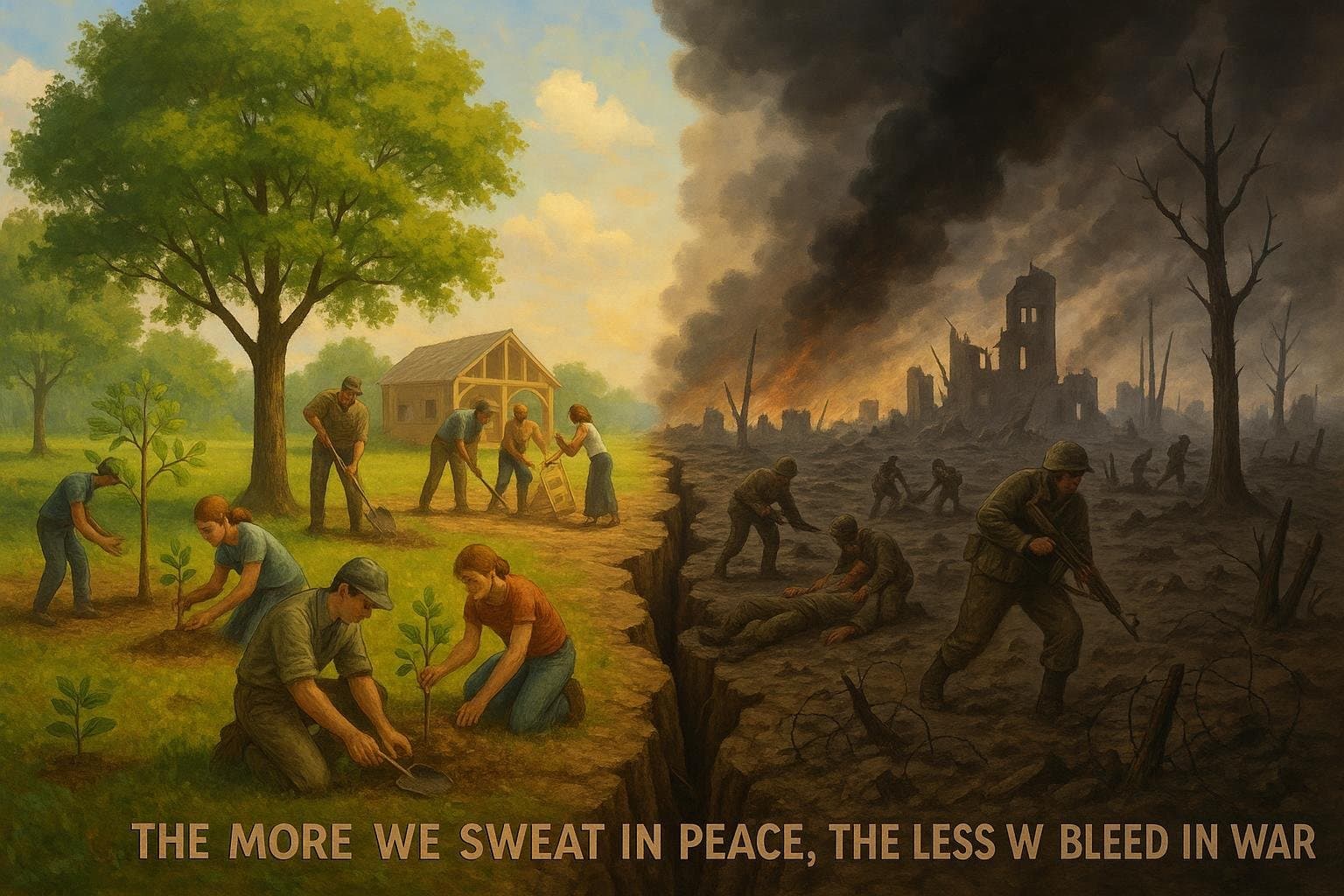
The more we sweat in peace, the less we bleed in war. — Vijaya Lakshmi Pandit
—What lingers after this line?
Understanding the Quote’s Wisdom
Vijaya Lakshmi Pandit’s adage encapsulates a timeless principle: diligent effort during peacetime serves as insurance against the devastations of war. She draws a parallel between metaphorical ‘sweat’—the hard work of preparation, training, and diplomacy—and the literal ‘blood’ spilt during conflict. In this way, the quote urges societies to invest seriously in peace-oriented efforts, reminding us that complacency today may lead to heavy losses tomorrow.
Historical Lessons in Preparation
History abounds with examples where rigorous peacetime training dramatically reduced casualties during conflict. For instance, prior to World War II, nations that prioritized disciplined military drills and strategic planning, like Britain’s early investment in radar technology, managed to withstand greater adversities with fewer losses. Conversely, lack of readiness has repeatedly increased wartime suffering, as seen in the disastrous opening months for poorly prepared states.
Application Beyond the Battlefield
While Pandit’s words evoke images of military preparation, their relevance extends to all aspects of governance and civil life. Effective disaster response, public health planning, and educational advancement rely on diligent effort before crises arise. For example, countries with robust pandemic preparedness plans fared substantially better during COVID-19, experiencing fewer fatalities and swifter recoveries—further evidence of the wisdom behind ‘sweating in peace’.
Diplomacy as Preventive Labor
Diplomatic engagement functions as another form of peaceful exertion. Through negotiation, alliance-building, and conflict resolution, nations can often address grievances before they escalate. The Oslo Accords of the 1990s, despite their limitations, exemplified how sustained talks might curb violence. Thus, diplomacy’s hard-earned compromises frequently save lives that would otherwise be lost to war.
Carrying Forward Pandit’s Legacy
Pandit’s legacy as a diplomat and activist underscores the enduring value of her counsel. In our world of persistent global tensions, her words implore leaders and citizens alike to invest energy into peace-building measures. By prioritizing cooperation, training, and preparedness, we honor the insight that proactive effort today secures a more stable and less bloody tomorrow—transforming sweat into the most valuable safeguard against future suffering.
One-minute reflection
Where does this idea show up in your life right now?
Related Quotes
6 selectedThe art of life is more like the wrestler's art than the dancer's; stand ready and firm to meet sudden and unexpected onsets. — Marcus Aurelius
Marcus Aurelius
Marcus Aurelius contrasts two arts to clarify what living well demands. A dancer suggests elegance, rhythm, and practiced beauty; a wrestler, by contrast, suggests balance under pressure, resistance, and constant readine...
Read full interpretation →Better remain silent, better not even think, if you are not prepared to act. — Annie Besant
Annie Besant
Annie Besant’s line shocks on purpose: it sounds anti-intellectual, yet it is really a demand for integrity. By saying it is “better remain silent” and “better not even think” without readiness to act, she targets the co...
Read full interpretation →Peace is a daily, a weekly, a second-by-second process of gradually changing minds.
second process of gradually changing minds.
The quote reframes peace from something declared—through treaties, speeches, or commemorations—into something continuously made. By calling it “daily” and “weekly,” it insists that peace is less like a finish line and mo...
Read full interpretation →There is no path to peace, peace is the path. - Mahatma Gandhi
Mahatma Gandhi
This quote emphasizes Gandhi's belief in non-violence (ahimsa). He suggests that peace itself should be the means and the end, rather than being viewed as a goal achievable through other means.
Read full interpretation →Do not wait to be ready; take action now, and you will become ready as you go. — Unknown
Unknown
This quote emphasizes the urgency of taking action rather than waiting for the perfect moment. It suggests that waiting for an ideal time can lead to unnecessary delays and procrastination.
Read full interpretation →The secret of success is to be ready when your opportunity comes. — Benjamin Disraeli
Benjamin Disraeli
This quote suggests that success is not just about luck but about being prepared to seize opportunities when they arise. Those who take the time to prepare themselves are more likely to succeed.
Read full interpretation →More From Author
More from Vijaya Lakshmi Pandit →