
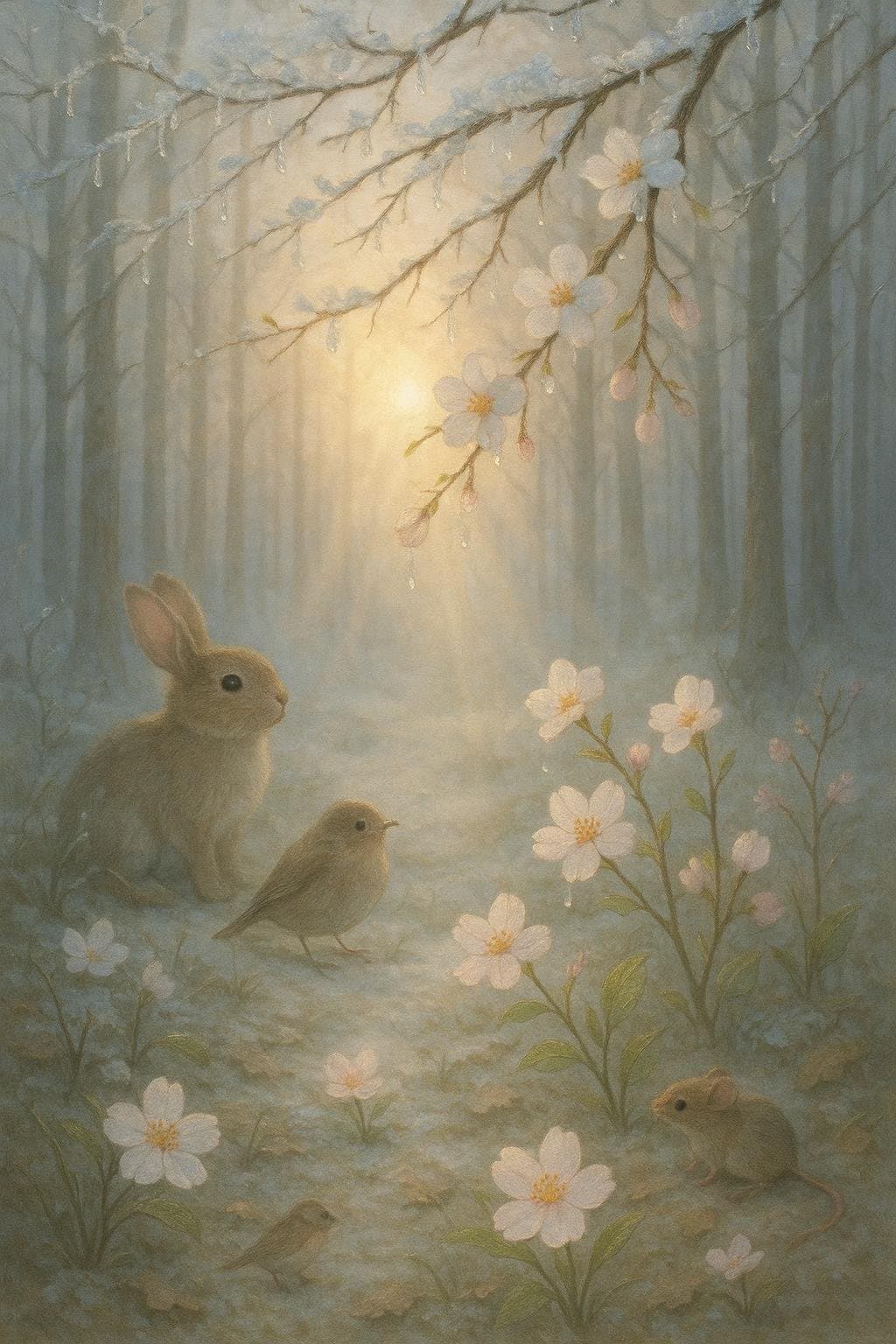
Creation begins where hesitation ends. — Haruki Murakami
—What lingers after this line?
The Paralysis of Doubt
In many creative pursuits, the initial spark of inspiration is too often snuffed out by hesitation. Murakami’s insight cuts to the heart of this dilemma, reminding us that indecision and overthinking form invisible barriers to artistic expression. When we hesitate, creative impulses waver, and ideas risk being lost to self-doubt before they ever see the light of day. Thus, the first battle in creation is often not with resources or technique, but with our own reluctance.
Movement as the Birth of Creation
Once hesitation is overcome, even incremental action can ignite the creative process. History is replete with stories of innovators who found momentum by simply beginning. Leonardo da Vinci reportedly sketched ceaselessly, believing that the mere act of drawing could unlock new visions. Likewise, starting—however imperfectly—often generates its own energy, propelling creators toward completion.
Murakami’s Own Practice
Murakami himself has spoken about ritual and routine as antidotes to creative paralysis. In interviews and his memoir, ‘What I Talk About When I Talk About Running’ (2007), he describes the discipline of daily writing, suggesting that creation thrives not on fleeting inspiration but on repeated, decisive action. By pushing past moments of hesitation, he consistently crafts deeply imaginative works.
Addressing the Fear of Failure
Persistent hesitation often masks a deeper fear of failure or judgment. Psychological studies, such as those by psychologist Carol Dweck on ‘growth mindset,’ emphasize that embracing uncertainty is crucial for creative growth. By accepting that imperfection is part of the process, creators can step boldly into action, discovering that progress—as Murakami notes—begins precisely where hesitancy ends.
Creativity in Everyday Life
Importantly, the end of hesitation has relevance beyond the arts. Whether in starting a conversation, launching a new project, or changing careers, the transition from indecision to action is a universal leap. Murakami’s wisdom thus underscores a broader truth: every act of creation—big or small—depends on the courage to move forward, unshackled by hesitation. This mindset transforms not only art, but everyday experience.
One-minute reflection
What's one small action this suggests?
Related Quotes
6 selectedTurn hesitation into a single deliberate step, and mountains start to look like stones. — Haruki Murakami
Haruki Murakami
Murakami’s line hinges on a simple conversion: hesitation becomes action. Hesitation is not just waiting; it is often a form of self-protection that keeps desire and risk safely separated.
Read full interpretation →A tiger does not proclaim his tigritude, he pounces. — Wole Soyinka
Wole Soyinka
Wole Soyinka’s line compresses a whole ethic into a single image: a tiger doesn’t narrate its identity; it embodies it. By contrasting “proclaiming” with “pouncing,” he treats competence as something proved in motion, no...
Read full interpretation →One clear action dissolves a thousand excuses. — Emily Dickinson
Emily Dickinson
Dickinson’s line hinges on a striking contrast: a single, concrete act can outweigh an entire inventory of explanations. Excuses multiply because they are easy to generate and hard to disprove, yet they remain weightless...
Read full interpretation →When doubt crowds in, make one clear choice and move your feet. — Helen Keller
Helen Keller
Helen Keller frames doubt as something that “crowds in,” suggesting a pressure that can shrink our sense of options and make thinking feel claustrophobic. Instead of treating that sensation as proof we should pause indef...
Read full interpretation →When doubt knocks, answer with a single focused action. — Toni Morrison
Toni Morrison
Toni Morrison frames doubt as something that “knocks,” suggesting it arrives from outside our plans like an unexpected caller at the door. This image matters because it implies doubt is not proof of incapacity; it is an...
Read full interpretation →Decide with depth, then act with urgency born of conviction. — Søren Kierkegaard
Søren Kierkegaard
Kierkegaard’s line begins by honoring depth: “Decide with depth” implies more than gathering facts or optimizing outcomes. It calls for wrestling with what truly matters—values, responsibilities, and the self you are bec...
Read full interpretation →More From Author
More from Haruki Murakami →A magician is strong because he hurts more than others. He has learned to break the world that has tried to break him. — Haruki Murakami
Murakami’s line begins with a striking reversal: the magician is not powerful because he is untouched, but because he has suffered more deeply than others. In this view, strength does not emerge from comfort; rather, it...
Read full interpretation →You have to realize it's going to be a long process and that you'll work on things slowly, one at a time. — Haruki Murakami
Murakami’s observation begins with a quiet but demanding truth: worthwhile things rarely happen quickly. Whether one is writing a novel, learning a craft, or rebuilding a life, the process unfolds in stages that cannot b...
Read full interpretation →Movement is medicine for the soul; you don't need a destination, only the willingness to keep going. — Haruki Murakami
Murakami’s line begins with a simple but profound claim: movement itself can heal. Rather than treating motion as merely a way to arrive somewhere, he frames it as a restorative act for the inner life.
Read full interpretation →I'm not interested in being a 'perfect' person. I am interested in being a whole person. — Haruki Murakami
Murakami’s distinction begins by exposing how “perfect” often means polished, acceptable, and free of visible flaws. That standard is typically external—set by culture, family expectations, or the quiet pressure to appea...
Read full interpretation →