
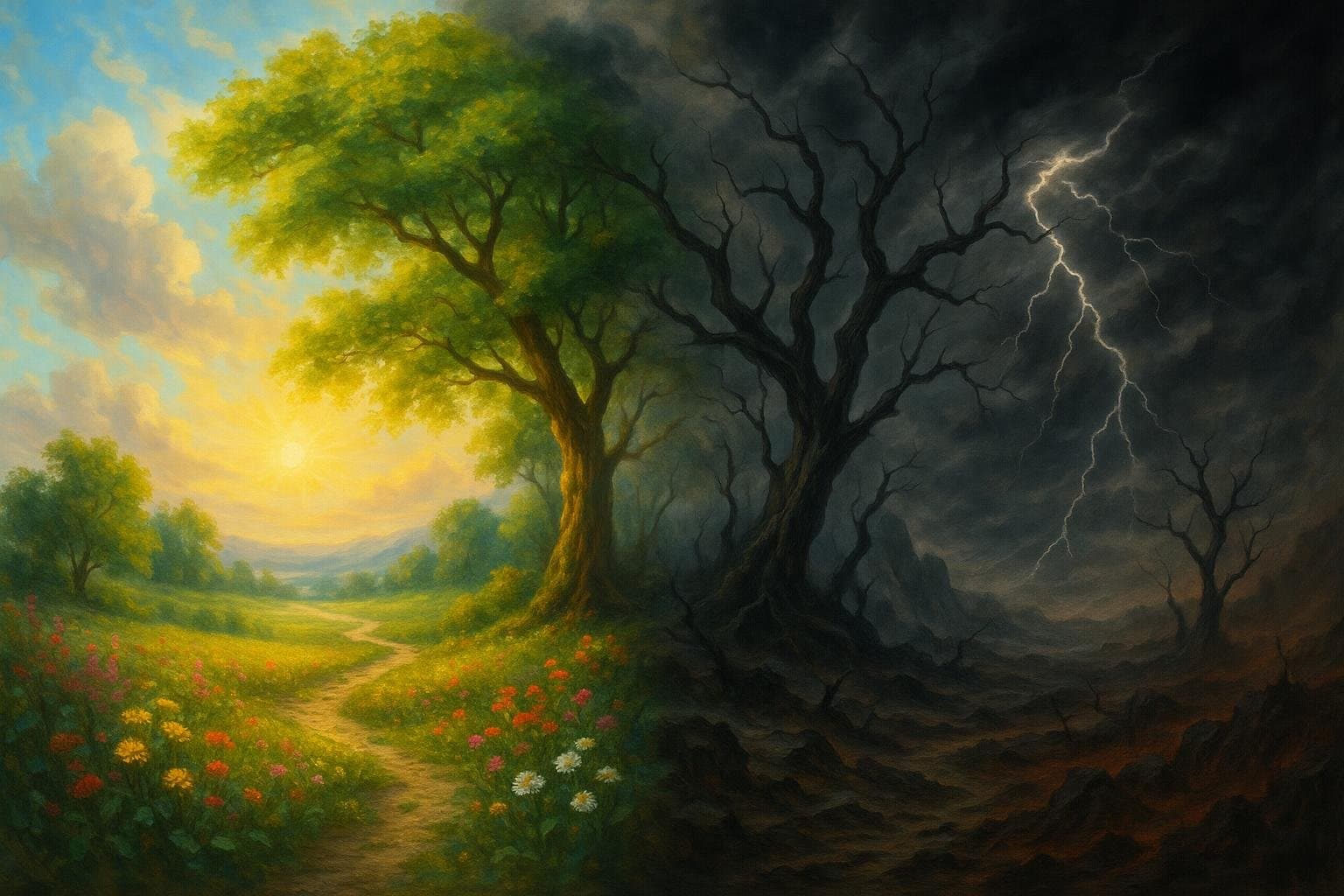
The mind is its own place, and in itself can make a heaven of hell, a hell of heaven. — John Milton
—What lingers after this line?
Milton’s Insight on Mental Sovereignty
John Milton, in his epic poem *Paradise Lost* (1667), gives voice to a profound idea: our inner world determines our experience of circumstances. The line emerges as Satan, recently cast into the torments of Hell, declares that his mind remains free and sovereign. This concept—that perception, not external fact, defines our reality—sets the foundation for understanding human resilience and despair.
Heaven and Hell as States of Consciousness
Building upon Milton’s words, we observe that 'heaven' and 'hell' need not be literal places but can reflect our mental and emotional states. Even in adversity, hope and gratitude can transform suffering, just as discontent can poison moments of abundance. This essentially means that inner attitude wields the power to redefine outer circumstances, a view echoed centuries later by Viktor Frankl in *Man’s Search for Meaning* (1946), where he argues that meaning stems from within, despite external hardships.
The Influence of Perspective in Daily Life
Transitioning from literature to daily experience, this idea manifests in how people respond differently to similar situations. Where one person finds opportunity amid challenge, another may spiral into despair. Consider the habitual optimist who reframes setbacks as growth, and the pessimist who finds disappointment even in success—underscoring that our mental narratives sculpt our lived realities.
Psychological Evidence for Mindset Control
Modern psychology substantiates Milton’s poetic insight through the study of cognitive appraisal and mindset. Research by Carol Dweck (2006) shows that a 'growth mindset' transforms failures into learning experiences, while a fixed mindset perceives them as personal deficiencies. This psychological flexibility is akin to Milton’s mind capable of remaking hell into heaven, illustrating cognitive control over emotional landscapes.
Cultivating a Resilient Mind
Ultimately, embracing Milton’s ethos encourages the nurturing of resilience and self-mastery. By becoming aware of our thoughts and actively shaping perspective—through practices like mindfulness or journaling—we can harness the mind’s transformative potential. Just as Milton’s words powerfully remind us, our greatest freedom lies in how we interpret and respond to the world, turning adversity into possibility.
One-minute reflection
What's one small action this suggests?
Related Quotes
6 selectedArt is a form of standing up for yourself, a way to declare that your internal world has a right to exist. — Rebecca Solnit
Rebecca Solnit
Rebecca Solnit frames art not as decoration but as an act of self-defense and self-definition. In this view, to make something—a poem, painting, song, or story—is to insist that one’s private perceptions deserve space in...
Read full interpretation →The sky is in the blue of the mind. - Paul Éluard
Paul Éluard
This quote suggests that our perception shapes our reality. The 'blue of the mind' implies that the way we perceive the world, including the sky, is deeply influenced by our thoughts and mental state.
Read full interpretation →In dreaming, we enter a world that is entirely our own. — Steven Gerrard
Steven Gerrard
Steven Gerrard’s reflection invites us to consider dreams as highly personal landscapes, shaped exclusively by our own inner thoughts and experiences. When we close our eyes and dream, we are transported into a domain un...
Read full interpretation →He who reigns within himself and rules passions, desires, and fears is more than a king. — John Milton
John Milton
At its core, John Milton’s line redefines power. Rather than praising crowns, armies, or inherited rank, he elevates the person who can govern the unruly forces within: passions, desires, and fears.
Read full interpretation →Your happiness is a choice. Choose wisely. — John Milton
John Milton
This quote emphasizes that an individual has the power to control their emotional state by actively choosing happiness, regardless of external circumstances.
Read full interpretation →Satisfaction is the death of desire. — John Milton
John Milton
This quote suggests that desire thrives on unfulfilled longing. Once satisfaction is achieved, the driving force of desire fades, making it seem as though it has ‘died.’
Read full interpretation →More From Author
More from John Milton →He who reigns within himself and rules passions, desires, and fears is more than a king. — John Milton
At its core, John Milton’s line redefines power. Rather than praising crowns, armies, or inherited rank, he elevates the person who can govern the unruly forces within: passions, desires, and fears.
Read full interpretation →Your happiness is a choice. Choose wisely. — John Milton
This quote emphasizes that an individual has the power to control their emotional state by actively choosing happiness, regardless of external circumstances.
Read full interpretation →Satisfaction is the death of desire. — John Milton
This quote suggests that desire thrives on unfulfilled longing. Once satisfaction is achieved, the driving force of desire fades, making it seem as though it has ‘died.’
Read full interpretation →Stand firm in your conviction; even a single righteous act can alter history's course. — John Milton
Milton’s line crystallizes a conviction he explored across genres: that conscience, rightly exercised, can defy vast machinery. In Areopagitica (1644), he argues for the liberty of the press because one faithful voice ca...
Read full interpretation →