
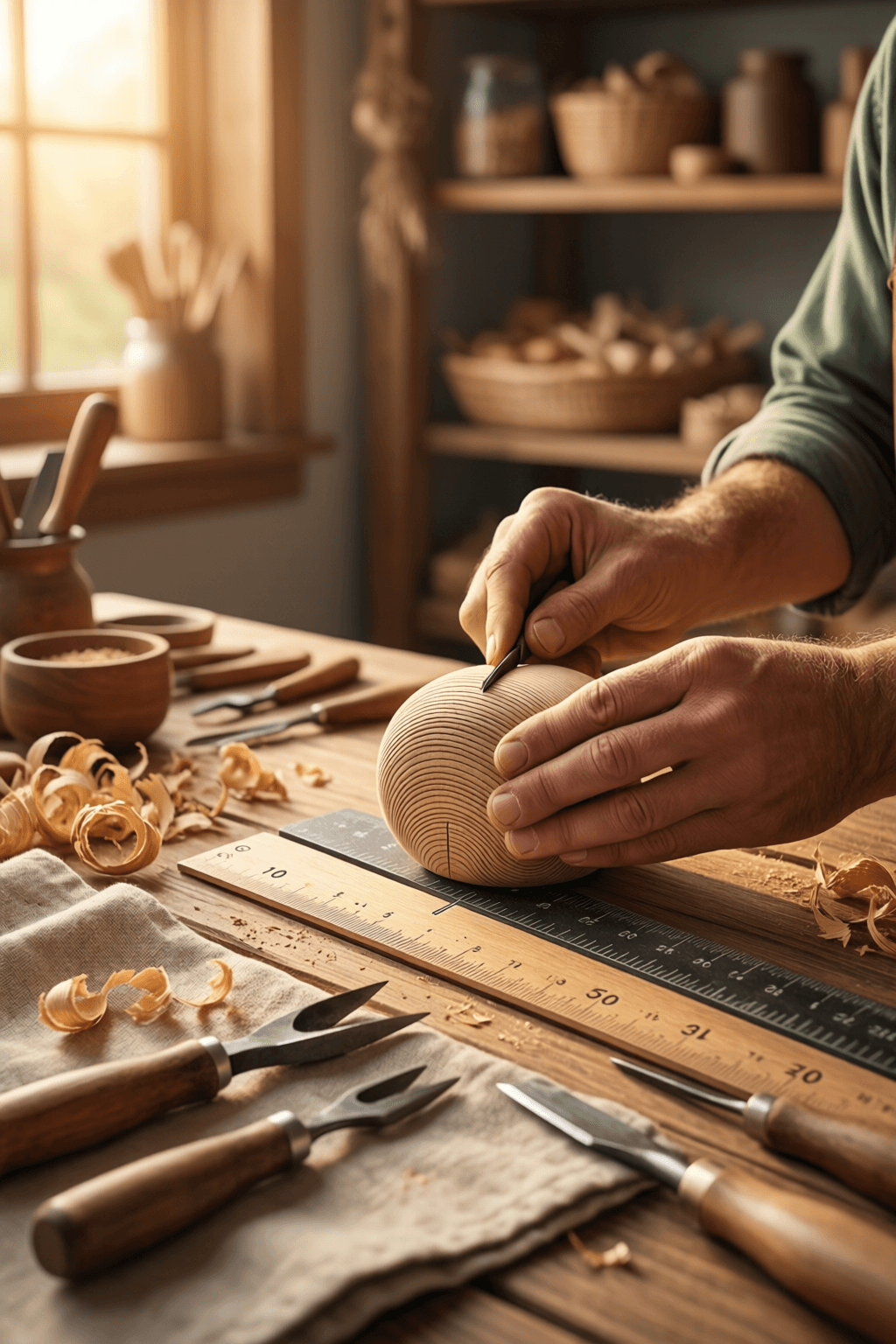
Craftsmanship is the quality of design, shown in something by the skill, time, and attention to detail put in by the artist. — Canvs Editorial
—What lingers after this line?
Defining the Mark of Craft
At its core, this statement presents craftsmanship as visible care. Design is not treated as mere decoration, but as the outward result of discipline, patience, and practiced skill. In other words, what makes an object feel well made is not only how it looks, but how clearly it carries the maker’s intention in every line, joint, texture, or finish. From that starting point, craftsmanship becomes a standard for judging quality beyond surface appeal. A chair, a poem, or a ceramic bowl may differ in function, yet each can reveal the same underlying truth: careful work leaves traces. The viewer senses that time was invested, choices were weighed, and details were refined rather than rushed.
Why Time Becomes Part of Quality
Just as skill gives form to an idea, time allows that idea to mature. The quote implies that excellence rarely appears instantly; instead, it emerges through revision, correction, and sustained attention. This is why handcrafted traditions, from Japanese woodworking to the patient glazing of studio pottery, often command admiration: they embody hours that cannot be faked. Moreover, time in craftsmanship is not simply duration but devotion. William Morris, writing in the Arts and Crafts movement of the late 19th century, argued that meaningful design should unite beauty and labor. His work suggests that when makers linger over a piece, they are not being inefficient; they are building depth into the final result.
Attention to Detail as a Language
Following this idea, attention to detail becomes the language through which craftsmanship speaks. Small choices—a balanced proportion, a hidden seam, a carefully tuned sentence—often communicate more than grand gestures. These details may go unnoticed individually, yet together they produce the feeling of completeness that distinguishes refined work from merely functional output. A useful example appears in architecture. The Swiss architect Peter Zumthor, in Thinking Architecture (1998), describes how materials, joins, and surfaces create atmosphere. His insight reinforces the quote: quality is often shown in the parts people almost overlook. Craftsmanship lives in these subtle decisions, where the maker’s care becomes quietly legible.
The Human Presence in Designed Objects
As the definition unfolds, it also reminds us that craftsmanship carries human presence. An expertly made object reflects the judgment of a person who responded to materials, solved problems, and accepted no easy shortcuts. Even in highly polished design, what we admire is often this sense of relationship between maker and work. Consequently, craftsmanship can create emotional attachment. People keep a leather bag that ages beautifully or a hand-thrown mug whose slight irregularities feel intimate because such objects seem inhabited by effort. The quote therefore points to more than technical success: it describes how care becomes tangible, allowing design to feel personal rather than anonymous.
Craftsmanship in a Fast-Made World
In contrast, contemporary culture often prizes speed, scale, and instant novelty. Against that backdrop, this definition of craftsmanship acts almost like a quiet resistance. It insists that quality cannot be separated from the labor behind it, and that design gains meaning when it bears evidence of concentration rather than haste. Yet this does not mean craftsmanship belongs only to old-world workshops. A digital interface, a film edit, or a typeface can also show the same virtues when creators refine them with precision and restraint. Thus the quote remains widely relevant: wherever skill, time, and attention converge, craftsmanship appears, and quality becomes something both seen and felt.
Recommended Reading
As an Amazon Associate, we earn from qualifying purchases.
One-minute reflection
What's one small action this suggests?
Related Quotes
6 selectedCraftsmanship is the visible edge of art. — David Bayles
David Bayles
At first glance, David Bayles’s line suggests that craftsmanship is the point where inner vision becomes outward form. Art may begin in imagination, intuition, or feeling, but it only enters the world through skillful ex...
Read full interpretation →The beauty of craftsmanship is that it is a dialogue with time, a slow resistance against the rush of the world. — Richard Sennett
Richard Sennett
At its core, Richard Sennett’s line presents craftsmanship as more than skilled labor; it becomes a moral and temporal stance. To make something carefully is to refuse the culture of haste, where speed is often mistaken...
Read full interpretation →Craftsmanship means an uncompromising dedication to excellence and durability. It means doing a job to the very best of your ability, simply because that is the basis of integrity. — The Craftsmanship Initiative
The Craftsmanship Initiative
At its core, this statement defines craftsmanship as more than technical skill; it presents excellence as an ethical obligation. To work with care, precision, and patience is not merely to produce something attractive or...
Read full interpretation →The mark of all good art is not that the thing done is done exactly or finely, but that it is worked out with the head and the workman's heart. — Oscar Wilde
Oscar Wilde
Oscar Wilde immediately shifts the standard by which art is judged. Rather than praising work simply because it is exact, polished, or finely executed, he argues that true artistic value comes from something deeper: thou...
Read full interpretation →Real craftsmanship, regardless of the skill involved, reflects real caring, and real caring reflects our attitude about ourselves, about our fellowmen, and about life. — Spencer W. Kimball
Spencer W. Kimball
Spencer W. Kimball’s statement begins by reframing craftsmanship as something deeper than technical competence.
Read full interpretation →I would almost prefer the word 'craftsman'. He is like one of those old-fashioned ship builders who conceived the build of the boat in their mind and after that touched every single piece. — William Golding
William Golding
At first glance, Golding’s preference for the word “craftsman” shifts attention away from the romantic image of effortless genius and toward disciplined making. The term suggests someone who does not merely imagine a wor...
Read full interpretation →More From Author
More from Canvs Editorial →