
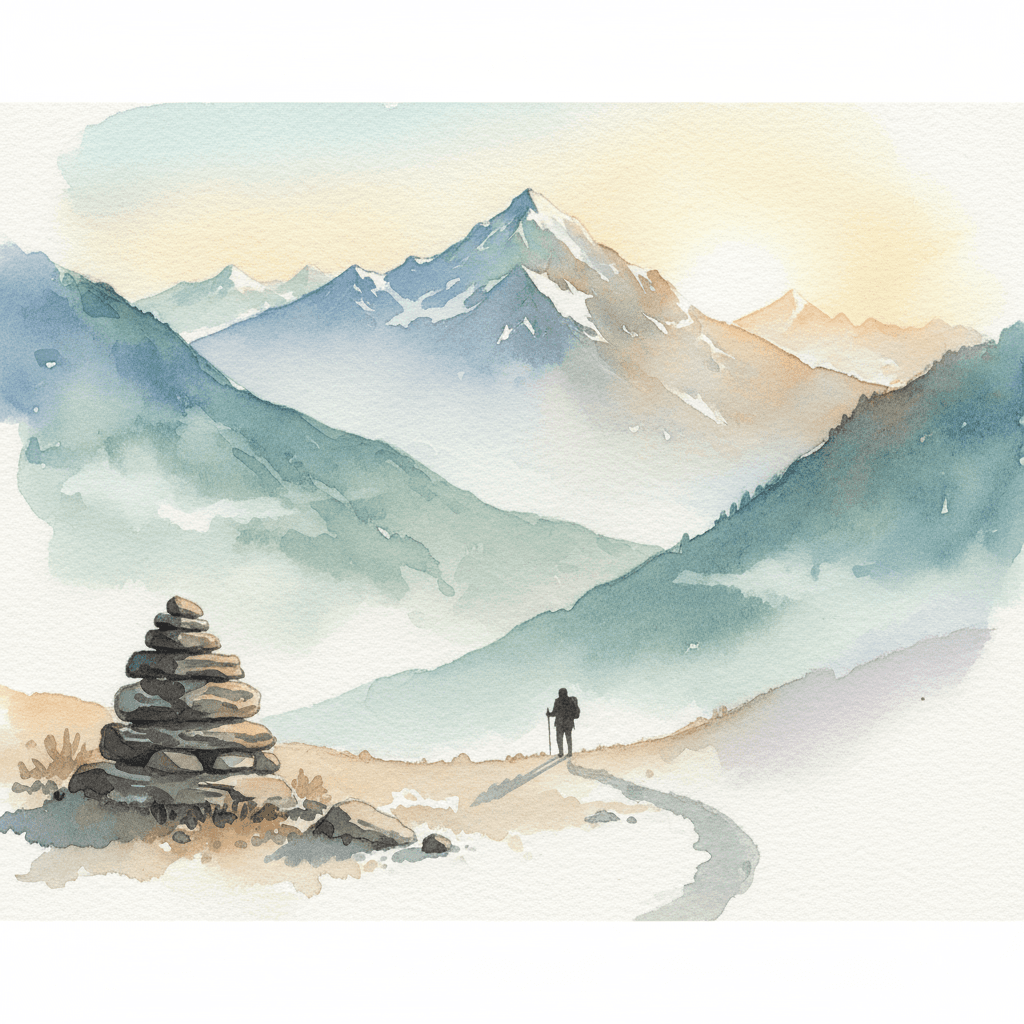
Peaceful resolve paired with steady effort moves mountains. — Thich Nhat Hanh
—What lingers after this line?
From Stillness to Action
Thich Nhat Hanh links inner tranquility to outward change by treating calm as a renewable power source. Peace is not passivity; it is the clarity that prevents wasted motion. When the mind is steady, each step lands where it matters. In Peace Is Every Step (1990), he shows how a single mindful breath can interrupt reactivity, turning frustration into focused care. From this foundation, the mountain-moving begins not with grand gestures but with reliable, unhurried effort. Like water that carves stone, serenity allows persistence to accumulate, day after day, until what once seemed immovable becomes malleable.
Engaged Buddhism in Practice
To see this beyond the meditation cushion, consider his wartime work in Vietnam. Through the School of Youth for Social Service (founded 1964), students rebuilt villages, opened schools, and aided refugees—quietly, consistently, and without hatred. In Vietnam: Lotus in a Sea of Fire (1967), he described compassion as practical labor carried out under fire. Martin Luther King Jr. recognized this ethic, nominating him for the 1967 Nobel Peace Prize. Thus the teaching takes a concrete form: peaceful resolve steadies the hands, while steady effort rebuilds what violence has broken. The pairing does not avoid conflict; it transforms the conditions that feed it.
Small Steps, Lasting Change
Next comes the arithmetic of small gains. Habit researchers show that tiny, repeatable actions compound over time. James Clear’s Atomic Habits (2018) argues that identity shifts through consistent micro-behaviors—exactly the rhythm of mindful practice. Washing dishes with awareness or pausing for five breaths appears trivial, yet it reshapes attention and mood. Because attention is the steering wheel of behavior, reclaiming it multiplies the value of every subsequent effort. In this way, calm cultivates precision, and precision spares effort; what remains, done steadily, becomes powerful.
Nonviolent Movements as Proof
History echoes the formula. Gandhi’s 1930 Salt March married disciplined nonviolence with relentless marching, converting moral clarity into political leverage. Likewise, the Montgomery Bus Boycott (1955–56) succeeded through organized carpools, legal strategy, and sustained civility; King’s Stride Toward Freedom (1958) recounts how training in nonviolence kept courage from hardening into rage. These movements did not triumph through sudden force but through durable resolve expressed in thousands of ordinary acts—meetings, letters, rides, and vigils. The mountains moved were laws and norms, shifted by steady hands that refused to hate.
Psychology of Steadfast Effort
Moreover, psychology clarifies why calm and consistency reinforce each other. Angela Duckworth’s Grit (2016) links long-term achievement to sustained passion and perseverance, while mindfulness research shows that lowered stress reactivity preserves cognitive flexibility. Jon Kabat-Zinn’s Mindfulness-Based Stress Reduction (1979) established that present-moment awareness reduces rumination, which otherwise drains willpower. When stress quiets, attention stabilizes; when attention stabilizes, effort becomes repeatable. The loop is self-reinforcing: peace protects persistence, and persistence confirms peace through incremental progress.
Sustaining Pace Without Burning Out
Finally, mountain-moving requires humane pacing. Thich Nhat Hanh taught bells of mindfulness, tea pauses, and walking meditation at Plum Village so that rest becomes part of the work. Strategic stopping prevents the friction that grinds down good intentions. In practice, this means defining small, finishable tasks, celebrating completion, and returning tomorrow. By respecting limits, we extend our timeline—and on a long enough timeline, steady kindness outperforms hurried force. Thus the mountain yields, not to a shove, but to a rhythm.
One-minute reflection
Where does this idea show up in your life right now?
Related Quotes
6 selectedEverything that is made is made by slow, steady effort. — Mary Oliver
Mary Oliver
Mary Oliver’s line distills a quiet truth: meaningful things rarely appear all at once. Instead, they emerge through repetition, patience, and attention, whether one is writing a poem, raising a family, or restoring a ga...
Read full interpretation →Row steadily, and even a current of doubt will become a path. — Mark Twain
Mark Twain
Mark Twain’s line frames life as a river you cross by rowing, not by waiting for perfect weather. “Row steadily” implies an ordinary, repeatable effort—the kind that matters precisely because it is not heroic in a single...
Read full interpretation →Act with small, steady fires; they will warm the coldest doubt. — Wangari Maathai
Wangari Maathai
Wangari Maathai’s image of “small, steady fires” reframes change as something cultivated rather than forced. Instead of one dramatic blaze that flares out, she points to consistent, modest actions that keep heat alive ov...
Read full interpretation →Start small, and the river of your effort will carry you farther than grand plans alone. — Rabindranath Tagore
Rabindranath Tagore
Tagore’s line treats ambition with gentle skepticism: the decisive force is not the size of your vision but the motion you create by beginning. “Start small” reframes progress as something that can be entered immediately...
Read full interpretation →A single steady effort outshines a burst of fleeting will. — Angela Davis
Angela Davis
Davis’s line redirects attention from dramatic spurts of resolve to the quieter power of reliability. Willpower can spark action, yet sparks alone do not boil the water; a consistent flame does.
Read full interpretation →Do not rush to comfort outcomes; cultivate steady, honest effort. — Seneca
Seneca
To begin, Seneca urges a shift in aim: do not chase quick, comforting outcomes, but cultivate steady, truthful effort. In On Tranquility of Mind, he distinguishes between mere comfort—which dulls the will—and tranquility...
Read full interpretation →More From Author
More from Thich Nhat Hanh →You must love in such a way that the person you love feels free. — Thich Nhat Hanh
At its core, Thich Nhat Hanh’s statement redefines love as an act of care that does not confine. To love someone so that they feel free means offering affection without turning it into control, guilt, or dependence.
Read full interpretation →We are not islands; we are threads in a tapestry. To pull away from the weave is to lose the very texture that makes life hold together. — Thich Nhat Hanh
At its core, Thich Nhat Hanh’s image of threads in a tapestry rejects the fantasy of total self-sufficiency. A single thread may exist on its own, yet it gains meaning, strength, and beauty only through its relation to o...
Read full interpretation →When you learn how to suffer, you suffer far less. Resilience is not about avoiding the fire; it is about becoming fireproof. — Thich Nhat Hanh
At first glance, Thich Nhat Hanh’s quote appears paradoxical: how could learning to suffer make suffering lighter? Yet his point is that pain intensifies when we resist it, fear it, or treat it as a personal failure.
Read full interpretation →Slow down, and you will find that the rhythm of your own heart becomes the master of your work. — Thich Nhat Hanh
At first glance, Thich Nhat Hanh’s words seem to offer simple advice about working more slowly, yet they point to something deeper: a different relationship with time itself. To slow down is not merely to reduce speed, b...
Read full interpretation →