
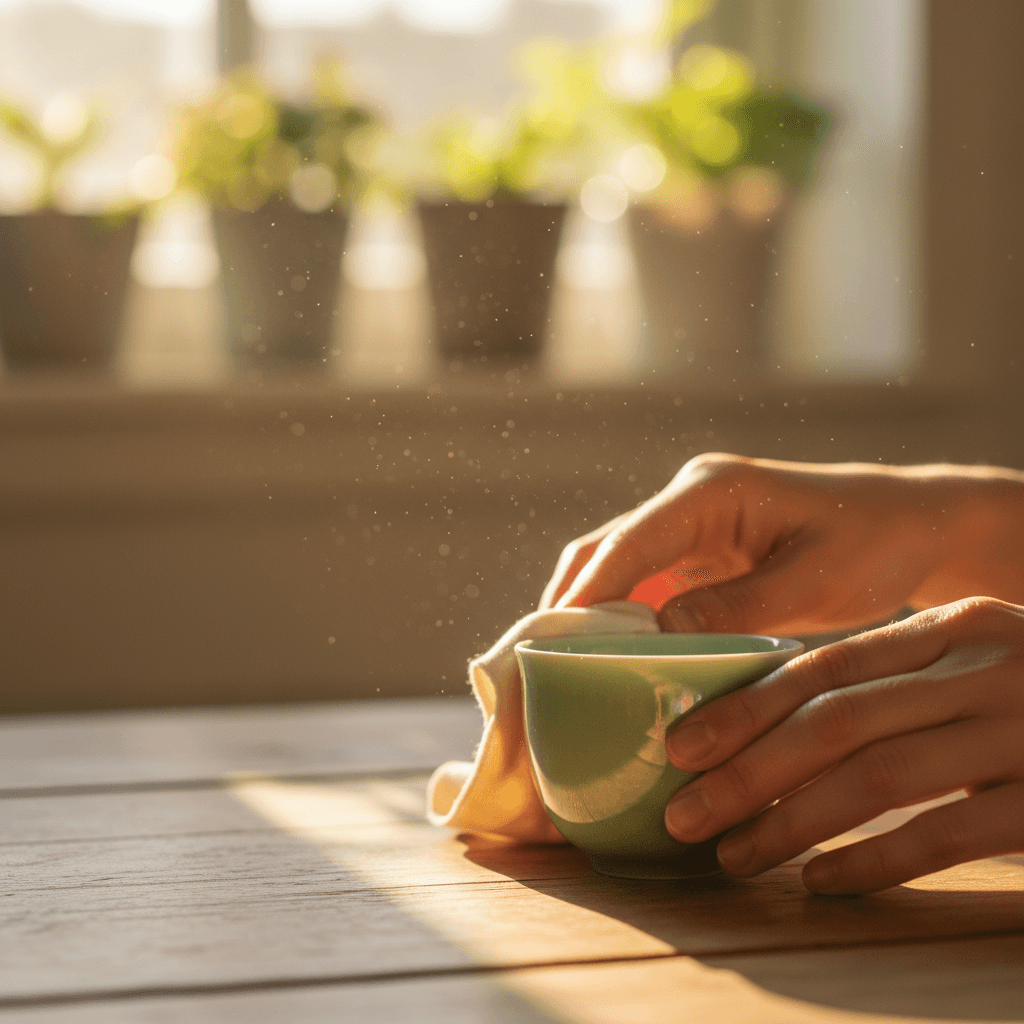
Turn the ordinary into the spectacular by the way you give it care — Confucius
—What lingers after this line?
Reverence Animates the Everyday
Confucius is often paraphrased as teaching that attentive care elevates even the simplest act. In the Analects, he links li (ritual) with jing (reverence), insisting that forms without heartfelt attention are hollow (see Analects 3). In this view, the spectacular is not a property of things but a quality of the way we meet them. A bowl set down with intention, a greeting offered with full presence—these gestures become carriers of meaning. Thus the path from ordinary to extraordinary runs through the inner stance of the doer: when care is present, routine becomes ceremony, and function becomes art.
Small Acts, Lasting Character
From principle to practice, Confucian ethics treats small, repeated actions as the workshop of virtue. Xunzi, expanding the tradition, argued that ritual forms train the crooked wood of human nature into moral shape (Xunzi, “On Ritual”). By approaching daily tasks—sweeping a floor, drafting an email, preparing a meal—with steadiness and respect, we shape ourselves as much as the task. Over time, these micro-rituals accumulate into character, much as countless brushstrokes compose a painting. Consequently, care is both technique and pedagogy: it accomplishes the job while teaching us who we are becoming.
The Craftsman’s Lesson
A classical vignette sharpens the point. In Zhuangzi’s tale of Cook Ding (Zhuangzi, ch. 3), a butcher carves an ox with such attuned ease that his knife never dulls; he moves along the natural seams, guided by years of mindful practice. Although Daoist in origin, the story illuminates a Confucian insight: skill joined to reverent attention turns a mundane task into a quiet spectacle. The wonder lies not in ornament but in fittingness—doing the right thing, in the right way, at the right time. Care reveals hidden structure, and in doing so, reveals the practitioner to herself.
Psychology of Value Through Effort
Modern research echoes this intuition. The IKEA effect shows that people value objects they have labored over more highly than identical ready-made items (Norton, Mochon, and Ariely, 2012). Likewise, studies on savoring suggest that deliberate attention intensifies appreciation and meaning (Bryant and Veroff, 2007). Care, then, is a generator of perceived splendor: when we invest focus, things answer back with richness. This is not mere sentimentality; it is a reproducible shift in perception and attachment. Through effort and mindful presence, we invite the ordinary to disclose its finer grain.
Service, Workmanship, and the Human Touch
Carrying this forward, consider domains where care is instantly legible. In hospitality, a handwritten note and a cup placed with two hands can transform check-in into welcome; Japanese omotenashi embodies this ethos of anticipatory attention. In healthcare, the way a blanket is tucked or a chart is explained dignifies the patient beyond procedure. In craft and design, clean edges, balanced spacing, and thoughtful maintenance broadcast respect. Across settings, the signature of care is consistency without stiffness: gestures are alive, responsive, and patient, turning tasks into experiences.
Stewardship and the Beauty of Repair
Ultimately, care is also stewardship. The Japanese practice of kintsugi repairs broken ceramics with gold lacquer, making fractures part of the story rather than a flaw. Paired with the ethic of mottainai—regret over waste—this approach honors the life of things. In a Confucian frame, such stewardship extends ren (humaneness) outward: to tools, spaces, and communities. By cleaning, mending, and maintaining, we lengthen usefulness and deepen attachment. Thus care does not merely polish the ordinary; it preserves, restores, and re-enchants it, allowing splendor to emerge where others might see only wear.
One-minute reflection
Where does this idea show up in your life right now?
Related Quotes
6 selectedCreate beauty from the ordinary and the ordinary will become extraordinary. — Alice Walker
Alice Walker
Alice Walker has long honored beauty that begins at home and in humble places. Her essay collection In Search of Our Mothers' Gardens (1983) celebrates creativity nurtured in kitchens, fields, and sewing rooms, while the...
Read full interpretation →Observe the ordinary and celebrate it fiercely; living is an act of artistry. — Mary Oliver
Mary Oliver
Mary Oliver’s line makes a simple, subversive claim: artistry begins not with paint or pen but with looking. To observe the ordinary is to mix the first colors of a life well made.
Read full interpretation →Look for the extraordinary in the ordinary. — F. Scott Fitzgerald
F. Scott Fitzgerald
This quote encourages us to appreciate the small, seemingly mundane aspects of life. By shifting our perspective, we can find wonder and inspiration in ordinary moments.
Read full interpretation →The power of finding beauty in the humblest things makes home happy and life lovely. — Louisa May Alcott
Louisa May Alcott
Alcott’s insight begins with a simple shift: when we look closely, the ordinary becomes luminous. A chipped mug, morning light on a wooden table, or the soft rhythm of sweeping a floor can center the heart.
Read full interpretation →Learning is a lifelong process of unlearning the need for immediate results. Patience is the discipline of trusting the slow, quiet compounding of your efforts. — Confucius
Confucius
At its core, this saying presents learning not as a race toward instant achievement, but as a gradual reshaping of expectation. The phrase “unlearning the need for immediate results” suggests that education is not only a...
Read full interpretation →Anything worth having is worth waiting for, and everything worth doing is worth doing with patience. — Confucius
Confucius
At its core, this saying ties value to delay. Confucius suggests that truly meaningful things do not arrive instantly; instead, they ask us to endure uncertainty, effort, and time.
Read full interpretation →More From Author
More from Confucius →Learning is a lifelong process of unlearning the need for immediate results. Patience is the discipline of trusting the slow, quiet compounding of your efforts. — Confucius
At its core, this saying presents learning not as a race toward instant achievement, but as a gradual reshaping of expectation. The phrase “unlearning the need for immediate results” suggests that education is not only a...
Read full interpretation →Anything worth having is worth waiting for, and everything worth doing is worth doing with patience. — Confucius
At its core, this saying ties value to delay. Confucius suggests that truly meaningful things do not arrive instantly; instead, they ask us to endure uncertainty, effort, and time.
Read full interpretation →A common man marvels at uncommon things. A wise man marvels at the commonplace. — Confucius
Confucius draws a quiet but profound distinction between two kinds of attention. The common man, in this saying, is captivated by what appears exceptional—spectacle, rarity, or public greatness.
Read full interpretation →To learn is to admit you do not know. The moment you stop being a student is the moment your growth ends. — Confucius
Confucius frames learning not as the display of knowledge but as the honest recognition of its limits. In that sense, to learn is to begin with humility: one must first admit, without shame, that there is something missi...
Read full interpretation →