
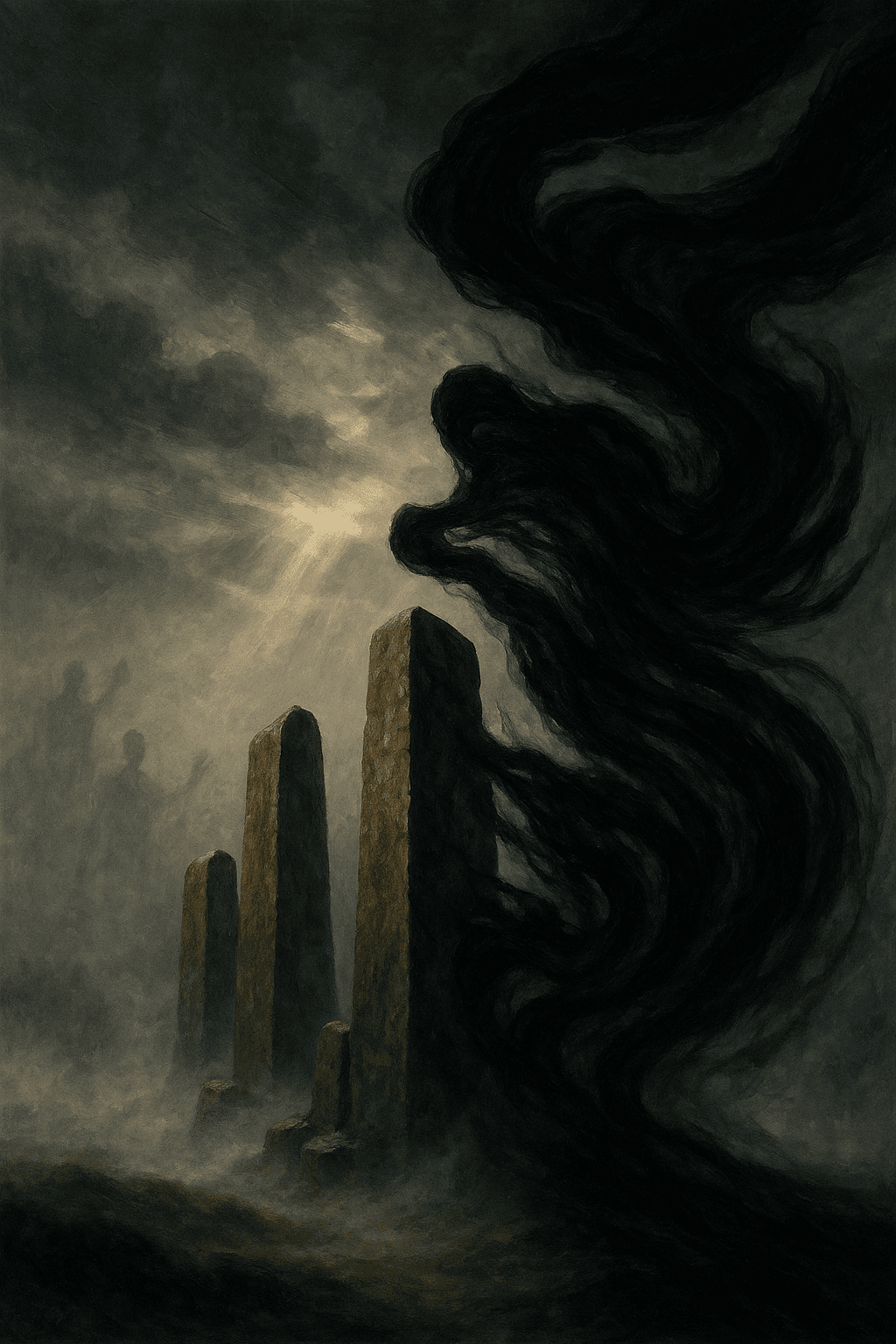
The struggle of man against power is the struggle of memory against forgetting. — Milan Kundera
—What lingers after this line?
The Core of Kundera’s Paradox
Milan Kundera’s observation turns a political struggle into an existential one, arguing that preserving memory is itself an act of resistance. In this view, the contest between individuals and oppressive power is not merely fought on battlefields or in public squares, but within the private realm of remembrance. By framing memory as defiance, Kundera elevates the act of recalling truth to a moral imperative, suggesting that the very fabric of history depends on our collective and personal recollections.
Historical Manipulation and Collective Amnesia
Looking back through history, totalitarian regimes have frequently tried to erase or rewrite the past. George Orwell’s ‘Nineteen Eighty-Four’ (1949) famously depicts a society where the past is continually altered to serve the present regime, encapsulating Kundera’s warning. Similarly, the Soviet Union’s alteration of photographs and records demonstrates how controlling memory underpins authoritarian power. In both fictional and real-world cases, the assault on memory facilitates the consolidation of power and the suppression of dissent.
Personal Memory and Identity
Beyond collective history, the struggle extends inward to the domain of personal memory. Our sense of self is built upon remembered experiences, and attempts by power to erase or distort them undermine identity at its core. For instance, survivors of traumatic events frequently fight to have their narratives recognized against denial or state-sponsored forgetting, as seen in post-conflict societies seeking truth and reconciliation. Thus, remembering becomes not just resistance but a reclamation of autonomy.
Art, Literature, and Preserving Truth
Transitioning from politics to culture, artists and writers have long assumed the role of custodians of memory. Kundera’s own novels, like ‘The Book of Laughter and Forgetting,’ exemplify how literature can function as an act of preservation against the tide of enforced amnesia. Similarly, Maya Angelou’s memoirs chart the ways in which personal and collective history can be shielded from obliteration through storytelling, highlighting the enduring power of art to bear witness.
The Ongoing Relevance of Remembrance
Ultimately, Kundera’s insight reverberates in contemporary debates about history, justice, and digital memory. In an age where misinformation spreads rapidly and histories are contested, the act of remembering—and insisting on the truth of past events—remains a critical form of resistance. This enduring struggle suggests that memory, both fragile and resilient, is not merely a passive archive but an active battleground on which the fate of freedom is continually decided.
One-minute reflection
What does this quote ask you to notice today?
Related Quotes
6 selectedThe present changes the past. Looking back you do not find what you left behind. — Kiran Desai
Kiran Desai
At first glance, Desai’s line seems paradoxical, yet it captures a basic truth about human memory: the past is not stored inside us like a sealed archive. Instead, each act of remembering rebuilds events through the lens...
Read full interpretation →The most important milestones are the ones that come to the door of memory unannounced, stray dogs that amble in, sniff around a bit and simply never leave. — Susan B. Anthony
Susan B. Anthony
Susan B. Anthony reframes the idea of a milestone by shifting attention away from public achievements and toward the private moments that linger unexpectedly.
Read full interpretation →Art begins with resistance—at the point where resistance is overcome. No human masterpiece has ever been created without great labor. — André Gide
André Gide
At its core, André Gide’s statement defines art not as effortless inspiration but as a struggle that starts where friction appears. Resistance may take many forms—technical difficulty, self-doubt, material limits, or the...
Read full interpretation →If you want to test your memory, try to recall what you were worrying about one year ago. — E. Joseph Cossman
E. Joseph Cossman
E. Joseph Cossman’s remark begins with an almost playful challenge: if you want to test your memory, try recalling what troubled you a year ago.
Read full interpretation →Gratitude is the memory of the heart. — Jean Baptiste Massieu
Jean Baptiste Massieu
Jean Baptiste Massieu’s line transforms gratitude from a simple polite response into something deeper and more enduring. At once, he suggests that the heart keeps its own kind of record, preserving moments of kindness lo...
Read full interpretation →Joy is the greatest act of resistance. — Valarie Kaur
Valarie Kaur
Valarie Kaur’s line turns a feeling into a stance: joy is not merely a private mood but a public refusal to be reduced by injustice. Rather than treating happiness as naïve, she suggests joy can be chosen with clear eyes...
Read full interpretation →More From Author
More from Milan Kundera →When the heart speaks, the mind finds it indecent to object. — Milan Kundera
This quote suggests that emotions can be so powerful that they override rational thought. When feelings are deeply felt, the mind hesitates to challenge them, almost as if doing so would be improper.
Read full interpretation →Even paradise will not be paradise without freedom. — Milan Kundera
Milan Kundera’s observation conveys a striking idea: even the most perfect setting loses its meaning if freedom is absent. While the word ‘paradise’ typically evokes images of bliss and fulfillment, Kundera challenges us...
Read full interpretation →