
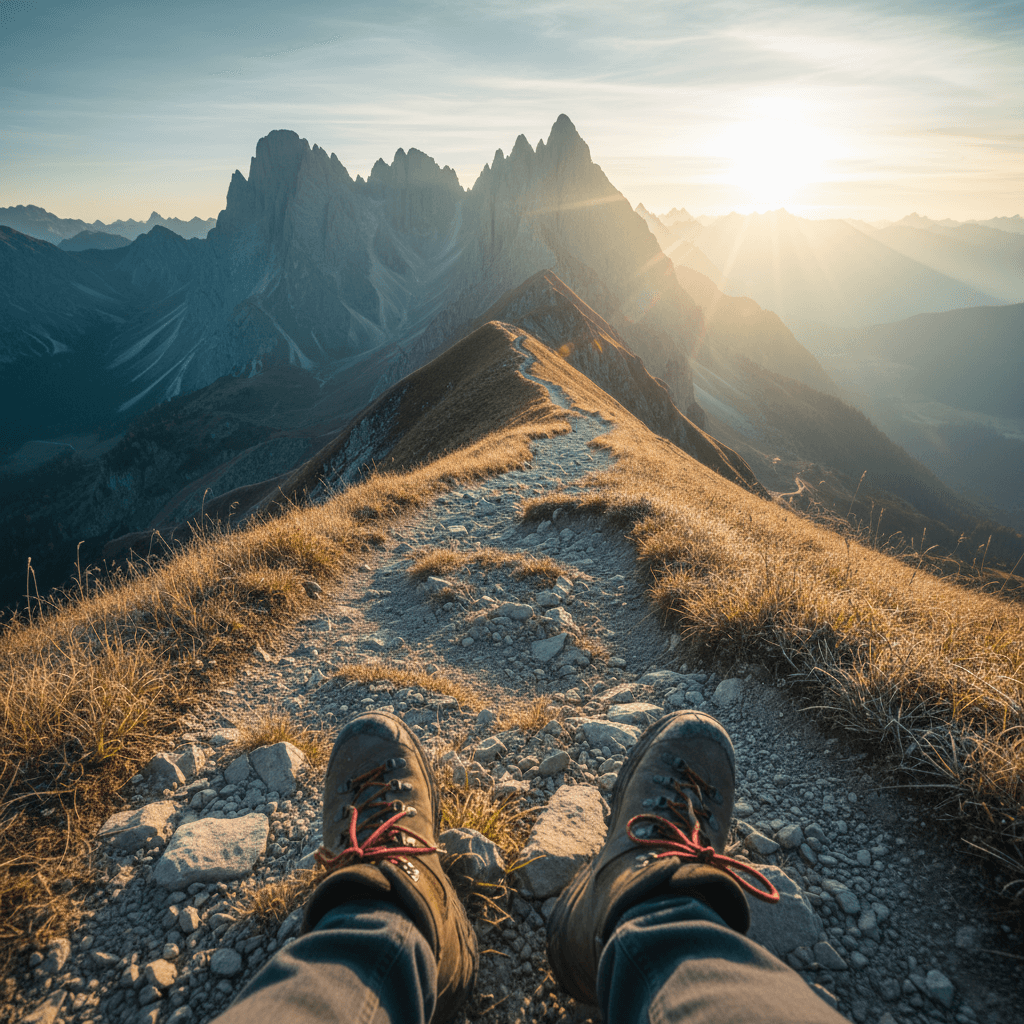
The true traveler learns by moving both feet and heart toward what matters. — José Martí
—What lingers after this line?
The Union of Steps and Sentiment
Martí’s line blends locomotion with devotion: to travel truly, we must move not only through space but toward significance. The feet carry us, yet the heart chooses the direction, filtering choices through care and conviction. Thus, travel becomes less a catalogue of distances and more a disciplined pursuit of what matters—justice, beauty, friendship, and truth—so that every mile advances understanding.
Martí’s Ethical Compass in Context
To see why this matters, consider Martí’s life across the Americas. Exiled and itinerant, he wrote Nuestra América (1891) as a summons to know the continent from within—its people, languages, and shared struggles—rather than through imported ideals. His travels were apprenticeships in solidarity; movement taught him to align perception with responsibility, turning observation into a pledge to serve freedom.
Learning Through Encounter and Humility
Moreover, the traveler learns by meeting others on their terms. Ibn Battuta’s Rihla (c. 1355) shows knowledge gathered at caravanserais and courts, where hospitality and law revealed the texture of societies. Likewise, Bashō’s Oku no Hosomichi (1702) models attentive wandering, where a roadside hut or a fleeting moonrise refines the traveler’s sensibility. In the same spirit, Clifford Geertz’s “thick description” (1973) reminds us that meaning resides in context; humility is the passport.
From Motion to Meaningful Itineraries
In this light, routes should reflect values. Slow travel—choosing trains over rushed flights, lingering in local markets, learning a few phrases—prioritizes depth over display. Responsible volunteering and community-led tours avoid extractive gazes and channel resources where they count. Ryszard Kapuściński’s Travels with Herodotus (2004/2007) shows how carrying a questioning text turns the road into a seminar, converting curiosity into ethical attention.
What Science Says About Feet and Heart
Concurrently, research suggests the body primes the mind for discovery. A Stanford study (Oppezzo and Schwartz, 2014) found that walking boosted creative output by roughly 60%, indicating that physical movement loosens cognitive pathways. Complementing this, Keltner and Haidt (2003) argue that awe expands attention and fosters prosociality—the heart’s openness. Together, these findings echo Martí: motion and emotion co-create insight.
Pilgrimage as Inner Practice
Yet the most consequential miles may be inward. Pilgrim diaries on routes like the Camino de Santiago describe how steady walking synchronizes breath, memory, and purpose, transforming landscapes into mirrors. Augustine’s Confessions suggests a similar turn: we cross seas to marvel at wonders and forget to wonder at ourselves. Reflection—through journaling, silence, or conversation—turns experiences into conviction.
Bringing the Journey Home
Ultimately, travel proves itself after the return. Skills learned abroad—listening across difference, noticing small systems, choosing time over haste—can reorient daily life: buying from local producers, greeting neighbors by name, or advocating for fair policies. Thus the traveler, guided by both feet and heart, extends the road’s lessons into enduring commitments, keeping Martí’s injunction alive with every grounded step.
One-minute reflection
What feeling does this quote bring up for you?
Related Quotes
6 selectedLearning to love yourself is like learning to walk – essential, life-changing, and the only way to stand tall. — Vironika Tugaleva
Vironika Tugaleva
Vironika Tugaleva’s comparison begins with a simple but powerful truth: self-love is not a luxury, but a basic human necessity. Just as walking allows a child to move through the world with growing independence, learning...
Read full interpretation →The most gifted members of the human species are at their creative best when they cannot have their way, and must compensate for what they miss by realizing and cultivating their capacities. — Bryant H. McGill
Bryant H. McGill
Bryant H. McGill’s observation begins with a striking reversal: gifted people may not reach their highest potential when everything comes easily, but when something blocks their path.
Read full interpretation →A mind grows by staying with difficulty long enough for the experience to change it. — Mary Catherine Bateson
Mary Catherine Bateson
Mary Catherine Bateson’s observation begins with a quiet but demanding truth: the mind does not grow merely by encountering difficulty, but by remaining with it. Challenge becomes transformative only when we resist the u...
Read full interpretation →Consistency is a superpower. — Ryan Holiday
Ryan Holiday
Ryan Holiday’s line begins with a deceptively simple idea: greatness is rarely built through dramatic gestures. More often, it emerges from repeated actions that seem ordinary in isolation but become extraordinary over t...
Read full interpretation →Confidence is silent. Insecurities are loud. — Unknown (Wait—skip/replace with: True nobility is being superior to your former self. — Ernest Hemingway)
Ernest Hemingway
At its core, Hemingway’s line redefines nobility as an inward achievement rather than a social rank. Instead of measuring worth by wealth, pedigree, or dominance over others, it points to a quieter standard: becoming bet...
Read full interpretation →You are under no obligation to be consistent with the person you were yesterday. — James McCrae
James McCrae
At its core, James McCrae’s line challenges the quiet pressure to remain legible to others. Many people feel bound to opinions, habits, or identities simply because they once claimed them, as though consistency were a mo...
Read full interpretation →More From Author
More from José Martí →Forward is a verb; it asks for hands and will — José Martí
When José Martí writes that “Forward is a verb,” he transforms what we usually treat as a mere direction into a call to act. Instead of thinking of “forward” as a passive movement that somehow happens to us, Martí insist...
Read full interpretation →Wake each morning with purpose; small intentions can set continents in motion. — José Martí
José Martí’s line invites us to reconsider the moment most people treat casually: waking up. Rather than seeing morning as a blur of alarms and obligations, he frames it as a decisive threshold.
Read full interpretation →Cultivation of the mind is as necessary as food to the body. — José Martí
José Martí, the Cuban poet, journalist, and independence leader (1853–1895), framed learning not as a luxury but as sustenance. When he declares that cultivating the mind is as necessary as food, he casts knowledge as th...
Read full interpretation →Conquer yourself and the world lies at your feet. — José Martí
José Martí (1853–1895), the Cuban poet and independence leader, binds political liberation to inner discipline when he writes, “Conquer yourself and the world lies at your feet.” The line reads less like a boast than a b...
Read full interpretation →