
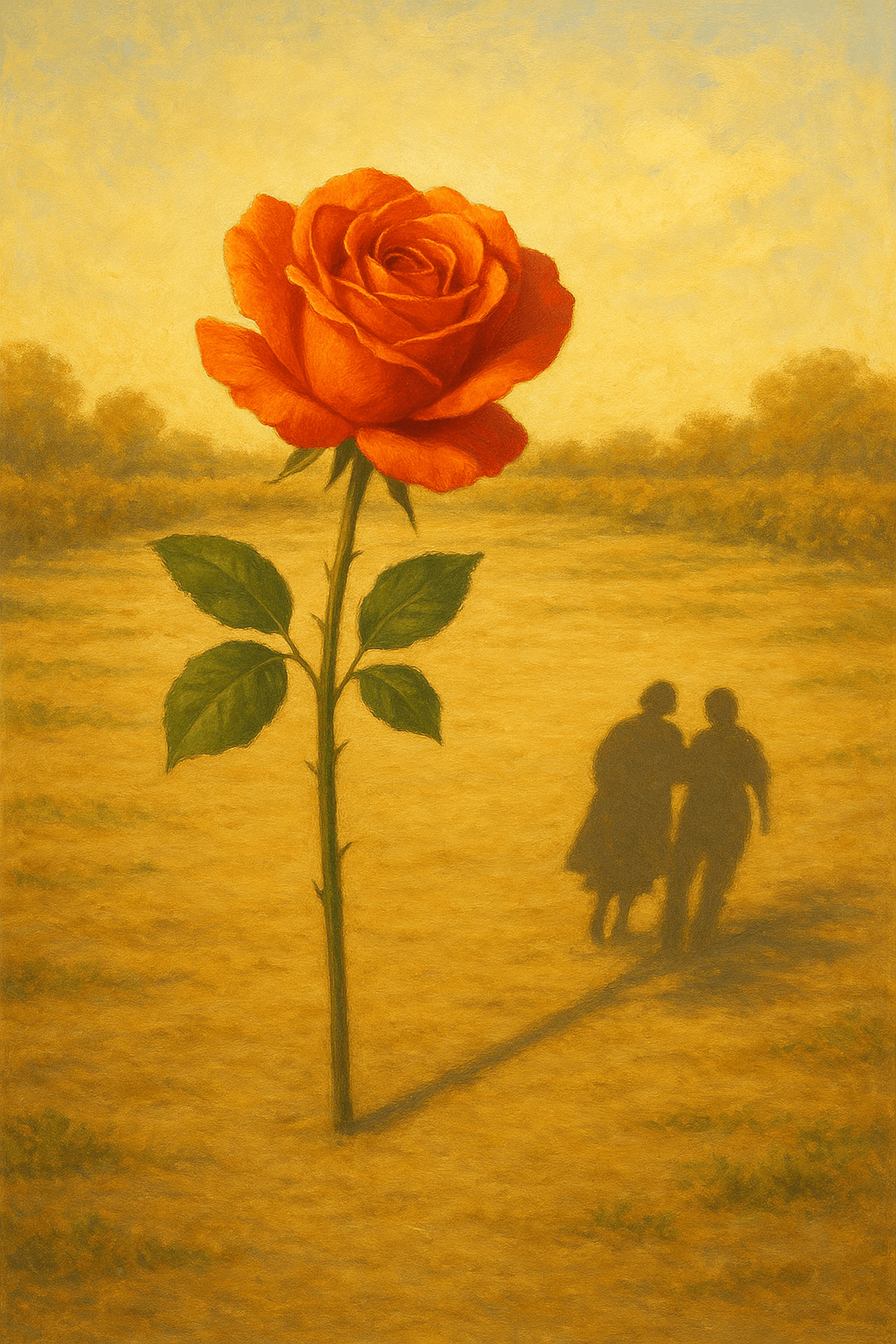
A single rose can be my garden… a single friend, my world. — Leo Buscaglia
—What lingers after this line?
Finding Abundance in Small Gestures
Buscaglia’s evocative metaphor highlights how even a single rose—an emblem of beauty and affection—can count as a full garden for the appreciative soul. This observation reminds us that true value often lies not in quantity but in the ability to appreciate singular, meaningful gifts. Much like a rose blooming alone in a field, one precious gesture can fill emotional landscapes with joy, demonstrating how the smallest acts or presences can enrich our lives beyond measure.
The Singular Impact of Friendship
Building on this metaphor, Buscaglia elevates friendship to a universal scale: just one friend can constitute an entire world. This echoes Ralph Waldo Emerson’s reflections in 'Friendship' (1841), where the author contends that a sole genuine connection is worth more than countless acquaintances. Such a profound relationship offers companionship, support, and understanding, acting as a steady anchor amid the turbulence of life.
Emotional Fulfillment Through Connection
Transitioning from philosophical reflection to psychology, studies by psychologist John Cacioppo suggest that even a single deep human bond significantly improves well-being and mitigates feelings of isolation. This underscores Buscaglia’s point: it is intimacy and genuine interaction, rather than social quantity, that truly satisfies our emotional needs and creates a sense of belonging.
Lessons from Literature and Real Life
In extending this idea, countless literary works affirm the transformative power of a lone friend. Consider Charlotte’s unwavering loyalty to Wilbur in E.B. White’s 'Charlotte’s Web' (1952): their friendship changes the fate not just of two individuals, but the community around them. Such stories resonate with readers because they reflect our own experiences—recognizing that one supportive friend can brighten even the darkest moments.
Cultivating Gratitude for the Present
Finally, Buscaglia’s insight invites us to shift our focus from longing for more to appreciating what we have. The garden and the world, vast as they may be, can be distilled down to singular, treasured experiences—a rose or a friend. By embracing gratitude and presence in the moment, we come to see richness in life’s simplest offerings, ultimately finding fulfillment in places we might have overlooked.
One-minute reflection
Where does this idea show up in your life right now?
Related Quotes
6 selectedWe are not born for ourselves alone; our country and our friends have a share in us. — Marcus Tullius Cicero
Marcus Tullius Cicero
At its core, Cicero’s line rejects the idea that a human life is a private possession. In works such as De Officiis (44 BC), he argues that each person is bound by obligations that extend outward to family, friends, and...
Read full interpretation →I have learned that to be with those I like is enough. — Walt Whitman
Walt Whitman
Whitman’s line reduces happiness to something disarmingly plain: the presence of beloved company. Rather than chasing wealth, status, or elaborate pleasures, he suggests that being with people one genuinely likes can alr...
Read full interpretation →I will get there, but now I'm here, and here is wonderful. — Jenny Offill
Jenny Offill
Jenny Offill’s line gently overturns the modern obsession with destinations. At first, “I will get there” acknowledges ambition and movement, yet the sentence immediately returns us to the present: “but now I’m here.” In...
Read full interpretation →Don't go expecting perfection; be satisfied with even the smallest progress. — Marcus Aurelius
Marcus Aurelius
Marcus Aurelius advises against the exhausting demand for flawlessness and redirects attention toward modest improvement. In the spirit of Stoic thought, especially in his Meditations (c.
Read full interpretation →A crust eaten in peace is better than a banquet partaken in anxiety. — Aesop
Aesop
At first glance, Aesop’s saying contrasts two meals, yet its real subject is the quality of life surrounding them. A dry crust seems poor beside a banquet, but once peace enters the comparison, the values reverse.
Read full interpretation →To have friends who will always take you to higher ground is an incalculable blessing. — John Green
John Green
John Green’s line frames friendship not merely as companionship, but as a force that elevates. To be taken to “higher ground” suggests more than comfort in difficult moments; it implies moral, emotional, and even intelle...
Read full interpretation →More From Author
More from Leo Buscaglia →Your talent is God's gift to you. What you do with it is your gift back to God. - Leo Buscaglia
This quote suggests that individual talents and abilities are divinely granted. Each person is born with unique skills and attributes bestowed upon them by God.
Read full interpretation →Change is the end result of all true learning. — Leo Buscaglia
This quote highlights the idea that genuine learning should lead to personal transformation. It's not enough to acquire knowledge; one must apply it to foster change in their lives.
Read full interpretation →Act with integrity and you will never be alone. — Leo Buscaglia
This quote underscores the importance of integrity. Acting with honesty and strong moral principles attracts respect and fosters meaningful relationships, reducing feelings of loneliness.
Read full interpretation →Life is uncharted territory. It reveals its story one moment at a time. — Leo Buscaglia
This quote emphasizes that life is an unpredictable journey. Much like exploring an uncharted map, we uncover its mysteries and opportunities one step at a time.
Read full interpretation →