
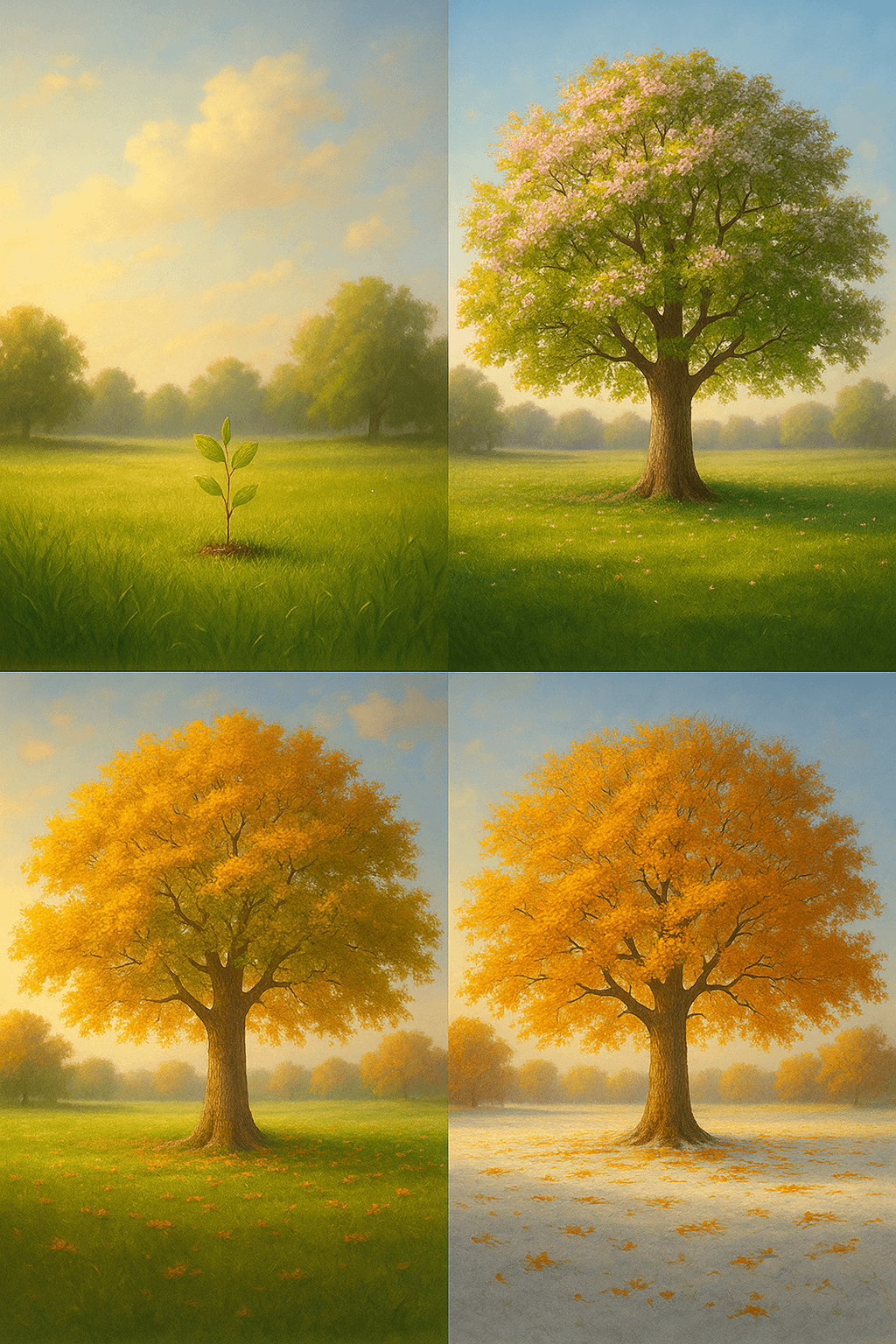
Do not regret growing older. It is a privilege denied to many. — Unknown, often attributed but recognized in cultural context
—What lingers after this line?
The Hidden Blessing of Age
The saying encourages us to reframe aging from a burden to a blessing. While society often fixates on youth and vitality, this quote insists that growing older is not a detriment but a unique privilege. Every added year, wrinkle, and memory is evidence of a journey many are unable to complete. This recognition invites an appreciation for the time we are given, rather than disdain for its effects.
Cultural Attitudes towards Aging
Historically, cultures have approached aging with a range of attitudes—from reverence to reluctance. For example, in many East Asian societies, elders are esteemed as vessels of wisdom, their accrued years celebrated at family gatherings and public ceremonies. In contrast, Western media frequently valorizes youth, sometimes casting age as something to resist or conceal. This quote, often circulated across both traditions (as noted in various online forums and wisdom compilations), challenges such negative biases by illuminating aging’s inherent value.
Loss as a Lens for Gratitude
Further deepening the sentiment, the phrase ‘a privilege denied to many’ prompts reflection on those whose lives end prematurely. From tragic events to illness, countless individuals are deprived of growing old. By recognizing these unrealized futures, we are guided to feel gratitude for the milestones and years that others never reach. This shift in perspective is frequently echoed in bereavement circles and memoirs of loss, where survivors find solace in continuing the journey on behalf of those gone.
Aging, Purpose, and Meaning
With the acknowledgement of aging as a privilege, individuals often discover renewed purpose. Viktor Frankl’s *Man’s Search for Meaning* (1946) illustrates how confronting our mortality and recognizing the fragility of life can sharpen our sense of mission and connection. Those who live to an older age, then, are granted a precious opportunity to contribute wisdom, nurture relationships, and experience deeper fulfillment—an advantage unavailable to the young who are taken before their time.
Embracing the Years Ahead
Finally, this quote serves as an invitation—to embrace each birthday and gray hair with gratitude, rather than regret. By viewing aging as an achievement rather than a loss, we can approach the future with acceptance and curiosity. Thus, celebrating our years becomes not only an act of self-compassion, but also a tribute to those who never had the chance. In this way, age transforms from something to lament to something to honor and cherish.
Recommended Reading
As an Amazon Associate, we earn from qualifying purchases.
One-minute reflection
Why might this line matter today, not tomorrow?
Related Quotes
6 selectedGratitude is a divine emotion: it fills the heart, but not to bursting; it warms it, but not to fever. — Charlotte Brontë
Charlotte Brontë
Charlotte Brontë presents gratitude as both elevated and restrained, calling it a “divine emotion” that enriches the heart without overwhelming it. From the start, her phrasing suggests that true thankfulness is powerful...
Read full interpretation →Reflect upon your present blessings, of which every man has plenty; not on your past misfortunes, of which all men have some. — Charles Dickens
Charles Dickens
At its heart, Dickens’s sentence asks for a deliberate shift in attention. Rather than denying pain, he urges us to look first at the blessings still present in our lives, however ordinary they may seem.
Read full interpretation →Acknowledging the good that you already have in your life is the foundation for all abundance. — Eckhart Tolle
Eckhart Tolle
At its heart, Eckhart Tolle’s statement argues that abundance does not begin with acquisition but with recognition. Before people can feel that life is full, they must first notice the value already present in ordinary m...
Read full interpretation →Gratitude is a way of saying that we are not the masters of our own existence. — Henri Nouwen
Henri Nouwen
Henri Nouwen’s statement begins with a quiet but radical insight: gratitude is more than politeness or positive thinking. At its deepest level, it is an admission that life is received, not manufactured entirely by our o...
Read full interpretation →Gratitude is like humor—it's best served with a side of sarcasm. — George Carlin
George Carlin
At first glance, George Carlin’s line turns gratitude into a joke, but that joke carries a recognizable truth. By comparing thankfulness to humor and insisting it is ‘best served with a side of sarcasm,’ he suggests that...
Read full interpretation →Home is where laughter and gratitude grow. — Melody Beattie
Melody Beattie
At first glance, Melody Beattie’s line reframes home as something more living than a building. Instead of focusing on property, décor, or permanence, it suggests that home is recognized by what flourishes inside it: laug...
Read full interpretation →