
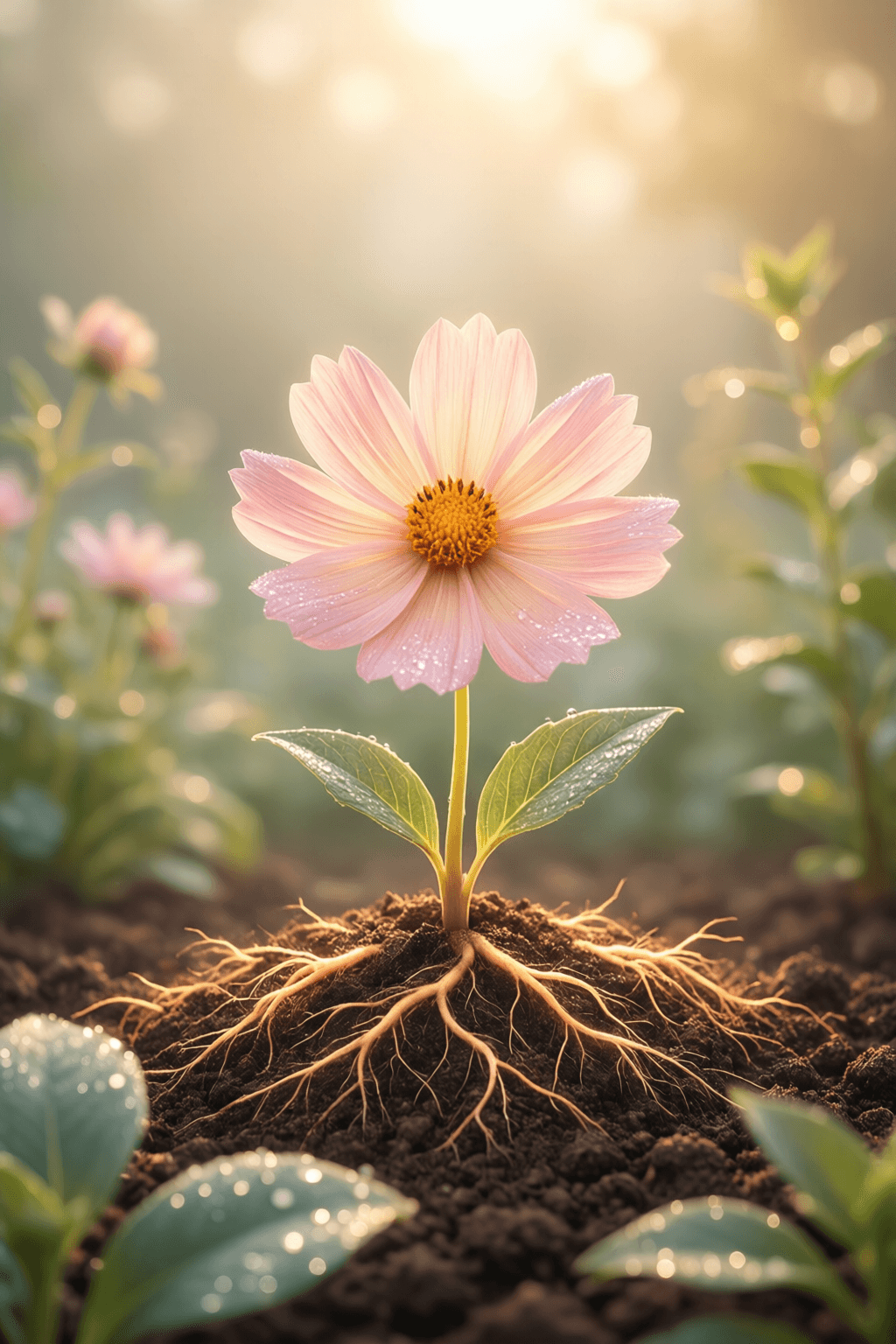
Gratitude is the fairest blossom which springs from the soul. — Henry Ward Beecher
—What lingers after this line?
An Image of Inner Flowering
At first glance, Henry Ward Beecher’s metaphor turns gratitude into something living and visible: a blossom emerging from the hidden depths of the soul. By choosing the image of a flower, he suggests that thankfulness is not forced or mechanical, but organic—something that grows when the inner life is healthy, receptive, and awake. In this sense, gratitude becomes evidence of spiritual vitality. Moreover, the word “fairest” gives gratitude a special rank among human qualities. Beecher implies that of all the emotions and virtues the soul can produce, gratitude is among the most beautiful because it transforms both the person who feels it and the world around them. What begins inwardly soon becomes outward grace.
Why Beauty Belongs to Thankfulness
From that image, it follows that gratitude is beautiful not merely because it feels pleasant, but because it reveals humility. A grateful person recognizes that life’s goods—love, kindness, opportunity, even ordinary peace—are not entirely self-made. This recognition softens pride and replaces entitlement with wonder, making gratitude morally as well as emotionally attractive. In literature and philosophy, this beauty appears repeatedly. Cicero called gratitude “not only the greatest of virtues, but the parent of all the others” in De Officiis (44 BC), suggesting that thankfulness gives rise to generosity, loyalty, and justice. Thus Beecher’s blossom is not decorative alone; it is fertile, producing further goodness.
The Soul as Soil
Yet Beecher’s sentence also invites a deeper question: what allows this blossom to spring up at all? The metaphor implies that the soul is like soil, and gratitude depends on its condition. In a life hardened by bitterness, envy, or constant comparison, gratitude struggles to grow. By contrast, reflection, memory, and humility create the inner ground where thankfulness can take root. This idea appears in spiritual traditions across cultures. The biblical passage 1 Thessalonians 5:18 urges believers to “give thanks in all circumstances,” not because every event is pleasant, but because the practice itself reshapes the heart. In other words, gratitude is both a natural bloom and a cultivated habit.
A Response to Gifts Received
Building on this, gratitude always points beyond the self toward a giver, a gift, or a moment of grace. We are grateful for a friend’s loyalty, a stranger’s kindness, a recovered health, or even a sunrise that asks nothing in return. Beecher’s metaphor works so well because flowers do not bloom in isolation from the world around them; likewise, gratitude arises through relationship. A simple anecdote captures this truth: when people recall a teacher who changed their lives, they often remember not only the lesson but the feeling of being seen. Years later, their gratitude remains fresh because it honors a gift that shaped them. In that way, gratitude preserves meaning, turning memory into living appreciation.
Gratitude in Times of Hardship
Still, the quote does not suggest that gratitude belongs only to easy or prosperous seasons. In fact, blossoms are often most striking against rough terrain, and thankfulness can become especially powerful in suffering. Viktor Frankl’s Man’s Search for Meaning (1946) reflects on how even in extreme hardship, moments of beauty, love, and inward freedom could still be recognized. Gratitude, then, is not denial of pain but defiance of despair. Consequently, Beecher’s image gains emotional depth: the soul’s fairest blossom may emerge not despite suffering alone, but sometimes through it. To remain thankful in dark times is to affirm that goodness has not wholly vanished from the world.
From Inner Feeling to Outer Grace
Finally, Beecher’s metaphor reaches its fullest meaning when gratitude becomes action. A blossom is meant to be seen and shared; similarly, thankfulness naturally expresses itself in words, gestures, and generosity. Saying “thank you,” returning kindness, or showing patience to others are all ways the inner flower opens outward. This is why grateful people often make communities gentler and more humane. Their appreciation reduces resentment and increases attentiveness, creating a chain of goodwill. In the end, Beecher’s quote is not only an observation about the soul’s beauty, but also a quiet moral invitation: let gratitude grow, and let its bloom be visible in the way one lives.
One-minute reflection
What's one small action this suggests?
Related Quotes
6 selectedThe art of being happy lies in the power of extracting happiness from common things. — Henry Ward Beecher
Henry Ward Beecher
The quote suggests true happiness comes from appreciating simple, everyday experiences rather than waiting for extraordinary events.
Read full interpretation →Gratitude is the closest thing to beauty manifested in an emotion. — Mindy Kaling
Mindy Kaling
At first glance, Mindy Kaling’s line suggests that beauty is not only something we see but something we feel. Gratitude becomes a kind of inward radiance, transforming an ordinary emotional response into something almost...
Read full interpretation →I would maintain that thanks are the highest form of thought, and that gratitude is happiness doubled by wonder. — G. K. Chesterton
G. K. Chesterton
Chesterton’s remark begins by elevating gratitude beyond manners and placing it within the life of the mind. To say that thanks are the highest form of thought is to suggest that real intelligence does not end in analysi...
Read full interpretation →Gratitude is the inward feeling of kindness received. Thankfulness is the natural impulse to express that feeling. — Henry Van Dyke
Henry Van Dyke
Henry Van Dyke draws a careful distinction between two experiences people often treat as identical. Gratitude, in his view, begins privately as the inward recognition that one has received kindness, help, or generosity.
Read full interpretation →Gratitude turns what we have into enough.
Unknown
This quote highlights the transformative power of gratitude. Recognizing and appreciating what we have can shift our perspective from scarcity to abundance.
Read full interpretation →Awaken each day with a heart full of gratitude; let your actions be the petals of kindness that blossom into a garden of joy and inspiration for all. — Unknown, Global.
Unknown, Global.
This quote emphasizes the importance of starting each day with a thankful mindset. Practicing gratitude can set a positive tone and enhance overall well-being.
Read full interpretation →More From Author
More from Henry Ward Beecher →Be a hard master to yourself and be lenient to everybody else. — Henry Ward Beecher
Henry Ward Beecher’s advice turns ordinary judgment upside down. Instead of demanding much from other people and excusing our own flaws, he urges the reverse: strictness inward, gentleness outward.
Read full interpretation →It is the heart that makes a man rich. He is rich according to what he is, not according to what he has. — Henry Ward Beecher
At first glance, Henry Ward Beecher’s statement overturns the usual measure of success. Instead of tying wealth to possessions, status, or financial accumulation, he locates it in the heart—in character, generosity, comp...
Read full interpretation →Hold yourself responsible for a higher standard than anybody else expects of you. Never excuse yourself. — Henry Ward Beecher
Henry Ward Beecher’s line begins by relocating the source of standards: instead of waiting for society, supervisors, or peers to demand excellence, he urges you to demand it of yourself first. The point is not perfection...
Read full interpretation →The ability to convert ideas to things is the secret of outward success. — Henry Ward Beecher
This quote underscores the importance of translating abstract ideas into tangible results or actions. It emphasizes that success stems not just from having ideas but from the ability to bring them to life.
Read full interpretation →