
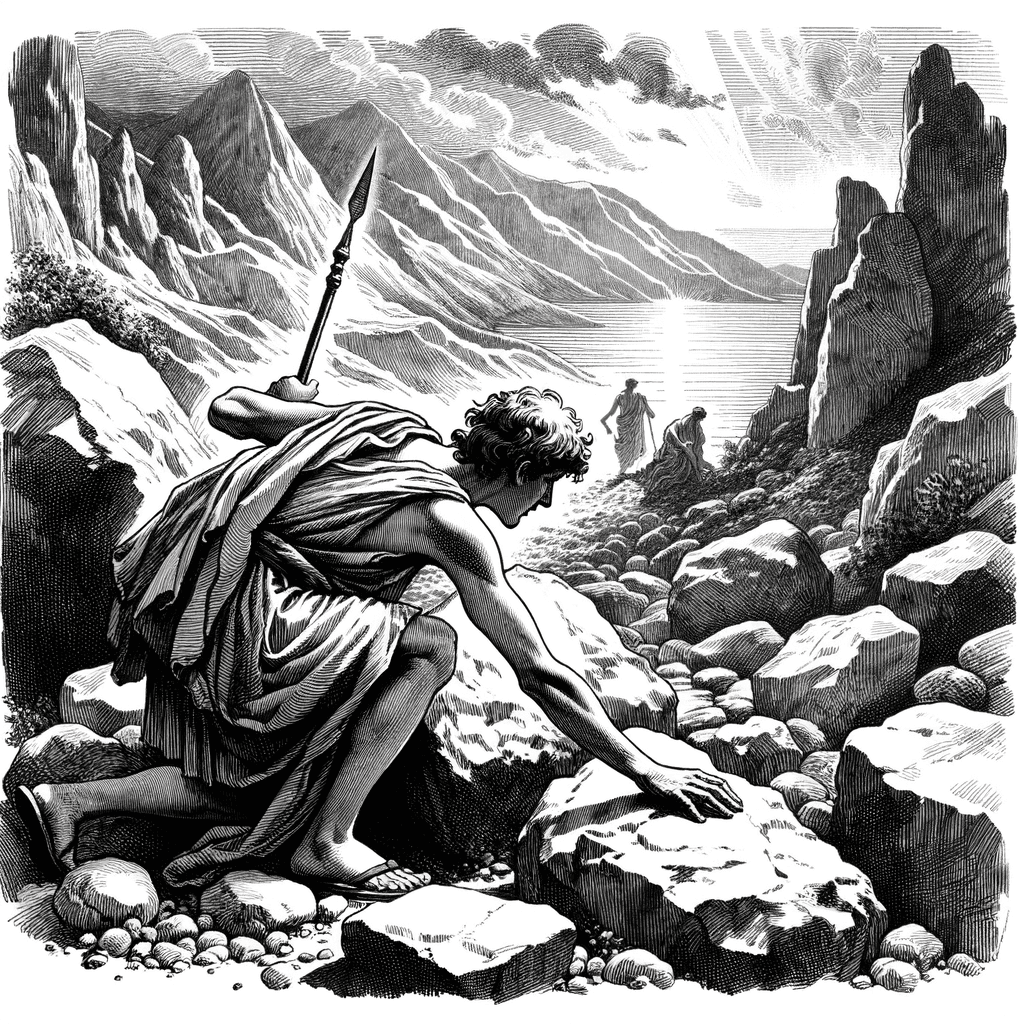
Leave no stone unturned. — Euripides
—What lingers after this line?
Thoroughness and Diligence
This quote emphasizes the importance of being thorough and diligent in one's efforts. To 'leave no stone unturned' means to explore every possible avenue and to look into every detail to achieve a goal.
Persistent Effort
It advocates for persistence and relentless effort, suggesting that one should continue searching and working until the desired results are achieved.
Problem-Solving
In problem-solving, this quote advises not to overlook any possibilities. Every potential solution should be considered and examined carefully.
Historical Significance
Euripides was an ancient Greek tragedian. This quote highlights the wisdom from ancient times that still resonates today, emphasizing the timeless value of persistence and thoroughness.
Application in Modern Context
In modern times, this advice can apply to various fields such as research, investigations, job hunts, and personal growth. Ensuring thoroughness and not giving up prematurely can lead to success and uncover valuable findings.
Recommended Reading
As an Amazon Associate, we earn from qualifying purchases.
One-minute reflection
What does this quote ask you to notice today?
Related Quotes
6 selectedCraftsmanship is the quality of design, shown in something by the skill, time, and attention to detail put in by the artist. — Canvs Editorial
Canvs Editorial
At its core, this statement presents craftsmanship as visible care. Design is not treated as mere decoration, but as the outward result of discipline, patience, and practiced skill.
Read full interpretation →Whatever you do, do it with all your might. Work at it, early and late, in season and out of season. — P.T. Barnum
P.T. Barnum
At its core, P.T. Barnum’s line is a demand for intensity rather than half-measures.
Read full interpretation →Quietly do the work that is yours to do. — Epictetus
Epictetus
At its core, Epictetus’ line urges a life governed by responsibility rather than display. “Quietly do the work that is yours to do” suggests that the real measure of character lies not in public recognition but in faithf...
Read full interpretation →We must all either wear out or rust out, every one of us. My choice is to wear out. — Theodore Roosevelt
Theodore Roosevelt
At its core, Theodore Roosevelt’s line reduces life to a vivid contrast: we either spend ourselves through action or deteriorate through inactivity. By saying he would rather “wear out” than “rust out,” he frames effort,...
Read full interpretation →Patience with small details makes perfect a large work, like the universe. — Rumi
Rumi
Rumi’s line begins with a humble insight: greatness is rarely born all at once. Instead, large works become whole through steady attention to what seems minor at first glance.
Read full interpretation →If you accomplish something good with hard work, the labor passes quickly, but the good endures. — Musonius Rufus
Musonius Rufus
Musonius Rufus frames effort and outcome on different time scales: the strain of labor is temporary, while the value of a good result can persist. In other words, pain is often a short-lived cost, but virtue and benefici...
Read full interpretation →More From Author
More from Euripides →Do not consider painful what is good for you. — Euripides
At its heart, Euripides’ line urges a change in judgment rather than a denial of discomfort. He does not claim that what helps us will always feel pleasant; instead, he asks us not to treat beneficial suffering as someth...
Read full interpretation →Where there is no wine, there is no love. — Euripides
In this quote, wine symbolizes joy, celebration, and the pleasures of life. Euripides suggests that love and joy are closely interconnected, implying that without the celebratory elements in life (represented by wine), l...
Read full interpretation →