
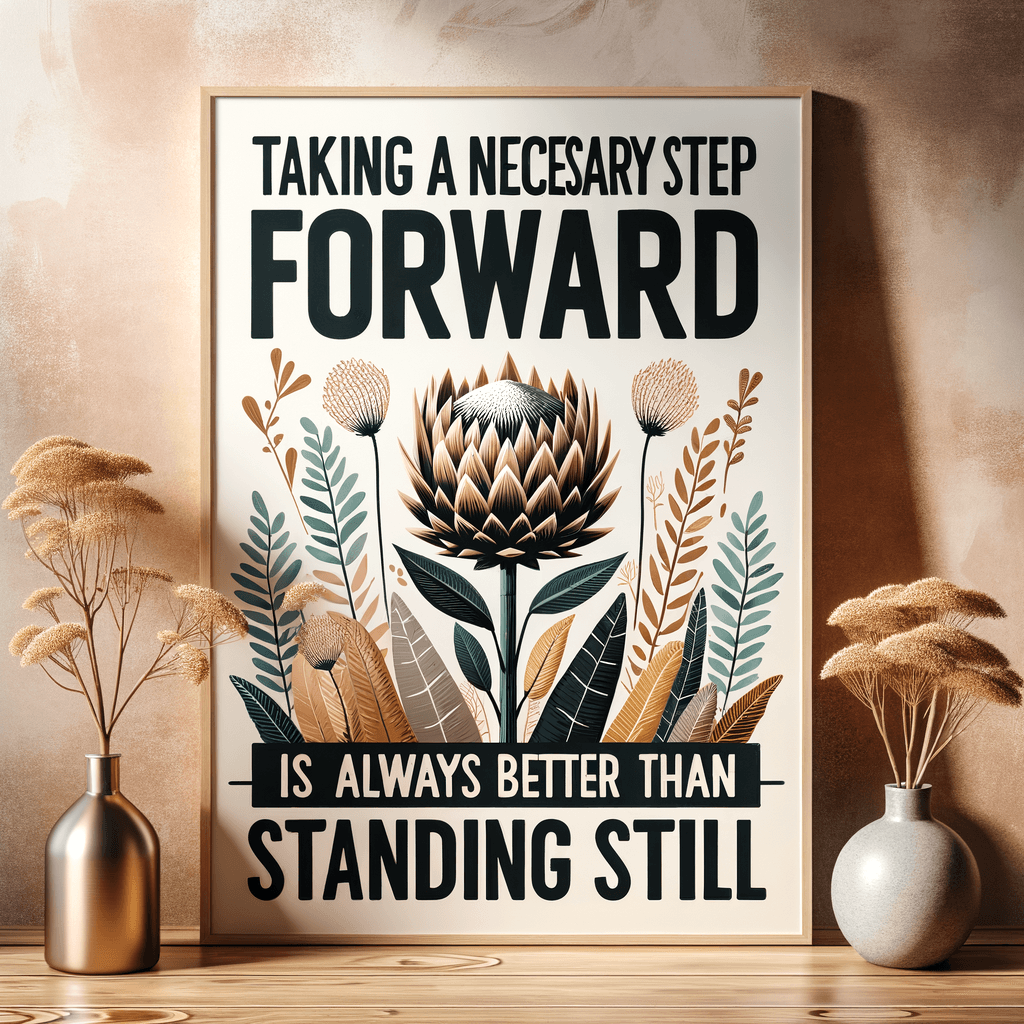
Taking anecessary step forward is always better than standing still. — Nelson Mandela, South Africa.
—What lingers after this line?
Importance of Action
This quote emphasizes that taking action, even if it is a small step, is crucial for progress. Standing still leads to stagnation, while moving forward brings opportunities and growth.
Overcoming Fear
Nelson Mandela highlights the need to overcome the fear of failure or the unknown. By taking steps forward, individuals confront their challenges rather than avoiding them, ultimately leading to personal and societal advancement.
Progress and Change
The notion of progress is central to this quote. It reflects the idea that change is a necessary part of life, and by being proactive, we can influence our circumstances positively.
Leadership and Courage
Mandela's life is a testament to leadership through action. His commitment to fighting for freedom and justice in South Africa demonstrates the courage it takes to take steps for meaningful change.
Historical Significance
As a leader in the anti-apartheid movement, Nelson Mandela's words resonate deeply within the context of social justice and human rights. His advocacy emphasizes the need for individuals to act decisively in the face of injustice.
One-minute reflection
Where does this idea show up in your life right now?
Related Quotes
6 selectedDo not wait to be ready; take the first step. Every journey begins with a single step. — Unknown
Unknown
This quote emphasizes the importance of taking the first step toward your goals instead of waiting for the perfect moment. It encourages immediate action to start the journey.
Read full interpretation →Don't go expecting perfection; be satisfied with even the smallest progress. — Marcus Aurelius
Marcus Aurelius
Marcus Aurelius advises against the exhausting demand for flawlessness and redirects attention toward modest improvement. In the spirit of Stoic thought, especially in his Meditations (c.
Read full interpretation →Consistency is the quiet, daily hum of progress that eventually drowns out the noise of doubt and external expectations. — James Clear
James Clear
At first glance, James Clear’s quote shifts attention away from dramatic breakthroughs and toward something far less glamorous: repetition. By calling consistency a “quiet, daily hum,” he suggests that meaningful progres...
Read full interpretation →Do not mistake movement for progress. Consistency in the right direction is the only path to genuine achievement. — W. Edwards Deming
W. Edwards Deming
At first glance, Deming’s quote sounds like a warning against busyness for its own sake. Movement can be noisy, visible, and even exhausting, yet none of that guarantees meaningful change.
Read full interpretation →History will judge us by the difference we make in the everyday lives of children. — Nelson Mandela, South Africa.
Nelson Mandela, South Africa.
This quote highlights the notion that the true measure of our legacy is not just in grand achievements, but in how we improve the lives of children today, who will shape the future.
Read full interpretation →Do not despise the bottom rungs of the ladder; they are what allow you to climb. — Publilius Syrus
Publilius Syrus
Publilius Syrus condenses a life lesson into a simple image: the ladder cannot be climbed without its lowest rungs. At first glance, the saying defends modest beginnings, reminding us that what seems small, menial, or un...
Read full interpretation →More From Author
More from Nelson Mandela, South Africa. →History will judge us by the difference we make in the everyday lives of children. — Nelson Mandela, South Africa.
This quote highlights the notion that the true measure of our legacy is not just in grand achievements, but in how we improve the lives of children today, who will shape the future.
Read full interpretation →Education is the most powerful weapon which you can use to change the world. — Nelson Mandela, South Africa.
Mandela emphasizes that education equips individuals with knowledge and skills necessary to effect transformative changes in society. It is a tool for empowerment and social progress.
Read full interpretation →