
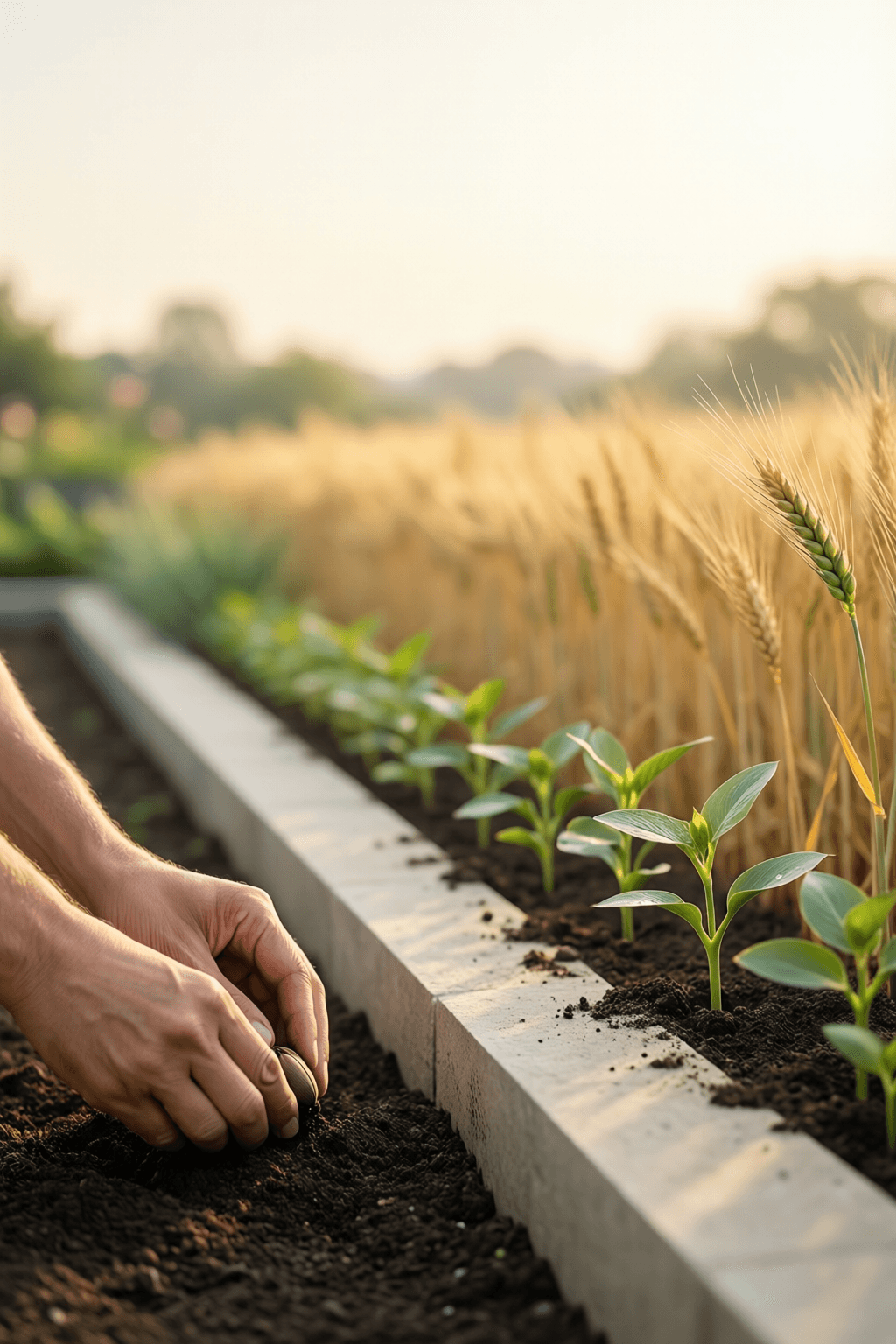
The pain of setting a boundary or denying a request is the planting; the growth and respect that follow are the harvest. — Iyanla Vanzant
—What lingers after this line?
The Sting of Saying No
At first glance, Iyanla Vanzant’s insight acknowledges an uncomfortable truth: setting a boundary often feels painful in the moment. Saying no can trigger guilt, fear of rejection, or anxiety about disappointing others. In that sense, the act resembles planting—quiet, effortful, and uncertain, with no immediate reward in sight. Yet this initial discomfort is precisely what gives the quote its moral force. Rather than treating pain as proof that a boundary is wrong, Vanzant reframes it as evidence of necessary growth. The emotional sting is not failure; instead, it is the first sign that a healthier pattern is being established.
Why Boundaries Feel So Costly
Moreover, boundaries can feel especially costly because many people are taught to equate kindness with constant availability. Family roles, workplace pressures, and cultural expectations often reward self-sacrifice, so any refusal may seem selfish even when it is reasonable. Brené Brown’s Daring Greatly (2012) similarly notes that clear is kind, suggesting that honesty may hurt briefly but prevents deeper resentment. As a result, denying a request can feel like breaking an invisible social contract. However, Vanzant’s metaphor gently challenges that assumption by implying that short-term discomfort may be the price of long-term dignity, clarity, and emotional sustainability.
Planting Seeds of Self-Respect
From there, the agricultural metaphor becomes especially powerful. Planting is an act of faith: one puts something into the ground before seeing any visible change. In much the same way, a boundary is a declaration of self-worth made before others have adjusted to it. The person who sets it may feel exposed, uncertain, or even misunderstood. Nevertheless, that very act plants the seed of self-respect. Psychologists Henry Cloud and John Townsend, in Boundaries (1992), argue that limits define what is one’s own responsibility and what is not. By naming those limits, a person begins cultivating an inner life rooted less in people-pleasing and more in integrity.
How Respect Grows Over Time
Eventually, what is planted begins to alter relationships. Others learn what behavior is acceptable, what access is appropriate, and what demands will no longer be met automatically. Although some may resist at first, consistent boundaries often create a new pattern in which mutual respect becomes more possible. In this way, the harvest Vanzant describes is not merely external obedience but a deeper relational recalibration. Respect grows because clarity replaces ambiguity. A colleague who once expected immediate replies may begin to honor work hours; a family member who pushed too far may learn restraint. The benefit arrives gradually, much like a crop, but its value is lasting.
The Difference Between Control and Care
Importantly, the quote does not celebrate harshness for its own sake. A boundary is not the same as punishment, nor is denying a request necessarily an act of rejection. Rather, it can be an expression of care—for oneself and, indirectly, for the relationship—because it prevents exhaustion, hidden resentment, and emotional confusion. This distinction matters because healthy boundaries are meant to clarify, not dominate. As Nedra Glover Tawwab explains in Set Boundaries, Find Peace (2021), limits help preserve connection by making expectations visible. Thus, the temporary pain of refusal may actually protect the possibility of more honest and stable closeness.
The Harvest Beyond One Moment
Finally, Vanzant’s statement invites a long view of emotional life. A single uncomfortable no may feel small, but repeated over time it reshapes identity and relationships alike. The harvest includes not only the respect of others but also increased confidence, peace, and trust in one’s own judgment. Seen this way, the quote offers both realism and hope. It does not deny that boundaries can hurt; instead, it insists that the pain belongs to a larger cycle of growth. What feels like loss in one moment may, with patience and consistency, become the very ground from which healthier love and respect emerge.
Recommended Reading
As an Amazon Associate, we earn from qualifying purchases.
One-minute reflection
What does this quote ask you to notice today?
Related Quotes
6 selectedTakers must have no limits, because givers never do. — Iyanla Vanzant
Iyanla Vanzant
At first glance, Iyanla Vanzant’s line sounds almost humorous, yet its irony cuts deeply. If givers continue offering time, energy, money, or emotional labor without pause, then takers are effectively trained to expect a...
Read full interpretation →Whatever you are willing to put up with is exactly what you will have. — Iyanla Vanzant
Iyanla Vanzant
At first glance, Iyanla Vanzant’s statement sounds blunt, yet its force comes from a simple truth: what we repeatedly allow begins to define the conditions of our lives. Tolerating disrespect, chaos, or neglect can funct...
Read full interpretation →Your home should lower your shoulders the moment you walk in. — Unknown (attributed to design philosophy/experts, but skipping as per rules: switching to:) The boundary to what we can accept is the boundary to our freedom. — Tara Brach
Tara Brach
At first glance, Tara Brach’s statement sounds simple, yet it points to a profound inner mechanism: the limits of our freedom are often set not only by external conditions, but by what we refuse to face within ourselves....
Read full interpretation →Respect yourself enough to say no to what does not serve you. — Marianne Williamson
Marianne Williamson
Marianne Williamson’s quote begins with a quiet but powerful premise: self-respect is not merely a feeling but a standard for action. To respect yourself enough to say no means recognizing that your time, energy, and dig...
Read full interpretation →If you don't build your own sanctuary, you will spend your life living in the wreckage of someone else's expectations. — Bell Hooks
bell hooks
Bell hooks frames sanctuary as more than a physical refuge; it is an inner and outer space where a person can live by values they have consciously chosen. At first glance, the quote sounds like a warning about independen...
Read full interpretation →Luxury becomes being able to say no without panic. — Anne Helen Petersen
Anne Helen Petersen
At first glance, luxury often suggests expensive goods, exclusive spaces, or polished ease. Yet Anne Helen Petersen shifts the idea inward, arguing that real luxury is not possession but freedom: the ability to say no wi...
Read full interpretation →More From Author
More from Iyanla Vanzant →Stop begging God to increase your territory when you can't even maintain the territory you already have. — Iyanla Vanzant
At its core, Iyanla Vanzant’s statement confronts a common contradiction: people often ask for more influence, wealth, opportunity, or responsibility before proving they can care for what is already in their hands. In th...
Read full interpretation →Takers must have no limits, because givers never do. — Iyanla Vanzant
At first glance, Iyanla Vanzant’s line sounds almost humorous, yet its irony cuts deeply. If givers continue offering time, energy, money, or emotional labor without pause, then takers are effectively trained to expect a...
Read full interpretation →Whatever you are willing to put up with is exactly what you will have. — Iyanla Vanzant
At first glance, Iyanla Vanzant’s statement sounds blunt, yet its force comes from a simple truth: what we repeatedly allow begins to define the conditions of our lives. Tolerating disrespect, chaos, or neglect can funct...
Read full interpretation →Your self-worth cannot be contingent upon someone else's judgment. — Iyanla Vanzant
Iyanla Vanzant’s statement draws a firm boundary between who you are and what others think of you. If self-worth rises and falls with praise, criticism, likes, or exclusion, then it becomes a fragile commodity—always at...
Read full interpretation →