
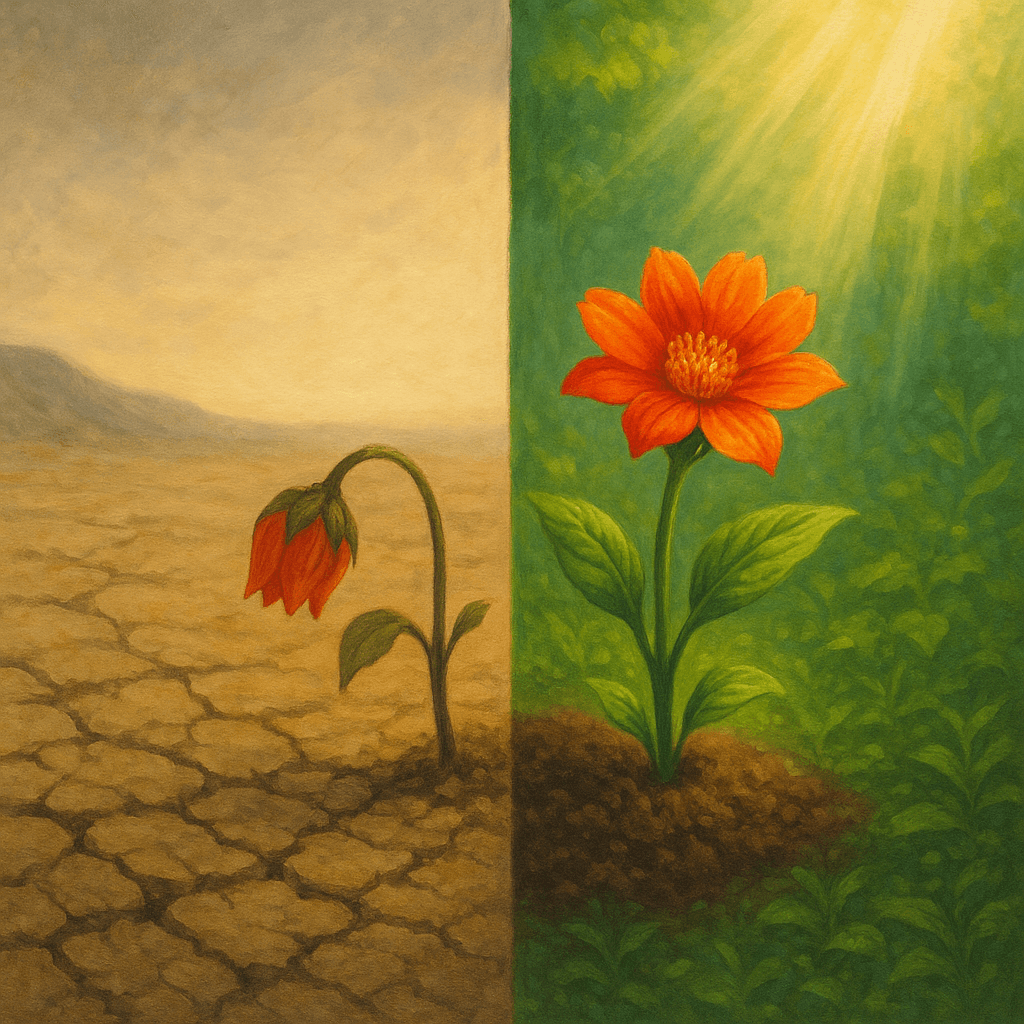
When a flower doesn’t bloom, you fix the environment in which it grows, not the flower. — Alexander Den Heijer
—What lingers after this line?
Understanding the Metaphor
At first glance, Alexander Den Heijer’s quote uses the image of a struggling flower to communicate a deeper message about human development. Rather than blaming the flower—a symbol of individual potential—for failing to bloom, he advises tending to the environment, suggesting that external conditions often play a pivotal role in flourishing. This perspective encourages us to shift our focus from personal shortcomings to surrounding influences when seeking improvement.
The Roots of Environmental Influence
Building on this metaphor, research in developmental psychology highlights how children’s growth is strongly shaped by their contexts. For example, Urie Bronfenbrenner’s ecological systems theory (1979) maps out how family, school, and broader society contribute to a child’s well-being. When a student struggles, educators are urged to assess classroom dynamics or home life, rather than simply labeling the child as deficient—echoing Den Heijer’s wisdom.
Lessons from Nature and Horticulture
Transitioning from people to plants, horticulturists understand the importance of soil, sunlight, and water in cultivating healthy flowers. Celebrated gardener Gertrude Jekyll once noted, 'The love of gardening is a seed once sown that never dies.' Her philosophy was to enrich the earth and adjust conditions to foster growth—mirroring how thoughtful changes in our environment can unlock hidden potential in ourselves and others.
Applications in Work and Leadership
This principle readily extends into organizational and leadership contexts. Modern managers are encouraged to examine workplace culture when team members underperform. Studies by Gallup (2017) show that engaged, supportive environments yield significantly higher productivity and satisfaction than those with blame-oriented atmospheres. Leaders who nurture talent by removing obstacles and promoting positive conditions find their teams more likely to ‘bloom’ collectively.
Cultivating Environments for Lasting Change
In conclusion, the emphasis on reshaping environments—rather than blaming individuals—fosters empathy and lasting progress. Whether in classrooms, offices, or communities, focusing on adjustive, supportive surroundings can transform outcomes. By embracing Den Heijer’s advice, we cultivate not just growth, but resilience and renewed possibilities for everyone who has struggled to bloom.
One-minute reflection
Where does this idea show up in your life right now?
Related Quotes
4 selectedSmall changes can produce big results, but the areas of highest leverage are often the least obvious. - Peter Senge
Peter Senge
Peter Senge’s line points to a counterintuitive reality: in complex situations, effort and impact rarely match in a straight line. A modest adjustment—one policy tweak, one habit shift, one new feedback loop—can outperfo...
Read full interpretation →Goals are good for setting a direction, but systems are best for making progress. — James Clear
James Clear
James Clear’s statement distinguishes between knowing where you want to go and actually moving toward it. Goals provide direction: they tell you what mountain you’re trying to climb, whether it’s writing a book, running...
Read full interpretation →You can’t make positive choices for the rest of your life without an environment that makes those choices easy, natural, and enjoyable. — Deepak Chopra
Deepak Chopra
This quote emphasizes that making positive choices consistently requires a supportive environment. Without external encouragement, sustaining good habits becomes much harder.
Read full interpretation →You do not rise to the level of your goals; you fall to the level of your systems. — James Clear
James Clear
While setting ambitious goals can provide motivation and a sense of direction, James Clear points out that aspirations alone rarely guarantee progress. Goals often represent desired outcomes—a finish line in sight—but fa...
Read full interpretation →More From Author
More from Alexander Den Heijer →