
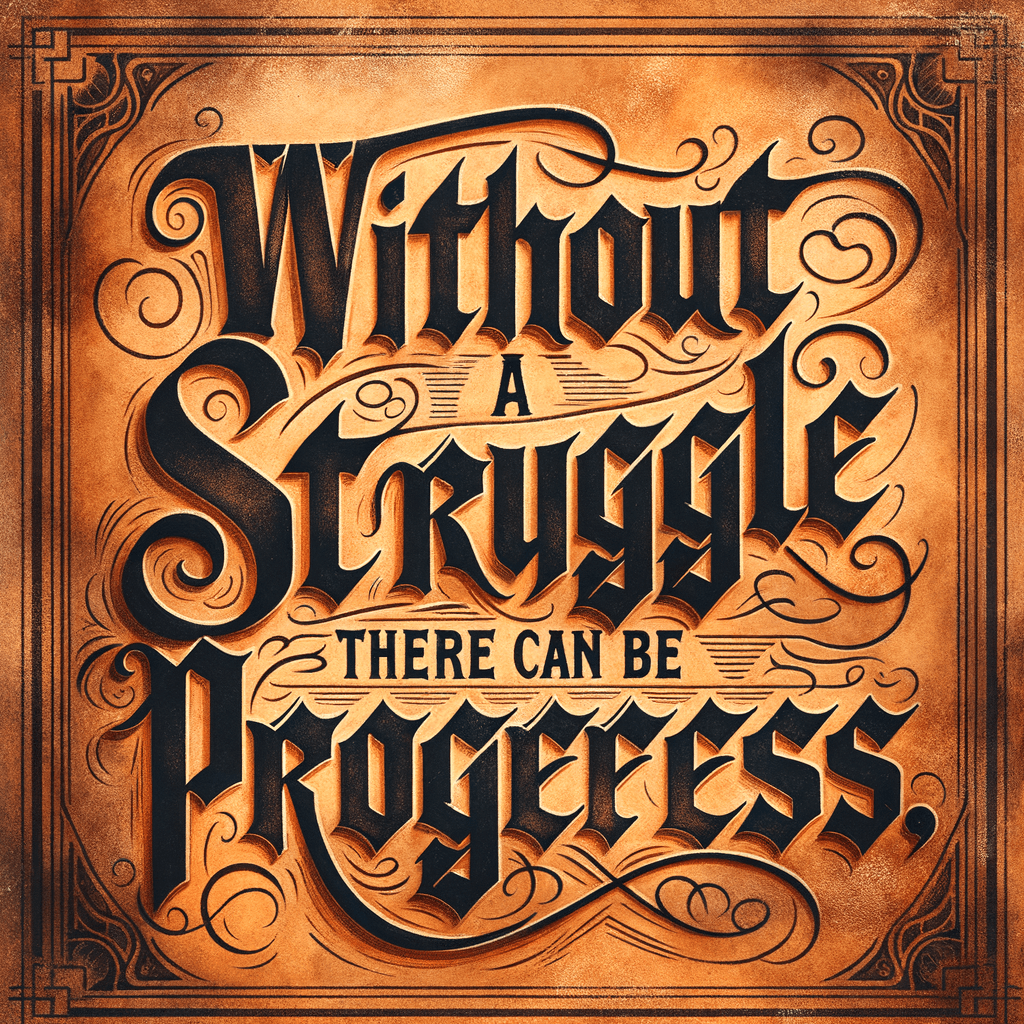
Without a struggle, there can be no progress. — Frederick Douglass
—What lingers after this line?
Necessity of Challenges
This quote highlights that challenges and hardships are essential for growth and development. Progress often comes through overcoming obstacles and facing difficulties.
Personal Growth
It emphasizes that individual advancement and self-improvement require effort and perseverance. Struggling through adversity can lead to personal development and increased resilience.
Social Change
Within a broader context, the quote suggests that societal progress requires collective struggle. Significant changes in society often result from the persistent efforts of people advocating for justice and reform.
Historical Context
Frederick Douglass was a prominent 19th-century African American social reformer, abolitionist, orator, and writer. His statement reflects his experiences and the broader fight against slavery and for civil rights, underscoring that real progress in social justice comes through enduring conflict and striving for change.
Inspirational Message
The quote serves as a motivational reminder that enduring struggles is a crucial part of achieving success. It encourages perseverance and determination in the face of difficulties, reinforcing that efforts and sacrifices are necessary for meaningful accomplishments.
Recommended Reading
As an Amazon Associate, we earn from qualifying purchases.
One-minute reflection
What's one small action this suggests?
Related Quotes
6 selectedDo not despise the bottom rungs of the ladder; they are what allow you to climb. — Publilius Syrus
Publilius Syrus
Publilius Syrus condenses a life lesson into a simple image: the ladder cannot be climbed without its lowest rungs. At first glance, the saying defends modest beginnings, reminding us that what seems small, menial, or un...
Read full interpretation →Consistency is not a grand, dramatic act; it is the small, boring choice to show up again even when your internal weather is stormy. — Atomic Habits (James Clear)
Atomic Habits (James Clear
James Clear’s line from Atomic Habits reframes consistency as something far less glamorous than popular culture often suggests. Rather than a heroic burst of motivation, it is the ordinary decision to return to the task,...
Read full interpretation →Progress over perfection. Done beats perfect every time. — The Table Read Magazine
The Table Read Magazine
At its heart, the quote argues that movement is more valuable than immaculate intentions. “Progress over perfection” rejects the habit of waiting for flawless conditions, while “done beats perfect every time” reminds us...
Read full interpretation →Anything worth having is worth waiting for, and everything worth doing is worth doing with patience. — Confucius
Confucius
At its core, this saying ties value to delay. Confucius suggests that truly meaningful things do not arrive instantly; instead, they ask us to endure uncertainty, effort, and time.
Read full interpretation →You don't need to have it all figured out to move forward. Sometimes you just need to trust the next step. — Susan Gale
Susan Gale
Susan Gale’s quote gently challenges the belief that action must wait for perfect understanding. At first glance, many people assume they need a complete plan before making a change, yet life rarely offers that kind of c...
Read full interpretation →True craftsmanship is found in the willingness to return to the task, not for perfection, but for the beauty of the work itself. — Ursula K. Le Guin
Ursula K. Le Guin
At its core, Ursula K. Le Guin’s statement shifts attention away from flawless results and toward a deeper kind of dedication.
Read full interpretation →More From Author
More from Frederick Douglass →The soul that is within me no man can degrade. — Frederick Douglass
Frederick Douglass’s line insists that there is a core of personhood that cannot be seized, even when everything else is threatened. He points to an inward refuge—“the soul that is within me”—where identity and worth rem...
Read full interpretation →Use the weight of every no as a lever to reach toward a new yes. — Frederick Douglass
Frederick Douglass frames rejection not as a dead end but as potential energy. A “no” carries weight—social pressure, disappointment, fatigue—and he suggests that this heaviness can be redirected rather than merely endur...
Read full interpretation →Rise each time with gratitude for the lesson and hunger for the next step. — Frederick Douglass
Douglass frames “rise each time” as an intentional stance rather than a lucky outcome. In his view, setbacks are inevitable, but our posture afterward is not: we can either remain where the blow landed or stand again wit...
Read full interpretation →Refuse to be a spectator of your life; be its craftsman. — Frederick Douglass
Frederick Douglass’s line draws a sharp boundary between merely witnessing our days and actively shaping them. To be a “spectator” is to let circumstances, other people, or fear decide the direction of our time; to be a...
Read full interpretation →