
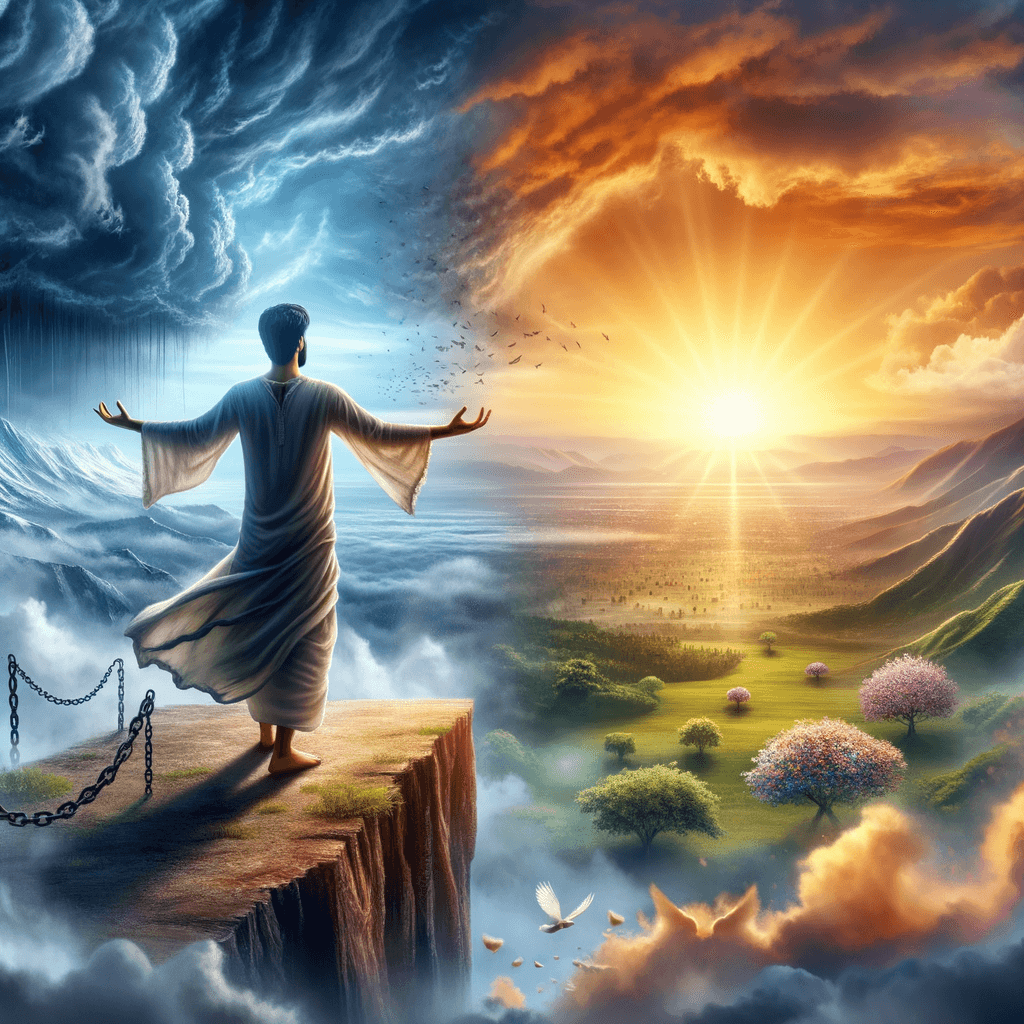
Your past is not your potential. In any hour you can choose to liberate the future. — Marianne Williamson
—What lingers after this line?
Separation of Past and Future
This quote emphasizes that the events of the past do not determine your future potential. While everyone has a personal history, it does not define their capability or what they can achieve moving forward.
Power of Choice
It highlights the power of choice in shaping one's future. At any moment, an individual has the ability to make a new decision and take action that can liberate them from their past limitations to create a different future.
Personal Responsibility and Empowerment
The quote suggests that individuals have the responsibility—and the power—to change their lives. By focusing on liberation rather than dwelling on past setbacks, people can embrace a more empowered and progressive mindset.
Potential for Growth and Transformation
It points to the fundamental belief that human beings are not static; they are capable of growth and transformation. The future is open and full of possibilities, regardless of what one's past has been.
Spiritual and Philosophical Undertones
Marianne Williamson, a spiritual leader and writer, often addresses themes of consciousness and self-improvement. This quote reflects her belief in the power of spiritual awakening and alignment with a higher purpose as a means of transcending past limitations to create a liberated future.
One-minute reflection
What feeling does this quote bring up for you?
Related Quotes
6 selectedGive up defining yourself—to yourself or to others. You won't die. You will come to life. — Eckhart Tolle
Eckhart Tolle
At its core, Eckhart Tolle’s statement urges us to loosen our grip on the identities we constantly construct. We define ourselves through profession, status, history, beliefs, and even wounds, imagining that these descri...
Read full interpretation →The best day of your life is the one on which you decide your life is your own. No apologies or excuses. — Elaine Maxwell
Elaine Maxwell
Elaine Maxwell’s quote frames transformation not as something that happens to us, but as a decision we make. The ‘best day’ is not defined by luck, wealth, or praise; instead, it begins when a person accepts full ownersh...
Read full interpretation →Discipline is not about being harsh with yourself; it is about aligning your actions with your purpose. It is a quiet form of freedom. — Ryan Holiday
Ryan Holiday
At first glance, discipline is often mistaken for punishment, deprivation, or relentless self-criticism. Ryan Holiday’s quote overturns that assumption by presenting discipline as a gentler, more intentional force: the p...
Read full interpretation →If you want to be free, be free. If you are chained, you are chained. But don't tell me you are free while wearing shackles. — Khalil Gibran
Khalil Gibran
Gibran’s words begin with a blunt distinction: freedom is real, and bondage is real, but confusion between them is a form of dishonesty. He is not merely speaking about physical captivity; rather, he is confronting the h...
Read full interpretation →I'll tell you what freedom is to me: no fear. I mean really, no fear! — Nina Simone
Nina Simone
Nina Simone’s line refuses abstractions and replaces them with something bodily and immediate: fearlessness. By saying “I’ll tell you what freedom is to me,” she frames freedom not as a slogan or a legal condition but as...
Read full interpretation →Why do you stay in prison when the door is so wide open? — Rumi
Rumi
Rumi’s line, “Why do you stay in prison when the door is so wide open?” confronts the listener with an unsettling possibility: that confinement is not always imposed from outside. Instead of offering comfort, he offers a...
Read full interpretation →More From Author
More from Marianne Williamson →Respect yourself enough to say no to what does not serve you. — Marianne Williamson
Marianne Williamson’s quote begins with a quiet but powerful premise: self-respect is not merely a feeling but a standard for action. To respect yourself enough to say no means recognizing that your time, energy, and dig...
Read full interpretation →The light in me sees the light in you. — Marianne Williamson
At its heart, Marianne Williamson’s line suggests that human connection begins with recognition rather than judgment. To say “the light in me sees the light in you” is to describe a meeting beneath personality, status, o...
Read full interpretation →You cannot pour from an empty cup, and you do not need to earn your right to find a moment of peace. — Marianne Williamson
At its heart, Marianne Williamson’s statement insists that care for others depends on care for oneself. The image of an empty cup makes the point vividly: when energy, patience, and emotional reserves are depleted, even...
Read full interpretation →Everything we do is infused with the energy with which we do it. If we're frantic, life will be frantic. If we're peaceful, life will be peaceful. — Marianne Williamson
Marianne Williamson’s quote begins with a simple but far-reaching claim: life often reflects the quality of the energy we carry into it. In other words, our actions are not neutral.
Read full interpretation →