
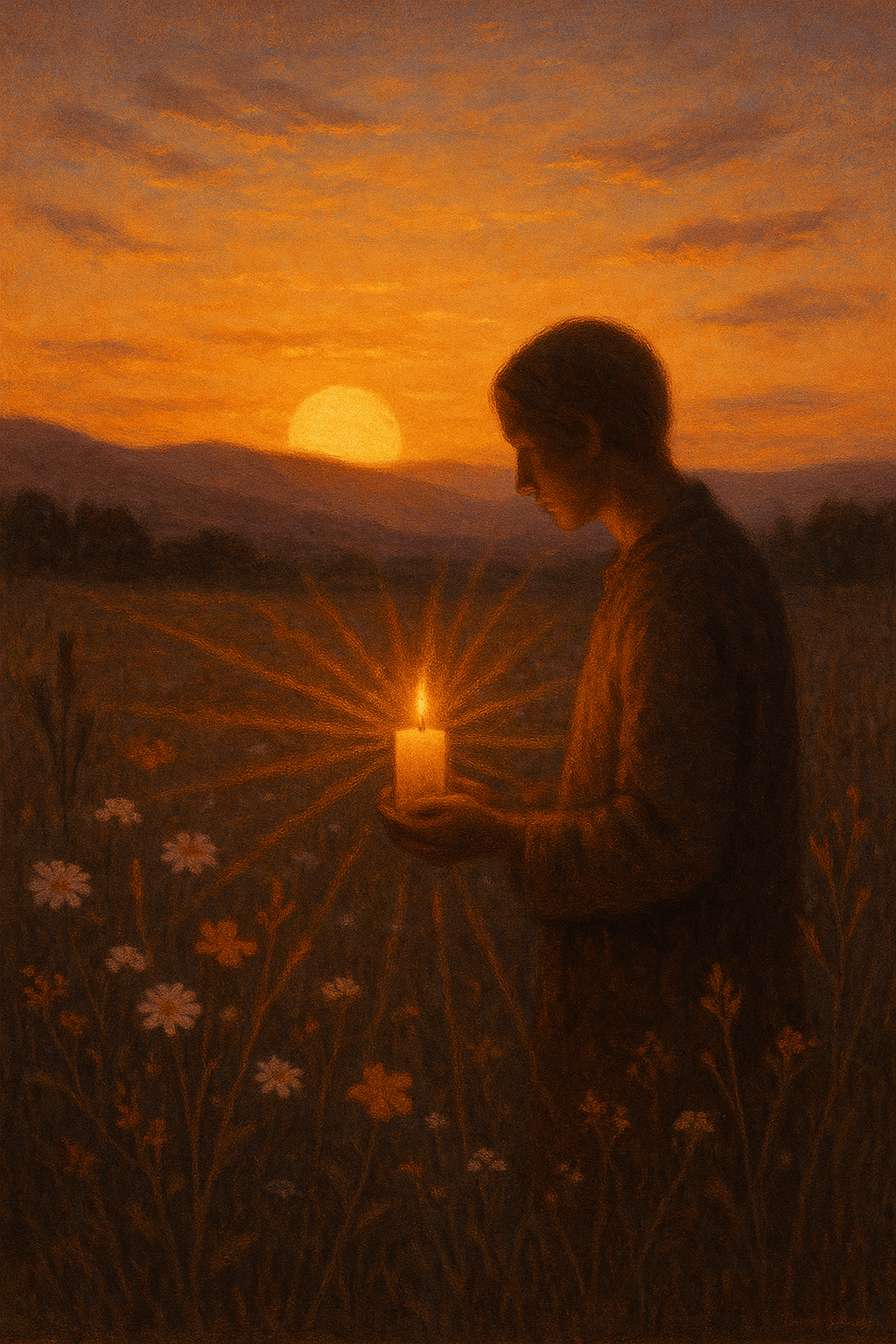
Do not block the sun with your heart, but light a candle of hope. — Thich Nhat Hanh
—What lingers after this line?
Interpreting Thich Nhat Hanh's Wisdom
Thich Nhat Hanh, a celebrated Zen master, urges us not to let our own despair or negativity obscure life’s brightness. The metaphor of ‘blocking the sun with your heart’ frames how inner hopelessness can cloud even the most radiant sources of joy or possibility. Yet, rather than remaining in the darkness of inner burdens, Hanh encourages the gentle act of ‘lighting a candle of hope’—a small, intentional step toward transformation.
The Power of Small Acts in Adversity
This teaching highlights how even minor gestures can illuminate difficult circumstances. For instance, during the Vietnam War, Hanh organized communities to rebuild bombed villages, choosing action over paralysis. These ‘candles’ of hope, though modest, countered collective despair and inspired resilience. The lesson persists: when overwhelmed by shadows, we need not wait for the sun, but can begin by kindling trust or kindness within ourselves and others.
Navigating Emotional Obstacles
Building upon this, the idea also addresses emotional self-sabotage. Often, when we feel discouraged, we unintentionally ‘block the sun’ of opportunities and joy. Instead, shifting our focus—by expressing gratitude, offering forgiveness, or extending compassion—can be that simple candle. Contemporary psychologists, such as Martin Seligman in his work on learned optimism, echo this advice: nurturing even a spark of hope cultivates enduring well-being.
The Ripple Effect of Hope
Moreover, a single act of hope can influence communities far beyond the individual. When people collectively choose hope over despair, a ripple effect begins. Thich Nhat Hanh’s concept of 'interbeing' shows how our smallest actions affect the whole. Lighting a candle—be it through support, activism, or quiet persistence—can inspire others to do the same, gradually dispersing darkness on a broader scale.
Integrating Hope Into Daily Practice
Ultimately, Thich Nhat Hanh’s message calls for daily renewal of hope, regardless of external circumstances. Whether through meditation, mindful breathing, or acts of kindness, each day offers a chance to rekindle light within and around us. By consciously choosing not to let our hearts cast shadows, but instead seeking to illuminate them, we honor Hanh’s enduring vision of hope, courage, and compassion in everyday life.
One-minute reflection
What's one small action this suggests?
Related Quotes
6 selectedLight a small candle for hope; its glow invites others to kindle warmth. — Desmond Tutu
Desmond Tutu
Desmond Tutu’s image of lighting a small candle captures how even fragile gestures can confront overwhelming darkness. A candle is ordinary, easily extinguished, and yet it remains one of humanity’s oldest symbols of res...
Read full interpretation →Tend your inner light; even a small flame brightens a long night. — Emily Dickinson
Emily Dickinson
Dickinson’s image of a small flame surviving a long night invites a gentle rethinking of strength. Instead of glorifying blazing bonfires of achievement or joy, she suggests that resilience often looks modest: a candle,...
Read full interpretation →In the darkness, there is always a ray of light; that is hope.
Unknown
This quote highlights the idea that no matter how challenging or dire a situation may seem, there is always a glimmer of hope. Hope acts as a guiding light during dark times.
Read full interpretation →Hope is the thing with feathers that perches in the soul - and sings the tunes without the words - and never stops - at all. - Emily Dickinson
Emily Dickinson
Emily Dickinson uses the metaphor of a bird to represent hope. The 'thing with feathers' suggests that hope is light, delicate, but also persistent.
Read full interpretation →In the depths of despair, one often finds the most beautiful hope.
Unknown
This quote highlights the human capacity to find hope during the darkest times. Even when faced with extreme challenges and despair, individuals can discover a profound sense of hope that can inspire them to move forward...
Read full interpretation →In the heart of the night, each star is a hope.
Unknown
This quote uses stars as a metaphor for hope. Just as stars light up the night sky, hope illuminates our darkest moments, bringing light and direction when everything seems bleak.
Read full interpretation →More From Author
More from Thich Nhat Hanh →If we are facing in the right direction, all we have to do is keep walking. — Thích Nhất Hạnh
Thích Nhất Hạnh’s words begin with a simple but profound premise: progress depends first on direction, not speed. If a person is turned toward compassion, clarity, healing, or truth, then each modest step becomes meaning...
Read full interpretation →You must love in such a way that the person you love feels free. — Thich Nhat Hanh
At its core, Thich Nhat Hanh’s statement redefines love as an act of care that does not confine. To love someone so that they feel free means offering affection without turning it into control, guilt, or dependence.
Read full interpretation →We are not islands; we are threads in a tapestry. To pull away from the weave is to lose the very texture that makes life hold together. — Thich Nhat Hanh
At its core, Thich Nhat Hanh’s image of threads in a tapestry rejects the fantasy of total self-sufficiency. A single thread may exist on its own, yet it gains meaning, strength, and beauty only through its relation to o...
Read full interpretation →When you learn how to suffer, you suffer far less. Resilience is not about avoiding the fire; it is about becoming fireproof. — Thich Nhat Hanh
At first glance, Thich Nhat Hanh’s quote appears paradoxical: how could learning to suffer make suffering lighter? Yet his point is that pain intensifies when we resist it, fear it, or treat it as a personal failure.
Read full interpretation →