
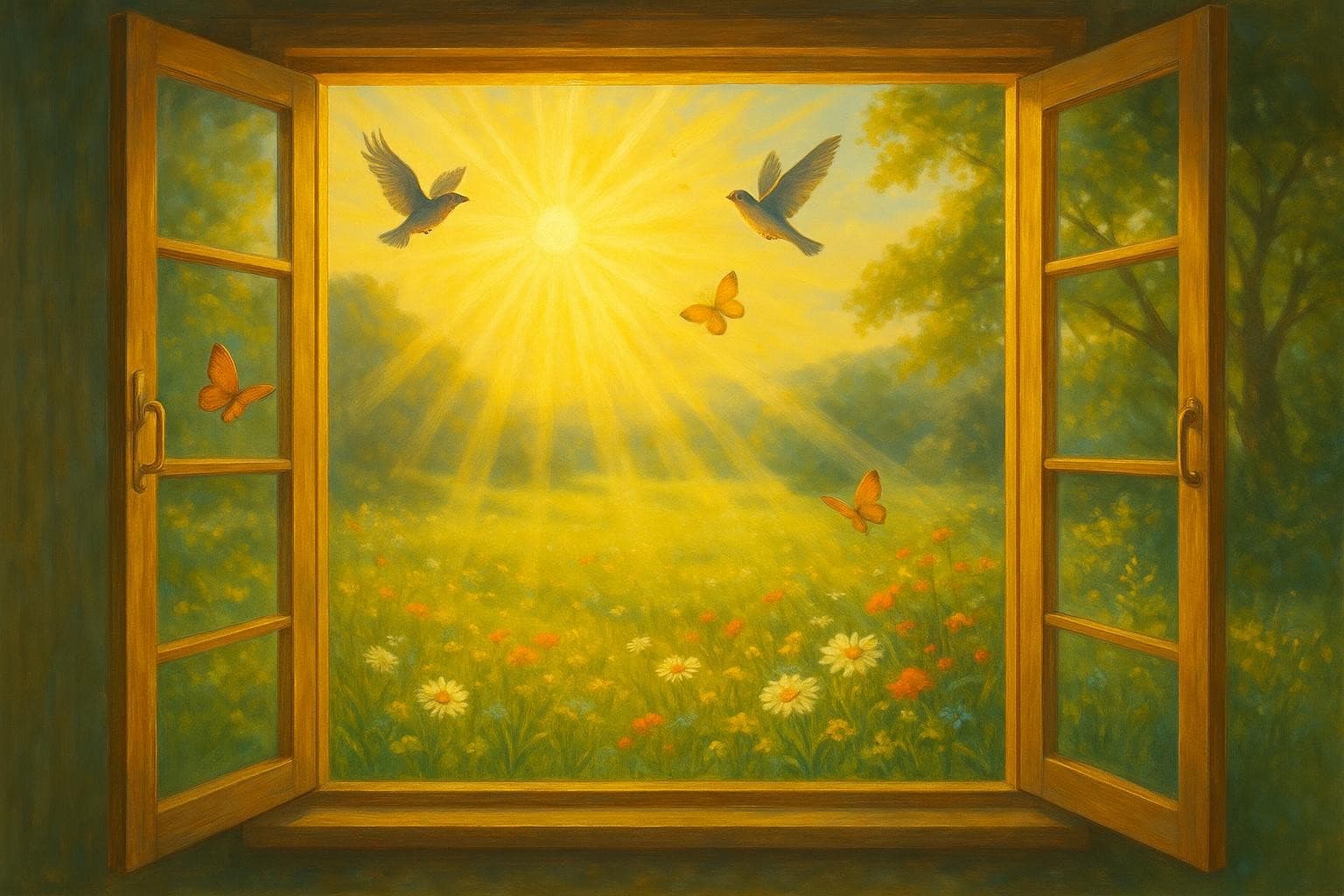
Freedom is the open window through which pours the sunlight of the human spirit and human dignity. — Herbert Hoover
—What lingers after this line?
Freedom as the Gateway to Expression
Herbert Hoover’s metaphor of freedom as an open window beautifully captures the idea that liberty is the essential entryway through which our true selves emerge. Just as sunlight dispels darkness and makes life flourish, freedom invites the essence of human spirit into the world. This image suggests that without such an opening, individuals remain confined—unable to express their thoughts, feelings, and creativity fully.
The Connection to Human Dignity
From here, Hoover’s words naturally bridge to the notion of dignity. Freedom doesn’t merely enhance self-expression; it upholds our basic worth. When societies open the window of liberty, they affirm each person’s right to live without fear or oppression. The Universal Declaration of Human Rights (1948) echoes this, proclaiming that dignity and liberty are equally fundamental to a just society.
Historical Struggles for Liberty
Throughout history, the struggle for freedom has often paralleled the fight for dignity. Consider how the abolition of slavery in the United States or the fall of the Berlin Wall signaled more than new laws—they marked the restoration of individuals’ lost spirit and self-worth. It is no coincidence that these moments are described in terms of breaking barriers or letting light in, further reinforcing Hoover’s imagery.
Sunlight as a Symbol of Hope
Hoover’s choice of sunlight is evocative—sunlight gives energy, clarity, and optimism. Similarly, freedom enables hope to kindle within individuals and communities. Philosophers like John Stuart Mill championed this idea, arguing in 'On Liberty' (1859) that only in an open society can people reach their fullest potential, much as plants flourish when exposed to light.
Protecting and Expanding the Window
Ultimately, Hoover’s metaphor challenges us not only to value freedom but also to defend and broaden it for others. Just as sunlight must not be blocked lest life wither, so must freedom be vigilantly protected for the human spirit to thrive. In a rapidly changing world, the continued expansion of that open window is essential for both personal growth and the collective uplift of humanity.
One-minute reflection
What feeling does this quote bring up for you?
Related Quotes
6 selectedI decided very early to love my family, and to see in each of its members something rare and good as well as the miserable and painful things that were obvious. — William Saroyan
William Saroyan
Saroyan begins with a striking idea: love within a family is not merely a feeling that appears on its own, but a conscious decision. By saying he “decided very early,” he frames affection as an act of will, suggesting th...
Read full interpretation →Give up defining yourself—to yourself or to others. You won't die. You will come to life. — Eckhart Tolle
Eckhart Tolle
At its core, Eckhart Tolle’s statement urges us to loosen our grip on the identities we constantly construct. We define ourselves through profession, status, history, beliefs, and even wounds, imagining that these descri...
Read full interpretation →You are not a machine built for constant output; you are a human being meant for meaningful growth. — Maya Angelou
Maya Angelou
At its core, Maya Angelou’s statement challenges a culture that often measures worth by visible productivity alone. By contrasting a machine with a human being, she exposes the danger of treating life as an endless cycle...
Read full interpretation →The best day of your life is the one on which you decide your life is your own. No apologies or excuses. — Elaine Maxwell
Elaine Maxwell
Elaine Maxwell’s quote frames transformation not as something that happens to us, but as a decision we make. The ‘best day’ is not defined by luck, wealth, or praise; instead, it begins when a person accepts full ownersh...
Read full interpretation →Discipline is not about being harsh with yourself; it is about aligning your actions with your purpose. It is a quiet form of freedom. — Ryan Holiday
Ryan Holiday
At first glance, discipline is often mistaken for punishment, deprivation, or relentless self-criticism. Ryan Holiday’s quote overturns that assumption by presenting discipline as a gentler, more intentional force: the p...
Read full interpretation →People, more than things, have to be restored, renewed, revived, reclaimed, and redeemed; never throw out anyone. — Audrey Hepburn
Audrey Hepburn
At its heart, Audrey Hepburn’s line reverses a common habit of modern life: we often repair objects more carefully than we repair relationships. By saying that people must be “restored, renewed, revived, reclaimed, and r...
Read full interpretation →More From Author
More from Herbert Hoover →