
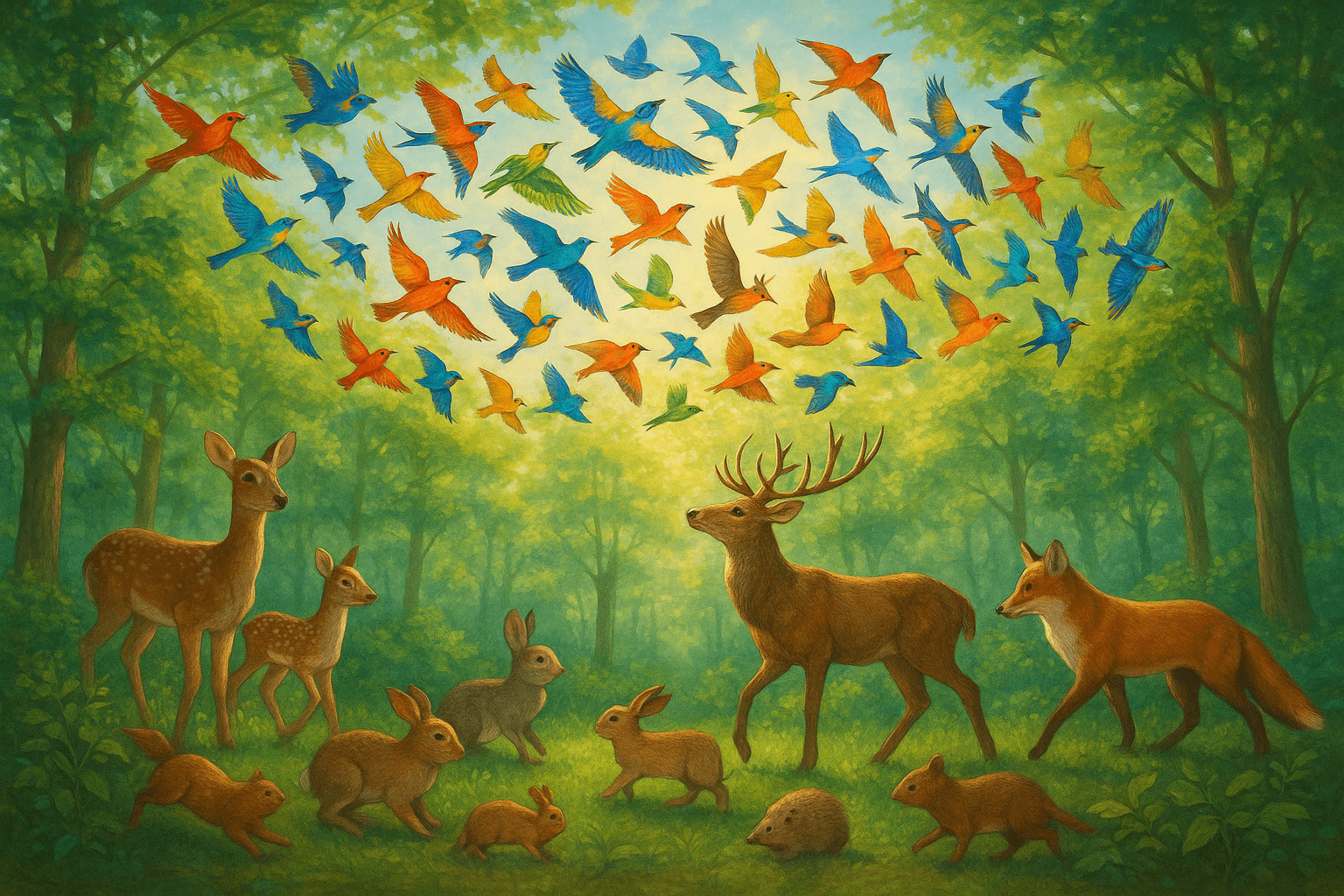
Harmony emerges when diverse voices are woven into one melody. — Yo-Yo Ma
—What lingers after this line?
The Essence of Harmony
Yo-Yo Ma's insight reflects a deep understanding of harmony as something greater than mere coexistence. Rather, it emerges when unique individual contributions blend into a unified whole. Just as a symphony is richer for the interplay of strings, winds, and percussion, true harmony in any group or society arises from the respectful integration of diverse perspectives.
Music as a Metaphor for Inclusion
Music, with its intricate layers and varied timbres, becomes a powerful metaphor for inclusion. In Bach’s *Brandenburg Concertos* (1721), for example, distinct solo instruments converse and complement each other, demonstrating that the beauty of the piece lies in their cooperation. Such musical collaboration mirrors how communities thrive: by valuing every voice, not despite difference, but because of it.
Historical Lessons in Collective Achievement
Throughout history, societies have flourished when they've embraced multiple voices. The American civil rights movement, for instance, was propelled by activists from many backgrounds—fusing varied hopes and strategies into a resonant call for justice. Each participant brought their own perspective, but together, they formed a force far greater than the sum of its parts.
Workplaces and the Value of Diverse Voices
Similarly, in modern workplaces, studies cited by Harvard Business Review (2016) have shown that diverse teams outperform homogeneous ones in problem-solving and innovation. Companies that cultivate environments where all voices are invited, welcomed, and heard typically experience greater creativity and team satisfaction, much like how a conductor ensures every section of an orchestra is integral to the performance.
Fostering Harmony Beyond Music
Ultimately, Yo-Yo Ma's sentiment challenges us to extend the concept of harmony beyond music into our daily lives. Whether building friendships, neighborhoods, or nations, true unity requires more than tolerance—it calls for an intentional weaving of differences into a single, beautiful melody. Only then can communities, like orchestras, achieve their fullest resonance.
One-minute reflection
What's one small action this suggests?
Related Quotes
6 selectedDiversity and harmony are not opposing forces but the foundation of life itself. — Vandana Shiva
Vandana Shiva
Vandana Shiva’s insight challenges the common notion that diversity and harmony are mutually exclusive. Rather than presenting them as conflicting forces, she posits they are interconnected foundations of life itself.
Read full interpretation →Diversity and harmony are not opposing forces but the foundation of life itself. — Vandana Shiva
Vandana Shiva
Vandana Shiva’s observation challenges a common misconception: that diversity and harmony are incompatible. Instead, she reframes them as mutually reinforcing, asserting that true harmony can only flourish in a setting w...
Read full interpretation →We don't get harmony when everybody sings the same note. Only notes that are different can harmonize. — Steve Goodier
Steve Goodier
Steve Goodier’s line turns to music to explain a human truth: sameness may create unity of sound, but it does not create harmony. In musical terms, harmony depends on distinct notes sounding together, each keeping its ow...
Read full interpretation →The diversity in the human family should be the cause of love and harmony, as it is in music where many different notes blend together in the making of a perfect chord. — Baha'u'llah
Baha’u’llah
At its heart, Baha'u'llah’s statement transforms diversity from a social challenge into a creative necessity. Just as a chord depends on distinct notes rather than repeated ones, human community becomes richer when diffe...
Read full interpretation →The art of living lies not in eliminating but in harmonizing with our troubles. — L.M. Montgomery
L.M. Montgomery
L.M. Montgomery’s remark shifts the aim of life away from conquest and toward coexistence.
Read full interpretation →I know there is strength in the differences between us. I know there is comfort, where we overlap. — Ani DiFranco
Ani DiFranco
Ani DiFranco’s line holds two ideas in careful balance: difference gives us strength, while similarity gives us comfort. At first glance, these might seem contradictory, yet together they describe how strong relationship...
Read full interpretation →More From Author
More from Yo Ma →Turn obstacles into instruments and compose a life that resonates beyond you. — Yo-Yo Ma
Yo-Yo Ma’s metaphor begins with sound itself: the bow meets the string with friction, and resistance becomes tone. Likewise, obstacles are not interruptions but raw material—surfaces against which we draw our efforts unt...
Read full interpretation →Let creativity be your compass in unknown territories. — Yo-Yo Ma
Yo-Yo Ma’s invitation reframes uncertainty as a landscape to be navigated rather than avoided. A map demands known borders; a compass offers orientation when borders blur.
Read full interpretation →