
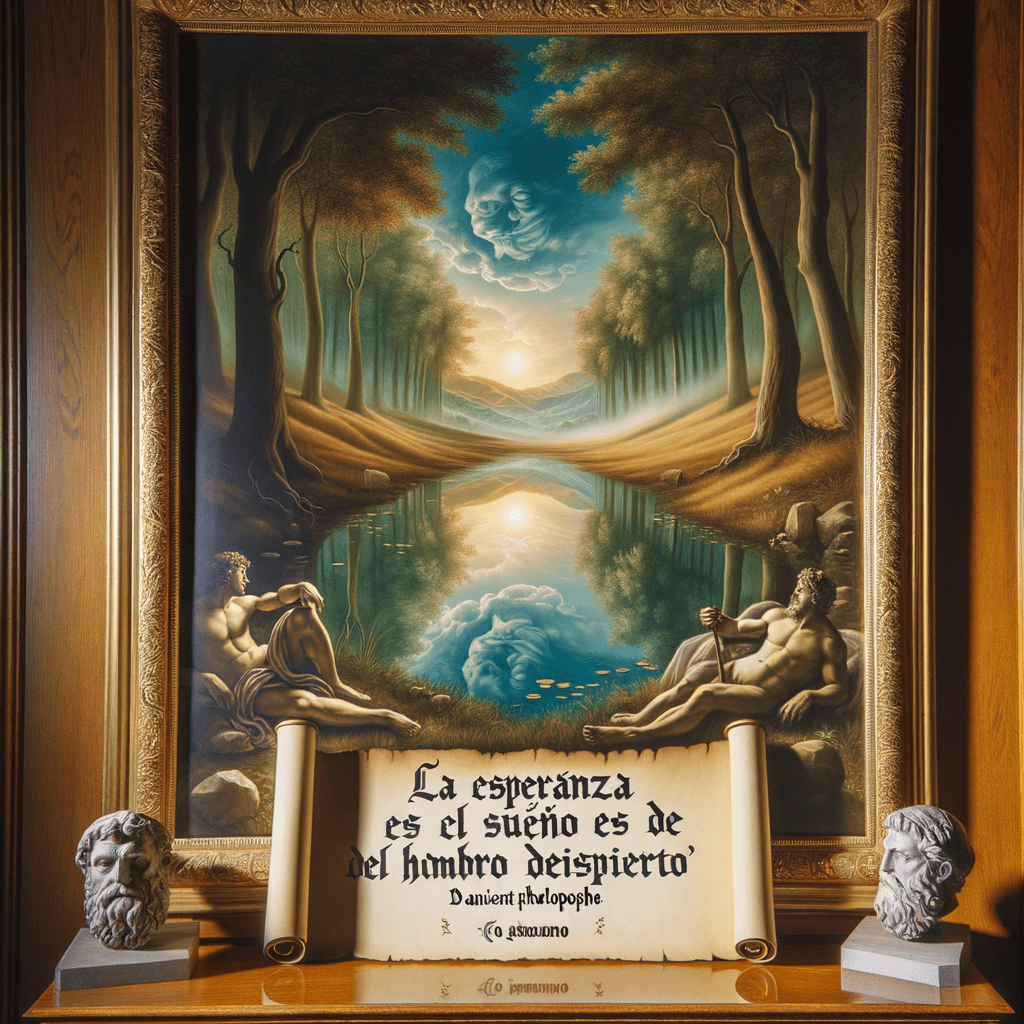
Hope is the dream of a waking man. - Aristotle
—What lingers after this line?
Nature of Hope
This quote suggests that hope is akin to a dream that one experiences while awake. Just as dreams provide a sense of possibility and imagination during sleep, hope offers a vision for the future during waking life.
Mental Aspiration
Aristotle indicates that hope is an active, conscious process. Unlike passive sleep dreaming, hope involves deliberate thinking and striving toward desires and goals.
Optimism and Future Orientation
This quote highlights the forward-looking aspect of hope. It serves as a reminder that maintaining hope allows individuals to envision and work towards better outcomes, keeping them motivated.
Psychological Well-being
Hope is essential for mental health. It helps people cope with difficulties and uncertainties by providing a mental escape and a reason to keep pushing forward.
Philosophical Context
Aristotle, a Greek philosopher, often explored concepts related to human behavior, ethics, and cognitive processes. This quote embodies his understanding of human nature and the importance of hope in leading a fulfilling life.
One-minute reflection
What feeling does this quote bring up for you?
Related Quotes
6 selectedHope is the dream of a waking man. - Aristotle
Aristotle
Aristotle's quote portrays hope as a form of aspiration or goal-setting that occurs in a state of awareness and consciousness, as opposed to dreams that occur during sleep.
Read full interpretation →Hope is the dream of a waking man. - Aristotle
Aristotle
This quote defines hope as a conscious and active state of dreaming or desire for a better future. Unlike the passive state of dreaming during sleep, hope involves a deliberate and mindful aspiration for improvement.
Read full interpretation →Hope is the dream of the waking man. - Aristotle
Aristotle
This quote illustrates the essential role of hope in our lives. Just as dreams give direction and purpose to someone who is asleep, hope provides motivation and aspiration to those who are awake and conscious.
Read full interpretation →Hope is the dream of a waking man. - Aristotle
Aristotle
This quote defines hope as a form of dreaming or envisioning a positive future, but it happens while an individual is awake and conscious, actively aspiring for something better.
Read full interpretation →Hope is the dream of a waking man. - Aristotle
Aristotle
This quote conveys that hope is similar to a dream, but it exists in the realm of reality, providing motivation and a sense of direction in life.
Read full interpretation →Hope is the thing with feathers that perches in the soul - and sings the tunes without the words - and never stops - at all. - Emily Dickinson
Emily Dickinson
Emily Dickinson uses the metaphor of a bird to represent hope. The 'thing with feathers' suggests that hope is light, delicate, but also persistent.
Read full interpretation →More From Author
More from Aristotle →Self-mastery is the hardest victory. — Aristotle
Aristotle’s remark turns victory inward, suggesting that the fiercest contest is not against rivals, armies, or public obstacles, but against one’s own impulses. At first glance, conquering external challenges may seem m...
Read full interpretation →Without friends, no one would want to live, even if he had all other goods. — Aristotle
Aristotle’s statement places friendship not at the margins of a good life, but at its very center. Even if someone possessed wealth, status, health, and comfort, he argues, life would still feel lacking without companion...
Read full interpretation →Anybody can become angry—that is easy, but to be angry with the right person and to the right degree and at the right time and for the right purpose, and in the right way—that is not within everybody's power and is not easy. — Aristotle
At first glance, Aristotle’s remark from the Nicomachean Ethics (c. 4th century BC) seems to state the obvious: anger comes easily.
Read full interpretation →The secret to a life of quality is found in your daily agenda; it is what you do consistently that becomes your reality. — Aristotle
At its heart, this saying argues that life is not transformed mainly by rare dramatic moments, but by ordinary actions repeated over time. The phrase “daily agenda” points to the quiet structure of a day—what we prioriti...
Read full interpretation →