
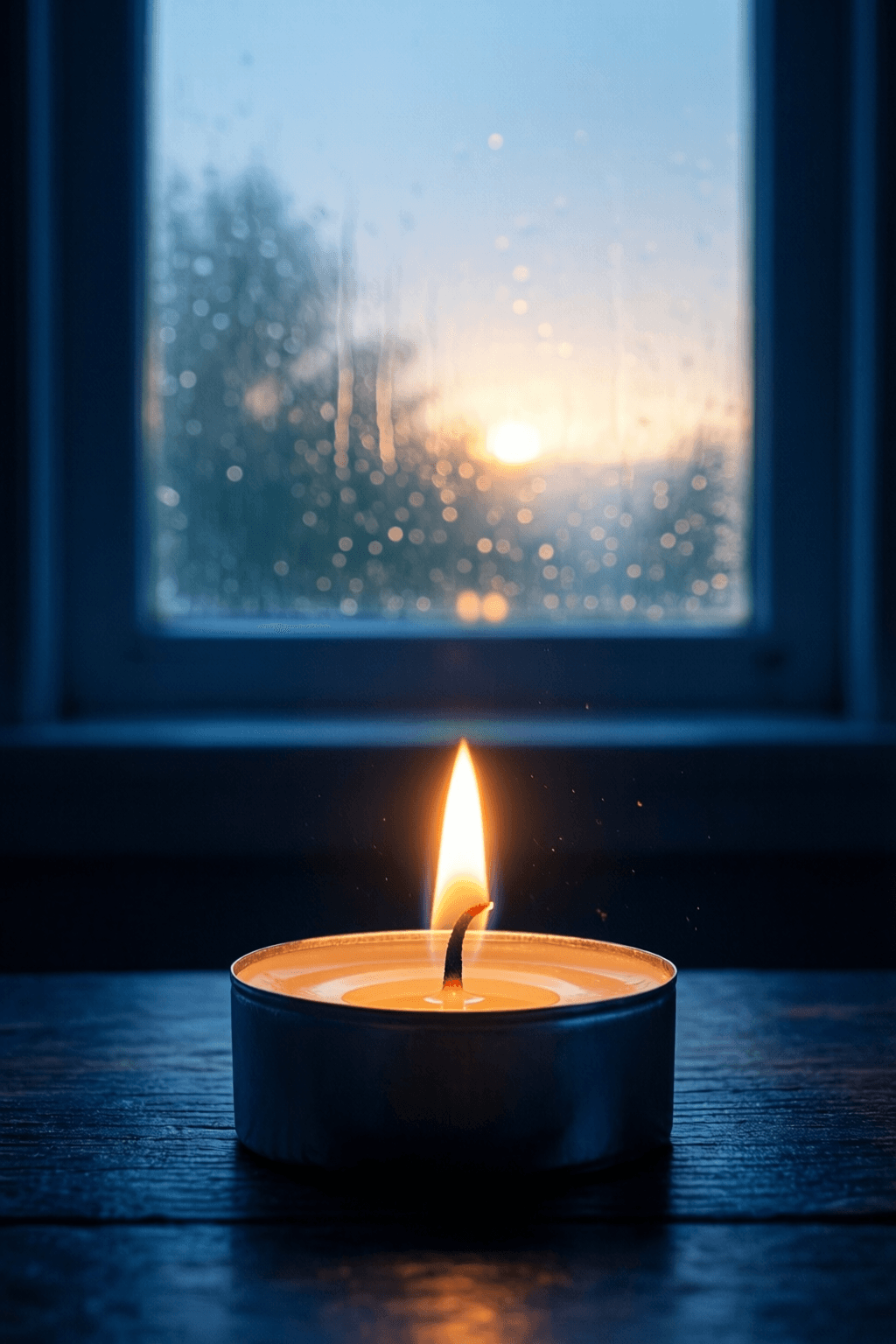
Just because your light flickers does not mean it is about to go out. — Yohancé Salimu
—What lingers after this line?
The Meaning Behind the Flicker
At first glance, Yohancé Salimu’s line separates appearance from reality. A flicker suggests instability, fatigue, or interruption, yet it does not automatically signal extinction. In that sense, the quote gently challenges our habit of treating temporary weakness as permanent collapse. More broadly, the image of light turns inner strength into something visible. Even when confidence wavers, hope dims, or energy stutters, the essential flame may still be alive. The saying therefore offers reassurance: struggle can be a moment in a life, not the verdict on it.
Why We Mistake Setbacks for Endings
From there, the quote speaks to a common psychological error: when people are tired or discouraged, they often interpret the moment as destiny. A failed attempt, a season of grief, or a loss of momentum can feel final precisely because pain narrows perspective. What flickers in the present is then mistaken for what will disappear forever. However, experience repeatedly proves otherwise. Abraham Lincoln’s many political defeats before the presidency are often cited as a reminder that inconsistency and disappointment do not erase long-term potential. The quote captures this same truth in a smaller, more intimate form.
Resilience as an Unsteady Process
Seen this way, resilience is not constant brightness but continued return. Popular narratives often praise strength as if it were smooth and unwavering, yet real endurance usually looks irregular. People heal unevenly, learn in fits, and recover through starts and stops rather than through a single dramatic rise. Consequently, Salimu’s image feels honest rather than merely comforting. The flicker is part of the life of the flame itself. Just as a candle bends in a draft but keeps burning, a person may tremble under pressure and still remain profoundly alive in purpose.
A Compassionate View of the Self
Because of that, the quote invites self-compassion. Instead of condemning moments of exhaustion, doubt, or inconsistency, it asks us to interpret them with more patience. Modern research on self-compassion, especially Kristin Neff’s work in Self-Compassion (2011), suggests that people cope better when they respond to their struggles with kindness rather than harsh self-judgment. In this light, a flicker becomes something to protect, not something to shame. The goal is not to deny vulnerability but to recognize that fragility and persistence can coexist. That shift in perspective can itself help the flame steady.
The Quiet Power of Continuing
Finally, the quote moves from comfort to resolve. If a flicker is not the same as an ending, then the proper response to difficult seasons is neither panic nor surrender, but care and continuation. One rests, regathers, and shields the light until it strengthens again. That is why the line resonates so deeply: it honors weakness without equating it with defeat. In a world quick to confuse visible struggle with failure, Salimu offers a steadier wisdom. Diminished is not gone, wavering is not finished, and a living light still holds the promise of brightness.
Recommended Reading
As an Amazon Associate, we earn from qualifying purchases.
One-minute reflection
What feeling does this quote bring up for you?
Related Quotes
6 selectedWhen something in your life dies—whether it be a job, a hobby, or a dream—I encourage you not to focus on what could have been but instead to look for the new life and the new opportunities that result. — Ryan Hall
Ryan Hall
Ryan Hall frames loss as a kind of death, and that metaphor immediately broadens the quote beyond grief in the literal sense. A job can end, a cherished hobby can fade, and a long-held dream can collapse; yet in each cas...
Read full interpretation →Today's tears water tomorrow's gardens. — Matshona Dhliwayo
Matshona Dhliwayo
At first glance, Matshona Dhliwayo’s line transforms grief into something unexpectedly fertile. Tears, usually seen as signs of pain or loss, become water for a future garden, suggesting that suffering is not merely endu...
Read full interpretation →Dreams are made of sturdy stuff. — William Carlos Williams
William Carlos Williams
At first glance, William Carlos Williams’s line reverses a familiar assumption: dreams are often treated as airy, fleeting, and insubstantial, yet he insists they are made of “sturdy stuff.” In that compact phrase, he gi...
Read full interpretation →Confidence is not absence of fear; it is the quiet recognition that you have survived every hard day so far. — Michelle Obama
Michelle Obama
At first glance, confidence is often mistaken for boldness without hesitation, yet Michelle Obama’s words gently overturn that myth. She frames confidence not as the absence of fear, but as a steadier inner knowledge: yo...
Read full interpretation →The art of life is more like the wrestler's art than the dancer's; stand ready and firm to meet sudden and unexpected onsets. — Marcus Aurelius
Marcus Aurelius
Marcus Aurelius contrasts two arts to clarify what living well demands. A dancer suggests elegance, rhythm, and practiced beauty; a wrestler, by contrast, suggests balance under pressure, resistance, and constant readine...
Read full interpretation →Everything is a season, and this is just a chapter, not your whole story. — Glennon Doyle
Glennon Doyle
At its core, Glennon Doyle’s quote reframes hardship and change by comparing life to the natural cycle of seasons. Just as winter does not cancel spring, a painful or uncertain period does not define a person forever.
Read full interpretation →More From Author
More from Yohancé Salimu →